





Abu Dhabi smart life sciences delegation visits the United States
The Department of Health — Abu Dhabi is leading a high-level delegation to the United States from June 18 to 25 to strengthen strategic international partnerships and showcase Abu Dhabi smart life sciences, officials said. The visit aims to present an integrated model that accelerates the translation of scientific discoveries into practical healthcare applications.
The delegation will travel to San Francisco, Los Angeles and San Diego and will take part in the Global Biotechnology Innovation Conference 2026, according to the Health Department. Meetings with U.S. government agencies, academic and research institutions and private companies are scheduled to explore cooperation in AI drug discovery, gene editing, advanced therapies and regenerative medicine.
Abu Dhabi smart life sciences model and the HELM accelerator
Abu Dhabi’s approach centers on an integrated ecosystem that combines population genomic data, advanced health records, research infrastructure and clinical services under a flexible regulatory framework. Officials say this alignment enables real-world testing, clinical research and the scalable deployment of innovations while maintaining patient protections and data governance.
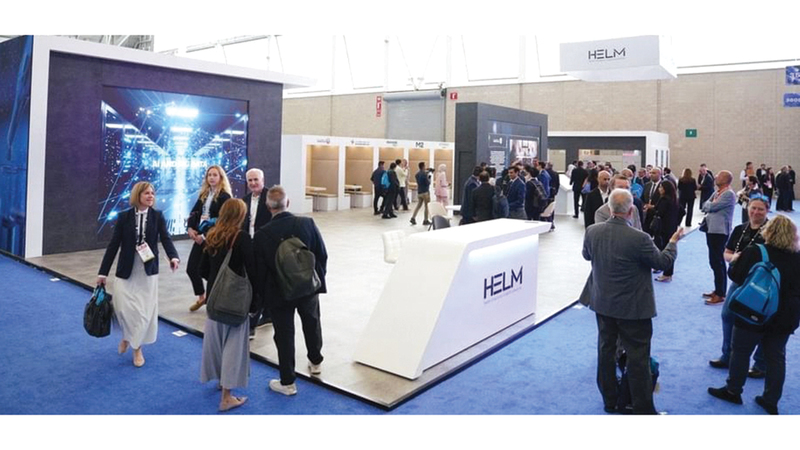
Meanwhile, the Health, Medicine and Fitness for a Sustainable Life (HELM) complex is cited as a key enabler in the pipeline from laboratory to market. HELM’s role, officials note, is to support technology validation, clinical translation and commercialisation, helping innovators move discoveries into scalable healthcare solutions that address local and global needs.
Partnership priorities: AI drug discovery, gene editing and advanced therapies
During the U.S. engagement, the Abu Dhabi delegation will focus on areas where the emirate has invested heavily: AI-driven drug discovery, gene editing and genetic therapies for rare and hereditary diseases, regenerative medicine and longevity science. These priorities align with global trends in biotechnology innovation and reflect Abu Dhabi’s stated ambition to accelerate next-generation healthcare solutions.
Discussions are expected to include the use of genomic data integration and machine learning to shorten discovery timelines and improve target validation. Furthermore, officials said the delegation intends to explore collaborative frameworks for clinical trials, regulatory harmonisation and shared research platforms with U.S. partners.
Who is on the delegation and what they seek to achieve
The delegation includes representatives from the Abu Dhabi Investment Office, M42, Masdar City, Khalifa University, KEZAD Group, Hub71, PureHealth, Mubadala Bio and Arsera, according to the Health Department’s briefing. These participants span health, investment and innovation sectors and are positioned to pursue public-private partnerships and investment opportunities.
Officials said the delegation will pursue memorandums of understanding, joint research initiatives and pilot projects that leverage Abu Dhabi’s data assets and clinical capacity. Furthermore, the delegation seeks to build linkages with venture capital and corporate partners to support scale-up and market entry for promising technologies.
Regulatory and data framework that supports collaboration
Abu Dhabi’s model emphasizes a flexible regulatory environment that accommodates research, development and clinical validation while upholding ethical and privacy standards. The integration of genomic and clinical data, coupled with environmental and lifestyle information, is presented as a distinctive asset that can accelerate translational research.
According to officials, this data-driven approach aims to de-risk early-stage development and enable more efficient design of clinical studies. Therefore, partners in the United States are being invited to consider mechanisms for secure data sharing, federated analysis and joint translational programs that respect local regulations.
Implications for global biotechnology innovation and healthcare markets
Observers say Abu Dhabi’s outreach reflects growing interest among cities and nations to combine capital, data and clinical capacity to compete in biotechnology innovation. By promoting collaborative models, Abu Dhabi is positioning itself as a regional hub for advanced therapies and AI-enabled health research, officials suggested.
Furthermore, the delegation’s engagement with U.S. institutions could accelerate access to specialised expertise, regulatory know-how and commercial partners. In turn, this may shorten time-to-market for treatments focused on rare genetic disorders and support pilots of regenerative and longevity-focused interventions.
Related areas to watch
Stakeholders should monitor proposed partnerships on AI drug discovery platforms, cross-border clinical trials and regulatory pilot programs that enable adaptive pathways for advanced therapies. Additionally, the operationalisation of HELM-based projects will be a key indicator of Abu Dhabi’s ability to scale laboratory advances into health services.
Next steps and what to expect
Officials said the June delegation will be followed by targeted follow-up dialogues and potential memorandums of understanding in the coming months, which could set timelines for joint research and pilot implementations. Therefore, industry and academic observers will be watching announcements on collaborative agreements and pilot projects once the delegation returns.
In conclusion, the U.S. mission is positioned as a strategic step in Abu Dhabi’s plan to link data, research and clinical capacity to accelerate innovation. Watch for announcements on specific partnerships and pilot programmes expected to emerge after the June engagements, which will indicate how the Abu Dhabi smart life sciences model moves from demonstration to deployment.