






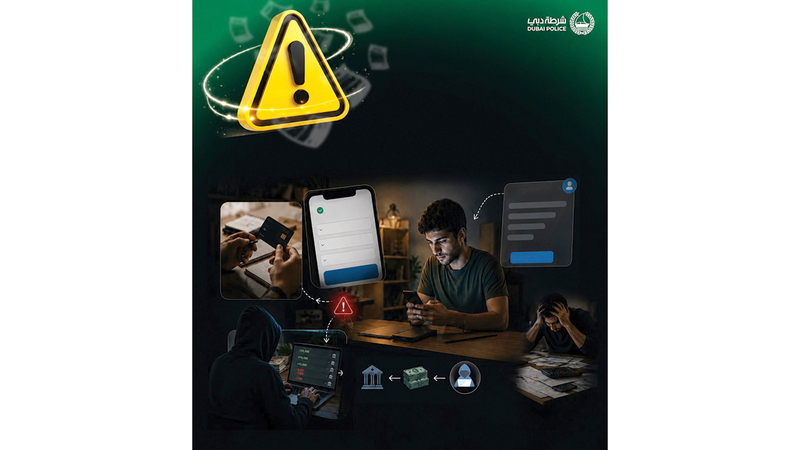

Social media job scam exposes bank account misuse in Dubai
A young man in Dubai was summoned by authorities after his bank account became linked to a social media job scam, Dubai Police said. The suspect responded to an online advertisement for a remote part-time job that promised quick income and flexible hours, later learning that his account had been used to receive and forward funds from fraud schemes.
Dubai Police investigators traced multiple transfers through the account and called the man in for questioning, officials said. The case highlights risks facing job seekers who reply to unsolicited offers on messaging apps and social platforms.
How the fake remote part-time job scheme operated
According to Dubai Police, the recruitment offer arrived via a social media message that advertised a legitimate-sounding position with a financial services firm. The perpetrators asked the applicant to open a new bank account or provide access to an existing account to “process company transactions,” promising a steady commission for each transfer.
The man complied and soon began receiving incoming payments, which he was instructed to forward immediately to other accounts to “settle client transactions.” Meanwhile, the group reassured him that his role would be formalized and that his status at the company would be secured. Therefore, he continued to execute transfers without recognizing that he was facilitating criminal proceeds.
Investigators say this pattern is common in online job fraud: criminals use seemingly plausible business processes to mask the movement of illicit funds. In some instances, victims are asked to pay registration fees or share personal and banking information, increasing the scope of bank account misuse and identity theft.
Warning signs and investigative findings on the social media job scam
Dubai Police noted several red flags in this case, including unsolicited contact, pressure to act quickly, and requests to use or open a bank account under the applicant’s name. Additionally, the promise of unusually high returns for minimal work and the absence of a formal hiring process were cited as warning signs.
Investigators reviewed transaction records and established links between the account activity and broader fraud patterns. The department responsible for crime prevention and criminal investigations emphasized that the scheme often begins with an attractive message, then escalates to requests for transfers, fees, or sensitive data.
Furthermore, officials warned that victims can be exposed to legal consequences even if they were unaware their accounts were used to launder criminal proceeds. Therefore, verifying the identity and credibility of a prospective employer and refusing to share banking credentials are essential precautions.
Reporting channels, public guidance and legal implications
Authorities urged the public to report suspicious recruitment adverts and contact attempts immediately through the Dubai Police eCrime platform or by calling 901 for non-emergencies. The report indicates that prompt notifications help investigators trace transactions faster and prevent further misuse of bank accounts.
In addition, Dubai Police advised job seekers to engage only with reputable, officially registered firms and to avoid offers that require upfront payments or access to personal financial accounts. Real employers typically do not ask for bank access or charge applicants for onboarding or registration.
Civil and criminal liability is a concern in such cases. Officials cautioned that regulatory and legal scrutiny can extend to individuals whose accounts were used to move illicit funds, even when those individuals claim ignorance. Therefore, preserving records of communications and seeking legal advice as soon as suspicious activity appears are important steps.
Practical advice for job seekers to avoid online job fraud and bank account misuse
Job seekers should adopt basic verification steps: check the employer’s official website, confirm company registration details, and look for independent reviews or news mentions. Furthermore, communicating via verified corporate channels rather than private messaging apps reduces exposure to impersonation risks.
Meanwhile, applicants should never share full banking credentials, account passwords, or PINs, and should decline requests to receive and forward funds on behalf of third parties. If an offer sounds too good to be true, it often is; therefore, skepticism is a useful defense in the online recruitment market.
Secondary precautions include enabling transaction alerts, regularly reviewing account activity, and notifying the bank immediately if unsolicited deposits appear. Banks can flag suspicious patterns and provide guidance on freezing or closing accounts if necessary.
Context and broader trends in online recruitment scams
Officials said the method used in this incident aligns with a wider trend of criminals exploiting social networks and messaging platforms to recruit unwitting intermediaries. As the gig economy and remote work models expand, scammers adapt by packaging illicit activity in the language of flexible employment.
Related tactics include identity theft through fake application forms, falsified job listings on legitimate boards, and pressure to move money as part of a “trial task.” The combination of remote hiring, rapid communication, and low vetting standards creates fertile ground for such schemes.
Consequently, public awareness campaigns and proactive policing have become central to prevention strategies. Dubai Police said it continues to monitor emerging fraud techniques and collaborate with financial institutions to detect suspicious transfers earlier in the money flow.
Conclusion and what to watch next
The Dubai Police investigation into this social media job scam underscores the need for vigilance among remote job applicants and the banking sector. Readers should watch for increased public advisories from law enforcement and financial regulators as they adapt to new patterns of online job fraud.
Next steps may include enhanced outreach by police, partnerships with social media platforms to remove fraudulent adverts, and guidance from banks on protecting account holders. In the immediate term, anyone who receives an unsolicited job offer that involves handling funds should report it to authorities and their bank without delay.