






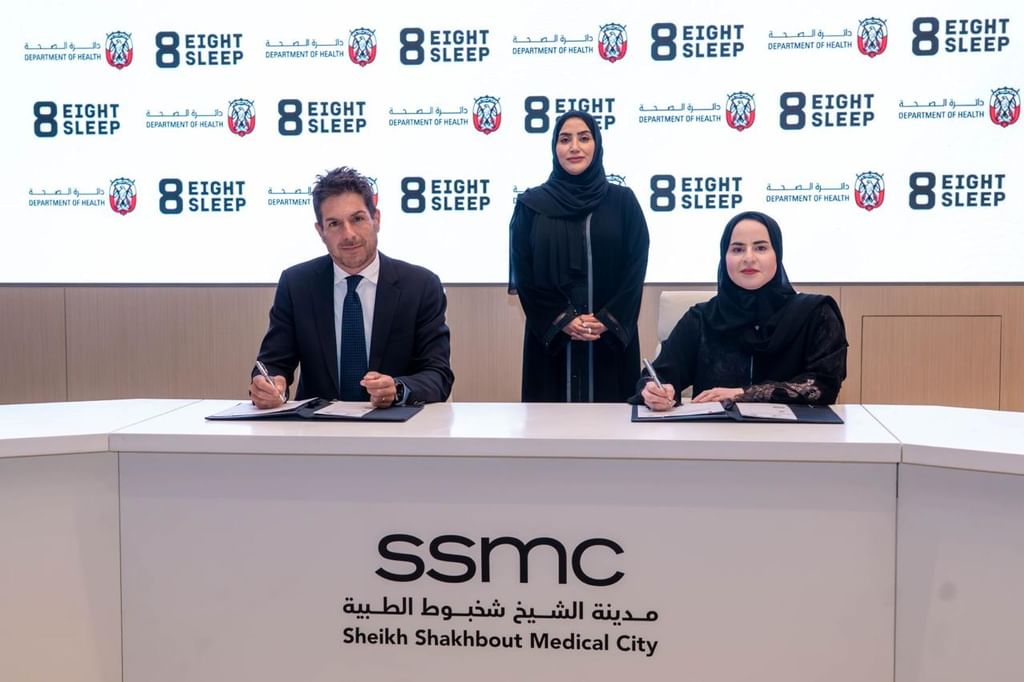

Abu Dhabi launches clinical study using smart bed technology to detect sleep apnea
The Department of Health – Abu Dhabi has launched a research partnership with Eight Sleep to run the emirate’s first clinical study of smart bed technology aimed at early detection of sleep apnea. The 12-week study will integrate continuous sleep data with Abu Dhabi’s advanced health research infrastructure to evaluate detection and real-time interventions, officials said.
Who, what, when and where of the study
The study will take place at Sheikh Shakhbout Medical City, a research hospital within the PureHealth network, and will collect continuous sleep and physiological measurements for 12 weeks from participants, according to the Department of Health – Abu Dhabi. Data gathered by Eight Sleep’s mattress system will include heart rate, respiration rate, movement, breathing interruption events and sleeping position.
Researchers will link these real-world data with clinical, genomic and lifestyle records already held in Abu Dhabi’s health research ecosystem. Meanwhile, study governance will follow established oversight frameworks and strict data protection protocols, officials said.
How the smart bed technology will be used and measured
Eight Sleep’s system uses sensors and artificial intelligence to monitor sleep continuously without requiring wearable devices. The platform can also deliver immediate interventions such as positional adjustments or temperature changes to influence sleep and breathing, which the study will assess for safety and effectiveness.
Investigators will compare mattress-derived indicators with clinical assessments to determine how accurately continuous sleep monitoring can identify undiagnosed sleep apnea and related events. Additionally, researchers will examine whether in-bed interventions can reduce the frequency or severity of breathing interruptions.
Why the study matters for sleep apnea detection and preventive care
Sleep apnea is among the most common yet underdiagnosed sleep disorders worldwide. Early identification and management can reduce long-term risks, including cardiovascular disease and impaired daytime functioning, health officials noted. Therefore, validating noninvasive home-like monitoring tools could broaden access to screening and support preventive care pathways.
By linking continuous sleep data with population health records, the study aims to reveal patterns that can inform personalized care plans and clinical decision-making. Furthermore, the integration with Abu Dhabi’s research infrastructure may produce evidence to guide future clinical trials and public health strategies.
Data governance, privacy and clinical oversight
Department of Health – Abu Dhabi and Eight Sleep said the study will operate under comprehensive governance arrangements and strict security measures to safeguard participant data. Data will be anonymized and managed under protocols consistent with local regulations and best-practice research standards.
Sheikh Shakhbout Medical City will provide clinical oversight during the trial, ensuring that assessments and any in-study interventions adhere to medical safety standards. Officials emphasized that participant safety, data integrity and ethical review are central to the project.
Potential broader applications and next research phases
Officials from the Department of Health – Abu Dhabi and Eight Sleep indicated the partnership could expand into other health areas if initial results are promising. Planned follow-ups may explore the role of sleep and temperature regulation in menopause care, cancer recovery and other conditions where sleep and physiological recovery are clinically relevant.
These prospective studies would examine how daily-use medical devices can be responsibly integrated into clinical care and preventive health models. The research could provide a template for evaluating consumer-grade health technologies in real-world healthcare settings.
Perspectives from stakeholders
Department of Health – Abu Dhabi leadership stressed that quality sleep is a pillar of long-term health and that undiagnosed sleep disorders can significantly reduce life quality and raise health risks if left unmanaged. They framed the project as part of a broader commitment to harness data and innovation for early risk detection and improved health outcomes.
Eight Sleep’s leadership described the collaboration as a step toward recognizing sleep as a core component of preventive care. Meanwhile, Sheikh Shakhbout Medical City noted that clinical research is essential to convert technological innovation into validated medical evidence and better patient care.
Related keywords and research terms
This initiative highlights links between continuous sleep monitoring, sleep apnea detection and data-driven preventive care. Related research topics include remote patient monitoring, AI-driven physiological signal analysis and integration of real-world evidence into clinical practice.
Conclusion and what to watch next
The Abu Dhabi–Eight Sleep clinical study begins a 12-week data collection phase designed to evaluate whether smart bed technology can help detect and manage sleep apnea earlier and more effectively. Observers should watch for published study protocols, interim safety reports and eventual outcomes that indicate diagnostic accuracy or clinical benefit.
Next steps will likely include formal analysis of linked datasets, publication of findings in peer-reviewed forums and consideration of expanded trials if initial evidence supports clinical utility. Stakeholders said these results could influence future policies on integrating consumer sleep devices into preventive health pathways.