





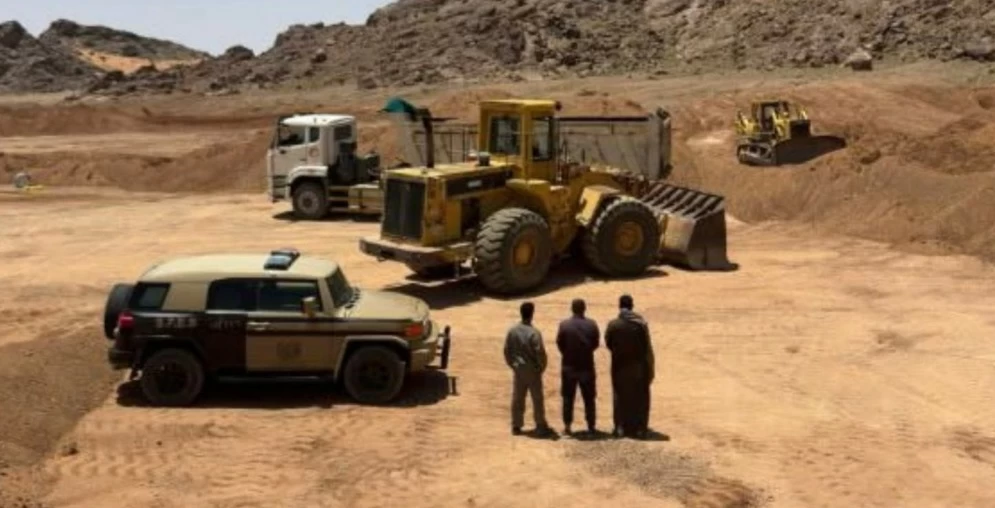

Illegal soil excavation incident in Hail
The Special Environmental Security Forces arrested three expatriates from Yemen after discovering illegal soil excavation in the Hail region, officials said. The arrests and seizure took place during a recent patrol and enforcement operation, according to a statement by the forces, which added that legal procedures have been initiated. The discovery highlights intensified efforts to curb environmental offenses.
Arrest and equipment seizure
Authorities said the three individuals were found exploiting ground deposits and using heavy machinery to remove and transport soil without permits. Officials reported that three pieces of equipment used for excavation and soil transport were confiscated at the scene. Therefore, charges and administrative measures are being processed under applicable environmental enforcement rules, the statement indicated.
Details of the operation and immediate response
The Special Environmental Security Forces conducted the operation after routine monitoring identified suspicious activity in a remote area of Hail. Patrol teams confronted the individuals on site and documented the activity before securing the equipment. Meanwhile, environmental inspectors were called in to assess the disturbed land and estimate the initial extent of damage.
Reporting channels and public role in enforcement
Officials urged the public to report any suspected environmental violations, including illegal sand extraction or other unauthorized groundworks. Reports can be made through emergency numbers: 911 covers Mecca, Medina, Riyadh and the Eastern Province, while 999 and 996 serve the remaining regions of the kingdom. All reports will be treated confidentially and whistleblowers face no legal responsibility, authorities said.
Why illegal soil excavation matters
Removing surface soils and sediments without oversight can accelerate erosion, alter drainage patterns, and damage habitats that support local wildlife. Consequently, illegal soil excavation undermines broader conservation and wildlife protection efforts, environmental specialists warn. Furthermore, the disturbance of soils can affect water quality and increase the risk of desertification in sensitive areas.
Legal framework and enforcement trends
The recent action reflects a wider enforcement push against environmental offenses, according to observers and officials. Environmental regulations generally require permits for excavation and land alteration to ensure mitigation measures and rehabilitation plans are in place. Therefore, enforcement agencies have increasingly coordinated field operations, inspections and penalties to deter illegal extraction activities.
Potential penalties and administrative measures
Authorities did not specify the exact penalties that the suspects may face, but officials noted that administrative and legal procedures are in progress. Typically, responses to such violations can include fines, equipment confiscation and orders to restore affected sites. In addition, cases may be referred to prosecutorial authorities when criminal intent or significant environmental harm is suspected.
Environmental assessment and remediation steps
Environmental teams will likely carry out a follow-up assessment to determine the extent of land disturbance and the necessary restoration measures. Rehabilitation can involve soil stabilization, regrading, replanting native vegetation and measures to prevent further erosion. Meanwhile, experts emphasized that prompt remediation reduces long-term environmental impacts and supports broader landscape resilience.
Context: regional enforcement and conservation priorities
Recent enforcement activity aligns with national priorities to protect natural resources and maintain ecological balance. Authorities have increased monitoring of vulnerable areas where illegal sand extraction and unauthorized land alteration are more likely to occur. Furthermore, these efforts form part of a broader agenda to balance development needs and environmental protection across the country.
What this means for local communities
Local residents and land users are directly affected by changes in land use and soil removal, which can alter water runoff, reduce grazing capacity and accelerate dust generation. Therefore, community awareness and cooperation are vital to prevent illegal activities and to report suspicious operations. In many cases, community tips have led to rapid interventions by enforcement teams.
Next steps and what to watch
Authorities indicated that the investigation is ongoing and additional details may be released as legal procedures proceed. Observers should watch for official updates on charges, remediation orders and any broader enforcement campaigns targeting illegal soil excavation. Meanwhile, environmental agencies are expected to continue public outreach on how to report violations and support wildlife protection objectives.
Conclusion and forward-looking note
The arrests in Hail underscore active measures to stop illegal soil excavation and related environmental offenses, officials said. As the case moves through administrative and possible judicial channels, authorities and communities will monitor remediation outcomes and any policy responses. Readers should look for follow-up statements from the Special Environmental Security Forces and environmental regulators in the coming days for more detail on enforcement outcomes and restoration plans.