








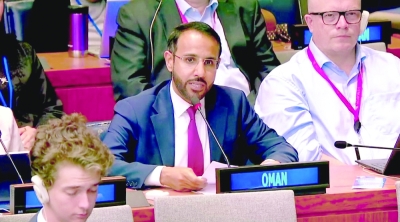

Oman disability rights highlighted at UN conference in New York
NEW YORK — Oman outlined recent advances in Oman disability rights during the 19th session of the Conference of States Parties to the Convention on the Rights of Persons with Disabilities held at United Nations headquarters over three days. The Omani delegation reviewed legislative, institutional and service-level measures intended to strengthen protection, inclusion and equal opportunity for persons with disabilities, officials said.
Legislative progress underpins policy changes
Oman presented its legal framework as central to its effort to align national laws with international norms, according to the official statement delivered by the delegation. The Basic Statute of the State, issued by Royal Decree No. 6/2021, was cited as reaffirming the state’s duty to care for persons with disabilities and to promote equality and equal opportunities.
Last year, the government enacted a dedicated law on the rights of persons with disabilities under Royal Decree No. 92/2025. The law, the delegation said, enshrines the Convention’s principles by prohibiting discrimination, promoting full inclusion and strengthening access to services such as inclusive education and health care. Therefore, legal reforms now create mechanisms for monitoring and inter-agency coordination.
Oman disability rights: focus on employment and economic empowerment
The new legislation places particular emphasis on economic and professional empowerment, officials noted. Government entities and private employers are required to reserve a minimum of 5 percent of jobs and positions for qualified persons with disabilities, with accommodations and full employment benefits guaranteed to enable equal performance.
Such measures aim to reduce barriers to workforce participation and to formalize workplace adjustments. Additionally, the law obliges public bodies to implement reasonable accommodation, vocational training and skills development initiatives that support long-term career progression.
Institutional measures and specialised services
Oman described a series of institutional initiatives designed to improve coordination and delivery of services. Royal directives established a new sector at ministerial level, headed by an undersecretary, tasked with overseeing services, enhancing empowerment programs and advancing inclusion policies nationwide.
Officials also highlighted plans for specialized facilities, including a centre dedicated to autism spectrum disorder that will offer integrated care and rehabilitation services. Meanwhile, authorities said they are mapping rehabilitation needs across governorates to replicate similar centres in partnership with private entities under corporate social responsibility arrangements.
Digital platform and rehabilitation centres expand access
The delegation announced a unified digital platform called “Taheel” to streamline access to rehabilitation services for persons with disabilities and their families. According to the ministry, the platform is intended to simplify referrals, centralize information on services and connect users to both public and private rehabilitation providers.
Oman reported that there are currently 139 government and non-government rehabilitation centres across the country. Therefore, the digital platform and the expanding network of rehabilitation centers are designed to enhance service coordination and to increase geographic reach, officials said.
Rehabilitation network and inclusive education linkages
Officials emphasized the link between rehabilitation services and inclusive education provisions. Early intervention, diagnostic support and therapy are presented as part of a continuum that supports learners with disabilities to access mainstream schools. Furthermore, the law explicitly references the right to inclusive education as a core element of social inclusion.
International engagement and policy alignment
Oman’s participation in the conference formed part of a broader effort to engage with states parties, international bodies and civil society organizations on disability rights. Delegates said the exchange facilitated dialogue on protection from violence and exploitation, strengthening care and support systems and increasing representation in public and political life.
According to the delegation, these interactions also serve to benchmark national practice against international standards and to identify areas where technical cooperation may be useful. Therefore, the conference offered a platform for sharing best practices and for exploring partnerships on capacity building and monitoring.
Implications for service delivery and social inclusion
Observers noted that codifying rights into law and expanding institutional structures can shift practical outcomes when followed by focused implementation. The new employment quotas and mandated accommodations, for instance, will require employer outreach, compliance mechanisms and accessible workplaces to be effective.
Furthermore, the combination of a national digital platform, a larger cadre of rehabilitation centers and targeted educational supports could improve continuity of care and reduce regional disparities. However, sustained funding, data collection and stakeholder engagement will be needed to translate policy into measurable inclusion gains.
What to watch next
Looking ahead, stakeholders will monitor the rollout and impact of implementing regulations and the Taheel digital platform, as well as the pace of establishing the autism care centre and additional rehabilitation centres nationwide. The ministry indicated that institutional monitoring mechanisms will track progress, while civil society and international partners may provide complementary oversight and technical assistance.
Readers should watch for published implementation guidelines, timelines for centre openings and early evaluations of employment quota outcomes. Meanwhile, further international dialogue is expected at upcoming UN sessions and regional forums where states share lessons on operationalizing disability rights.