





Salman Relief Center distribution in Farah province
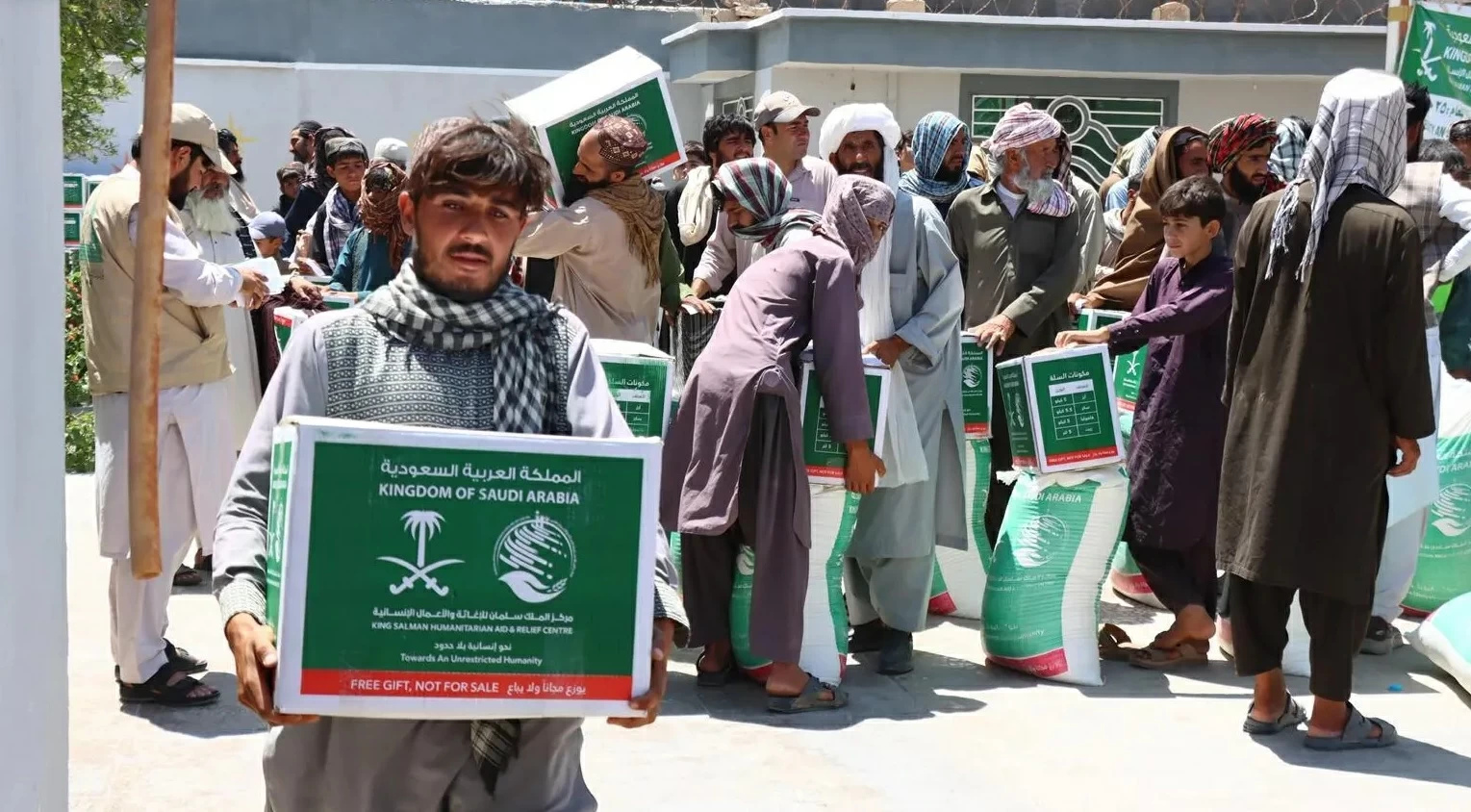
The Salman Relief Center distribution of 200 food baskets took place recently in Farah province, Afghanistan, officials said. The shipment, arranged by the King Salman Humanitarian Aid and Relief Center and local partners, reached families in need amid ongoing economic strain and seasonal shortages.
The distribution occurred in western Farah, where local authorities coordinated with relief staff to identify vulnerable households. Aid workers and community leaders confirmed that the assistance targeted internally displaced families, low-income households and those affected by recent climatic and economic pressures.
Details of the food aid delivery and beneficiaries
Relief teams delivered 200 pre-packed food baskets that include staple items intended to sustain households for several weeks, according to the center. The contents typically feature rice, flour, cooking oil and dates, consistent with standard humanitarian aid packages used by regional relief organizations.
Local officials said the selection process prioritized families with limited access to markets and those living in remote districts. Meanwhile, aid coordinators implemented registration and distribution protocols to reduce duplication and ensure transparency, according to statements from relief partners.
Main impacts of the Salman Relief Center distribution
Humanitarian workers indicated that the Salman Relief Center distribution helped alleviate immediate food insecurity for hundreds of people in the targeted communities. Furthermore, the arrival of these food baskets reduced urgent pressure on household budgets and provided short-term nutritional support for children and elderly family members.
In addition to direct food assistance, relief staff reported that the distribution created temporary employment opportunities for local laborers hired to transport and unload supplies. This ancillary economic activity offered modest income to families while strengthening community engagement in relief operations.
Coordination with local authorities and NGOs
Coordination involved provincial representatives, community elders and non-governmental organizations working in the area. The King Salman Humanitarian Aid and Relief Center partnered with local actors to map needs and verify recipients, officials said, consistent with best practices for humanitarian response.
Moreover, monitoring teams were deployed to observe distribution points and document the process. These monitoring efforts aim to ensure equitable delivery and to provide feedback for subsequent operations, according to aid coordinators and local administrators.
Context: Food insecurity and humanitarian assistance in Farah province
Farah province has faced persistent food insecurity driven by drought, limited market access and displacement, experts and local officials report. Therefore, targeted food aid such as the delivered baskets forms part of a broader humanitarian response to immediate needs while longer-term solutions are pursued.
Humanitarian aid groups have increasingly focused on combined efforts that include cash assistance, nutrition programs and agricultural support to complement in-kind distributions. According to recent relief assessments, integrated approaches can help stabilize households and reduce repeated dependency on single-round distributions.
Logistics and challenges in delivering aid
Transporting and distributing food baskets in western Afghanistan presents logistical hurdles, including rugged terrain and security constraints. Distribution organizers noted that careful route planning and coordination with local authorities were necessary to complete the Salman Relief Center distribution safely.
Moreover, relief teams must balance speed with accountability, ensuring that eligible families receive aid while preventing diversion. Aid coordinators said the operation employed documentation and community verification to minimize such risks, though challenges remain in remote areas where record-keeping is difficult.
Secondary support and follow-up measures
After the initial delivery, relief partners plan to conduct household visits and needs assessments to monitor outcomes and identify remaining gaps. These follow-up measures aim to inform whether additional distributions or alternative support, such as cash transfers or livelihood assistance, are required.
Additionally, local health and nutrition services were notified to track any acute needs among vulnerable groups, particularly children under five and pregnant women, who may require further interventions beyond food support.
What this distribution means for the community and next steps
The Salman Relief Center distribution provided immediate relief to families in Farah province and underscored the role of coordinated humanitarian assistance in fragile settings. Furthermore, the operation highlighted the importance of partnerships between international relief centers and local organizations for effective delivery.
Going forward, stakeholders said they will assess the impact of the distribution and determine whether further aid rounds are necessary this season. Observers recommend continued monitoring of food security indicators in Farah province and the surrounding regions to guide future humanitarian programming.
Readers should watch for updated reports from the King Salman Humanitarian Aid and Relief Center and local authorities, which are expected to outline any additional assistance plans and timelines. Continued transparency and coordination will be key to addressing ongoing needs and stabilizing vulnerable communities in Afghanistan.