






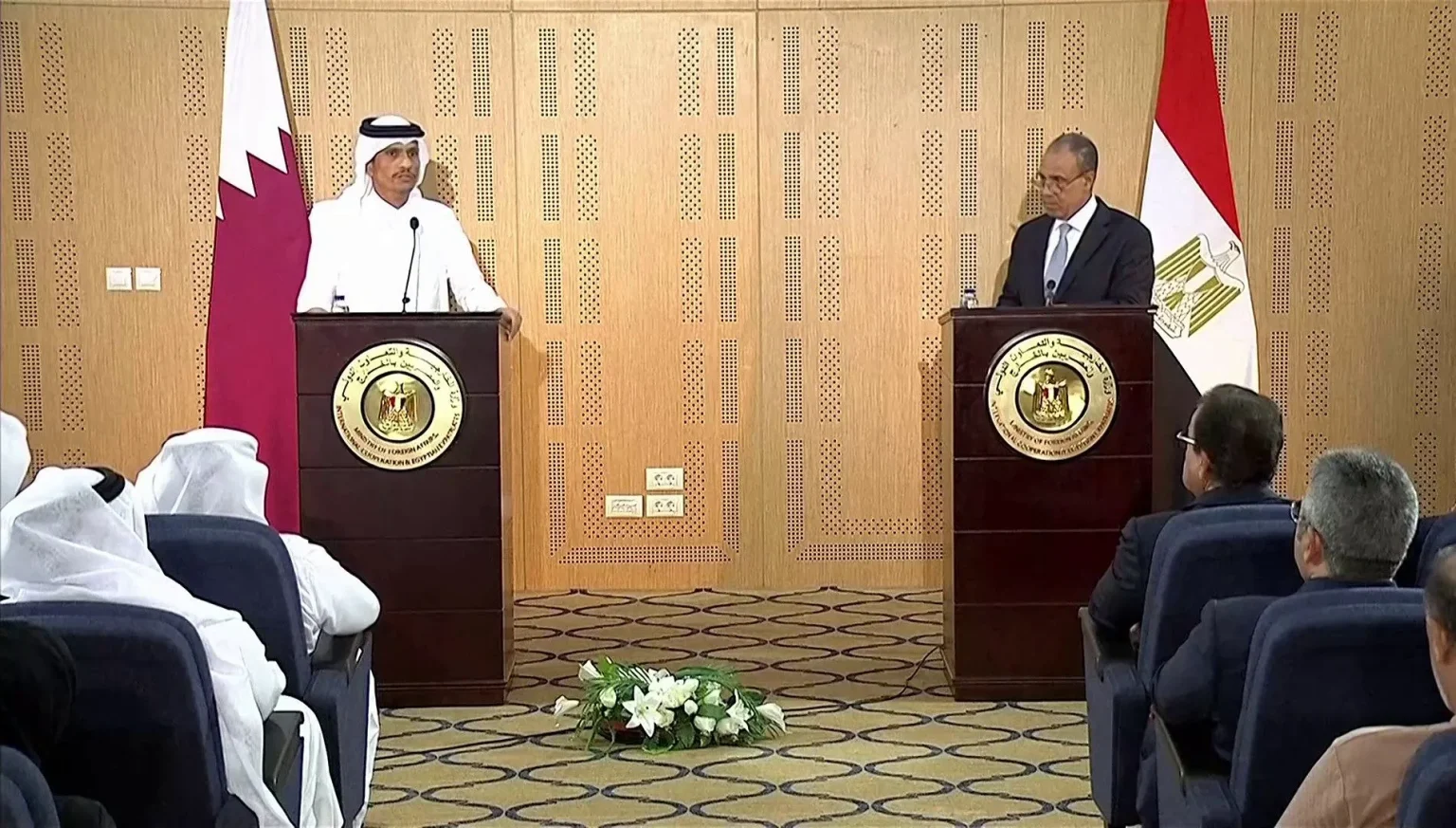

Qatar’s prime minister and foreign minister, Sheikh Mohammed bin Abdulrahman Al Thani, and Egyptian Foreign Minister Badr Abdel Aaty held a joint press conference on Thursday in El Alamein, where they warned against any attempt to obstruct freedom of navigation and to inflame regional tensions. The leaders said they would press for diplomatic measures to protect shipping routes and ensure humanitarian obligations are met in Gaza.
The two officials discussed the stalled Gaza ceasefire process, rising settlement activity in the West Bank, and wider regional security challenges, including recent tensions involving Iran and the imperative of keeping key chokepoints open, officials said.
Freedom of Navigation and Gulf Maritime Security
Sheikh Mohammed and Minister Badr Abdel Aaty emphasized the centrality of freedom of navigation to regional stability, citing the Strait of Hormuz and the Bab el-Mandeb as vital corridors for world trade. They rejected any attempt by a state or non-state actor to use maritime routes as leverage, and pledged continued coordination with Gulf partners to safeguard shipping lanes, according to their statements.
Officials noted Qatar’s diplomatic contacts with Gulf states and Pakistan aimed at maintaining uninterrupted commercial flows and preventing the weaponization of maritime access. Furthermore, the ministers called for strict adherence to international law, particularly the United Nations Convention on the Law of the Sea, as the legal basis for maritime security and safe passage.
Trilateral Statement Demands Israel Honour Gaza Ceasefire Commitments
Qatar, Egypt and Turkey issued a joint statement condemning recent strikes on Gaza and expressing deep concern that repeated violations undermine the agreed Gaza ceasefire and the broader peace roadmap. The three mediators urged Israel to fully implement its obligations under the ceasefire and to refrain from actions that could further escalate the situation, the joint communique said.
The statement requested international support for enforcement, specifically calling on the United States-led peace council and the United Nations Security Council to apply effective pressure to prevent renewed hostilities. It also referenced Security Council Resolution 2803 as a framework for reinforcing the ceasefire and protecting civilians.
Diplomatic Coordination in El Alamein
The meeting in El Alamein brought together Qatari and Egyptian officials for consultations that covered the Gaza file, Palestinian political arrangements, and regional crises in Libya and Sudan. Sheikh Mohammed reported coordinated efforts with Turkey and other mediators had persuaded Palestinian factions to accept key provisions of the peace plan, but warned that Israeli noncompliance jeopardizes progress.
Both capitals said they are maintaining daily coordination to de-escalate tensions and to push for a sustainable political solution. They stressed that military options would only deepen humanitarian suffering and that sustained diplomacy remains the primary route to stability.
Humanitarian Access and Governance in Gaza
Egypt and Qatar reiterated the need to secure unimpeded humanitarian access, rehabilitate critical infrastructure and support early recovery in Gaza as part of the phased plan. They highlighted the importance of establishing temporary administrative arrangements, deploying Palestinian police and an international monitoring presence, and delivering reconstruction supplies as early confidence-building measures.
Analysts See Message to Washington and Tel Aviv
Political analysts interviewed by Al Jazeera interpreted the joint statements as a diplomatic signal to Washington to intensify pressure on Israel to meet its commitments. Dr. Eyad Al Qara observed that the mediators want to prevent the collapse of the plan after Palestinian acceptance and that Israeli violations have heightened regional anxiety, particularly amid U.S.-Iran tensions.
Academic observers also noted the reputational stakes for the United States. Dr. Mohamed Al-Sharqawi told Al Jazeera that the credibility of the U.S. as a chief mediator is at stake if it does not ensure Israeli compliance with the roadmap it helped broker, given the Palestinian side’s reported adherence to its obligations.
Maritime Security, Regional Risks and Next Steps
Beyond Gaza, ministers stressed the broader risk that maritime disruption could be used as political leverage, undermining regional economies and global supply chains. They called for collaborative measures to de-escalate incidents at sea and to restore confidence among commercial operators and navies that patrol key waterways.
Diplomats outlined immediate next steps: continued trilateral coordination among Qatar, Egypt and Turkey; engagement with Washington to translate diplomatic consensus into enforceable measures; and intensified appeals to the international community to back mechanisms that guarantee humanitarian access and monitor compliance.
Observers should watch closely for a series of follow-up meetings among the mediators and for any public moves by the United States to press Israel on specific commitments, including increased humanitarian deliveries, withdrawal steps tied to the roadmap, and the deployment of monitoring forces. The mediators signaled they will seek tangible verification measures to prevent further backsliding.
Conclusion: The El Alamein press conference underscored a coordinated regional push to protect freedom of navigation and salvage the Gaza ceasefire process through diplomatic pressure and international oversight. In the coming days, attention will focus on whether the United States and other global actors translate diplomatic appeals into concrete pressure on Israel and on whether mediators can secure the operational steps needed to stabilize Gaza and safeguard maritime security.