







Sixth Conference of Arab States Parties to Combat Corruption Begins in Doha
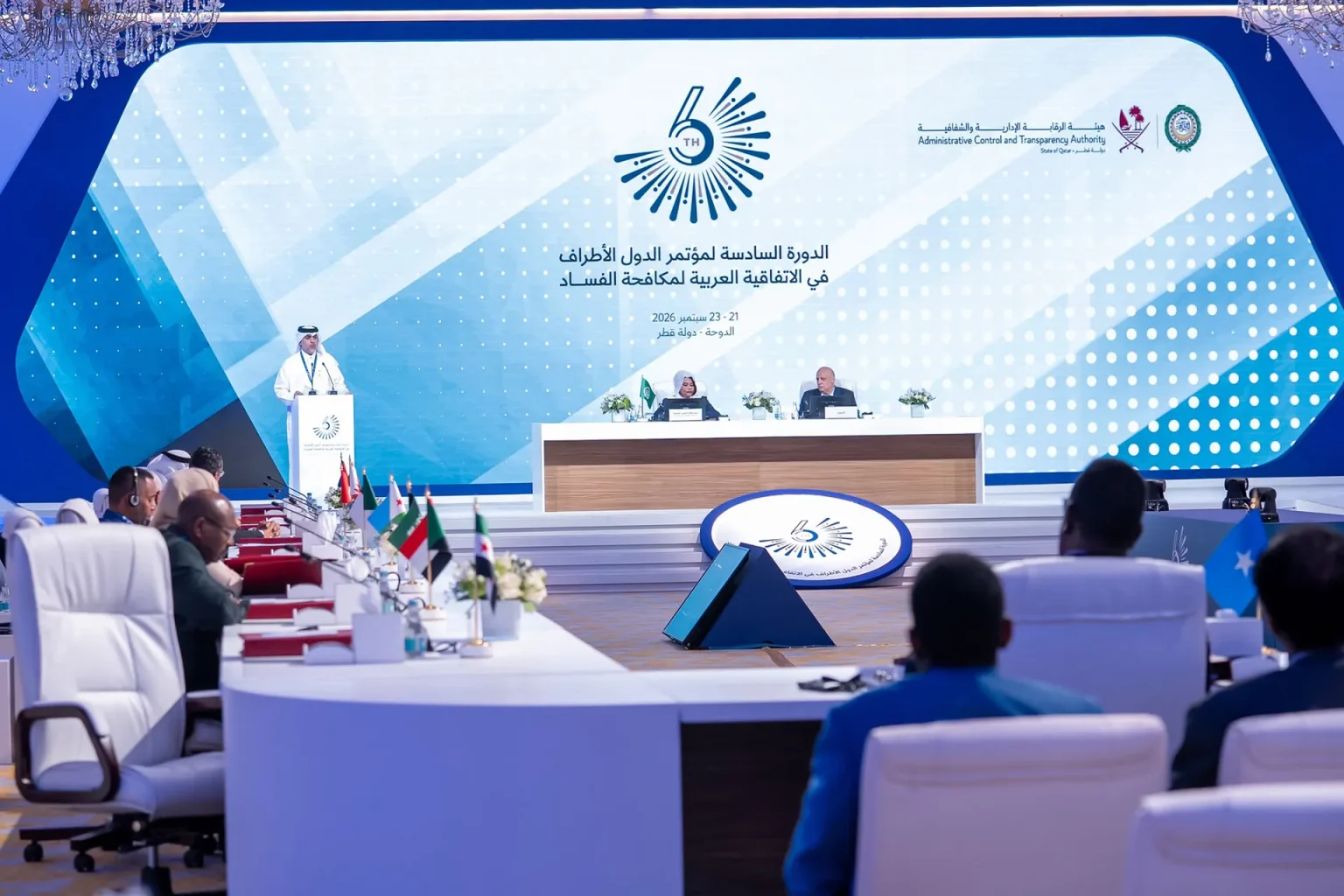
The capital of Qatar, Doha, hosts the sixth session of the Conference of Arab States Parties to the Arab Convention Against Corruption. The conference commenced on Monday, September 21, 2026, and is organized by the Administrative Control and Transparency Authority of Qatar. It runs over three days and focuses on significant issues such as the establishment of a unified Arab guide for parallel financial investigations in cases of financial corruption.
Maha Bakheet, supervisor of the legal affairs sector at the Arab League, addressed the opening session and highlighted the agenda. The conference will review the implementation of the Arab Convention Against Corruption and discuss recommendations from the sixth and seventh meetings of the open-ended advisory committee of government experts and representatives of independent bodies from the contracting parties.
Regional Collaboration and Financial Investigations
During the conference, Bakheet stated that preparations will be made for a regional expert meeting involving ministries of justice, interior, and relevant anti-corruption bodies in Arab countries to develop a vision for the unified Arab guide for parallel financial investigations.
Saeed Shahada, advisor to the President of the Palestinian Anti-Corruption Authority, informed the media that the establishment of this unified guide is essential in the fight against corruption, particularly in facilitating the recovery of embezzled funds. Shahada emphasized that the guide is integral to parallel financial investigations, which aim to expedite the process of investigating these crimes.
Concerns Over Corruption Perception Index
Regarding the Arab countries’ standings in the Corruption Perception Index developed by Transparency International, Shahada expressed reservations about the methodology used by the international organization to derive the annual corruption perception results. He indicated that several Arab and non-Arab countries have concerns about the index, which relies on subjective perceptions and unrelated reports.
He noted that if Transparency International had considered the actual efforts of Arab nations in combating corruption, the index results would likely differ significantly. Shahada voiced hopes for the creation of an Arab mechanism to assess corruption perceptions based on concrete data from anti-corruption agencies rather than mere impressions.
Projects Under Discussion at the Conference
Bakkour Al-Baqour, Director of the Investigation Directorate at the Jordanian Integrity and Anti-Corruption Commission, mentioned that the current session will address various initiatives submitted by Arab states. One notable project from Qatar aims to enhance the review of the convention’s implementation while Saudi Arabia has proposed a project to strengthen international cooperation in anti-corruption efforts by expediting mutual legal assistance requests.
Al-Baqour stated that Jordan’s participation reflects its commitment to combating corruption and demonstrates a collaborative approach with Arab nations in addressing this pervasive issue.
Associated Arab Conference on Corruption Prevention
On Tuesday, the conference will feature four sessions focused on enhancing anti-corruption efforts in the public sector. These sessions will cover various topics, including codes of conduct and their outcomes on public sector integrity, sharing Kuwait, Saudi Arabia, Iraq, and Oman’s experiences.
The second session will delve into the challenges and opportunities in facilitating access to information, showcasing Qatar’s experience. The third session will explore how artificial intelligence technologies can support corruption prevention efforts, while the final session will discuss the relationship between parliamentary bodies and anti-corruption agencies in the Arab world.
On the final day of the conference, attendees will address multiple proposed resolutions and adopt the “Doha Declaration,” which serves as the conference’s concluding statement.