




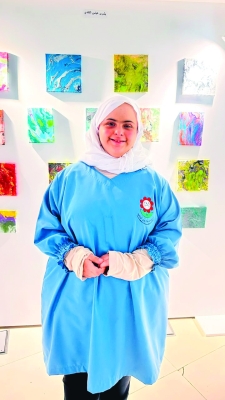

Bushra Al-Kindi begins a public knitting journey
At 24, Bushra Al-Kindi turned a rehabilitation program into a small craft business after learning knitting and crochet through the rehabilitation department of the Association for Children with Disabilities. The main keyword Bushra Al-Kindi learned basic techniques from trainers and then expanded her skills by following instructional videos on YouTube, quickly producing blankets, shawls, bags and accessories.
Bushra Al-Kindi’s knitting journey
Bushra Al-Kindi started with a simple handmade piece for her own bed and then made items for family members before receiving external orders, according to family accounts and program staff. Her work combines traditional knitting and crochet methods with personal color selections and patterns, making each piece distinct. Furthermore, she balances learning from trainers and digital tutorials, which has accelerated her progress and product variety.
Training, tools and production process
Initial training took place inside a rehabilitative setting where instructors demonstrated basic stitches and safety with needles. Additionally, Bushra continued to practice at home, refining techniques and experimenting with different yarn weights and hooks. A single blanket typically takes about three weeks to complete, a shawl about three days, and some smaller bags can be finished within a day, reflecting a steady workflow that suits part-time production.
Materials and tools are supplied by the family and sourced from local shops and online stores, the family said. Meanwhile, they also tap into small home-based suppliers for specialty yarns, allowing Bushra to test a range of textures and color blends. Choosing color combinations is central to her work; sometimes clients specify palettes, and other times they trust her aesthetic judgment.
Market response and community support
Demand for Bushra Al-Kindi’s products rises during the school season and at community events where she exhibits her work. Participation in craft fairs and the use of an Instagram account have expanded her visibility and increased orders, according to social media activity and family statements. Furthermore, a local ice cream shop has donated a display corner so she can present and sell items without rental fees, reflecting emerging community backing.
The family emphasized that public display opportunities and social media presence are crucial for small producers, particularly for people with disabilities seeking independent income. Sales remain mostly local for now, but interest from a wider audience has prompted the family to consider formalizing the activity with a business name to support growth and order management.
Inclusive entrepreneurship and social rehabilitation
The experience of Bushra Al-Kindi illustrates how vocational training and accessible marketplaces can foster inclusive entrepreneurship for people with disabilities. According to rehabilitation experts, structured programs that blend hands-on instruction with digital learning platforms can improve both skill acquisition and confidence. In this case, knitting and crochet functioned as therapeutic activity, creative outlet and potential income stream.
Families and program staff noted that craft production supports social rehabilitation by promoting routine, fine motor skills and social interaction with customers and peers. Additionally, the combination of institutional support and family encouragement enabled Bushra to pursue continuous learning and adapt to customer preferences, demonstrating the value of coordinated support systems.
Operational considerations and product strategy
As orders grow, practical considerations include managing material costs, setting prices that reflect time and skill, and choosing a sales strategy that balances custom work with ready-to-sell inventory. The family is exploring simple bookkeeping practices and options for packaging and delivery to make small-scale production sustainable. They are also weighing whether to trademark a name or keep operations informal while demand is evaluated.
Operational decisions will likely influence product range; for example, higher-demand items such as phone straps or small accessories could be scaled up, while labor-intensive blankets might remain custom or made to order. Meanwhile, maintaining quality and the handmade character of items remains a top priority for the producer and her supporters.
Broader implications and what to watch next
Bushra’s case points to broader opportunities for inclusive local economies that integrate training, public exposure and micro-retail venues. Observers should watch whether more community venues replicate the donated display model and whether similar rehabilitation programs expand craft-based training. Additionally, the family’s decision on branding will be important to follow as a signal of professionalization.
Over the next 6 to 12 months, stakeholders can expect to see growth in orders if participation in seasonal markets continues and online promotion is sustained. Furthermore, program coordinators may evaluate the model’s replicability, assessing outcomes in confidence, skill development and economic participation among other participants.
Conclusion: next steps and expectations
In summary, Bushra Al-Kindi’s transition from rehabilitation trainee to active craft producer demonstrates how targeted training, family support and community goodwill can create pathways to independence. The immediate next steps include exploring a business name, scaling production for popular items and maintaining public engagement through markets and social media. Therefore, readers should watch for increased local initiatives that support similar small-scale inclusive enterprises.