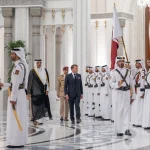








Saudi-Japan relations
Saudi-Japan relations were at the center of a diplomatic phone call this week when Saudi Foreign Minister Prince Faisal bin Farhan received a call from Japanese Foreign Minister Toshimitsu Motegi, the Saudi Foreign Ministry stated. The ministers reviewed bilateral ties and discussed recent developments in the wider region, according to the ministry, in a conversation aimed at sustaining diplomatic and strategic engagement.
The call, conducted by phone, brought into focus cooperative efforts on regional stability, economic partnerships and diplomatic coordination. Officials said both sides emphasized the importance of continued dialogue and practical cooperation to address shared concerns and strengthen long-term ties.
Details of the foreign ministers’ call
According to the Saudi Foreign Ministry, the two ministers exchanged views on the current situation in the region and evaluated ongoing efforts to de-escalate tensions. Prince Faisal bin Farhan and Toshimitsu Motegi reviewed existing channels for consultation and explored avenues to enhance coordination on security and humanitarian matters.
Furthermore, the conversation touched on the status of bilateral projects and mechanisms for diplomatic cooperation. The ministry statement indicated that both sides reaffirmed mutual respect and a willingness to work together across political and economic spheres.
Regional context and security concerns
Regional developments, including security challenges in the Gulf and surrounding areas, framed much of the discussion. Officials noted that shared threats and geopolitical shifts have underscored the need for strategic dialogue between Riyadh and Tokyo, especially on issues affecting maritime security, energy flows and the safety of international commerce.
Analysts say that Saudi-Japan relations benefit from regular high-level contact as both countries navigate changing security dynamics. Meanwhile, both capitals appear focused on leveraging diplomatic tools to reduce the risk of escalation and to support humanitarian responses where needed.
Bilateral cooperation on energy and economic ties
Energy and investment were highlighted as core pillars of bilateral cooperation. Saudi Arabia remains a key supplier of energy to Japan, and Japanese companies have long-standing involvement in infrastructure and technology projects across the kingdom. Therefore, ministers discussed ways to deepen commercial links, promote sustainable energy initiatives and encourage private-sector engagement.
Prince Faisal bin Farhan and Toshimitsu Motegi also discussed cooperation beyond hydrocarbons, including potential collaboration in renewable energy, industry, and technology transfer. Officials indicated that both sides recognize the economic benefits of expanding trade, investment and cultural exchanges as part of a diversified partnership.
Diplomatic coordination and multilateral engagement
Both ministers underscored the role of diplomatic coordination in addressing regional crises and supporting stable international relations. The call served as an opportunity to align approaches to multilateral fora and to coordinate responses to developments affecting regional security and humanitarian conditions.
Japan has historically played a diplomatic and economic role in the broader Middle East, and Saudi authorities view sustained engagement with Tokyo as important for balancing regional interests. Officials said that continuing consultations can help manage tensions and prepare constructive contributions to international mediation efforts.
Implications for policy and private-sector ties
The renewed ministerial contact signals an intention to maintain momentum in Saudi-Japan relations. For policymakers, the exchange reinforces mutual commitments to political dialogue and crisis management. For businesses, clearer diplomatic alignment often translates into renewed confidence for long-term projects and joint ventures.
Moreover, civil and cultural exchanges remain a vital complement to official ties, with both countries likely to encourage people-to-people initiatives that support broader economic and societal objectives. Observers note that consistent diplomatic engagement can reduce uncertainty for investors and facilitate cooperation on emergent sectors.
What to watch next
Readers should watch for follow-up statements from the Saudi Ministry of Foreign Affairs or Japan’s Ministry of Foreign Affairs that may provide additional detail on agreed actions or scheduled visits. Upcoming international meetings and regional forums could offer opportunities for face-to-face consultations between Saudi and Japanese officials.
In the short term, expect further diplomatic contacts, technical-level discussions on specific projects, and possible coordination in international platforms addressing security and humanitarian issues. The trajectory of Saudi-Japan relations will likely be shaped by how both capitals convert diplomatic discussions into practical cooperation.
Conclusion and forward look
The phone conversation between Prince Faisal bin Farhan and Toshimitsu Motegi reaffirmed steady Saudi-Japan relations and highlighted shared priorities on regional stability, economic cooperation and diplomatic coordination. Moving forward, officials and private actors will be watching for concrete initiatives and follow-up meetings that translate dialogue into measurable outcomes.
Going ahead, the next expected steps include technical follow-ups, potential ministerial visits, and coordination at upcoming multilateral gatherings. Therefore, observers should monitor official communiqués and scheduled meetings to assess how the two governments progress from consultation to implementation.