





Duraz unified procession inspected by Ministry of Interior advisor
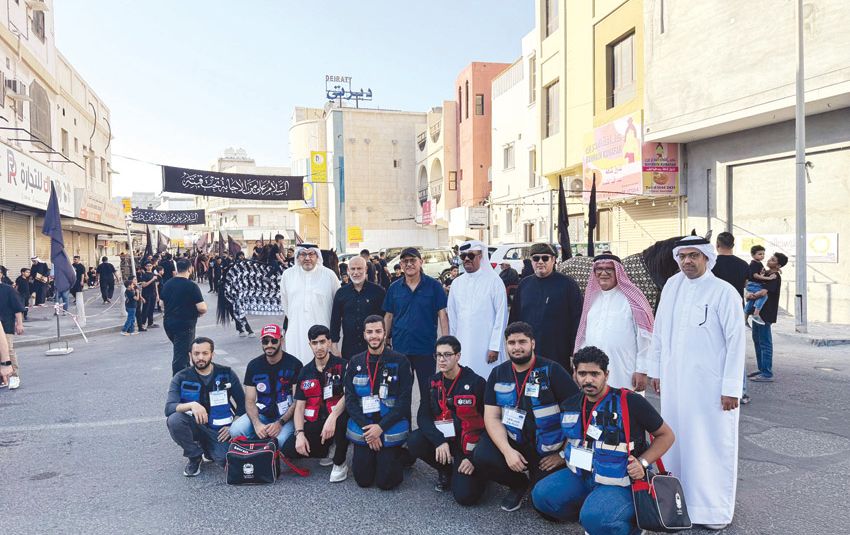
The Advisor for Community Affairs at the Ministry of Interior, Sheikh Abdul Hussain Al-Asfour, inspected the Duraz unified procession on the tenth day of Muharram, officials said. The inspection took place in Duraz within the Northern Governorate and was held in coordination with the Northern Governorate office, the local police directorate and the Ansar Al-Adalah matam on the day of Ashura.
The visit, attended by Deputy Governor of the Northern Governorate Brigadier Abdullah Al-Maantar and senior service and investment officers, focused on safety, crowd management and adherence to public order regulations. Officials from the Ministry of Interior and the governorate emphasized that the procession was conducted under established legal and organizational frameworks.
Security arrangements for the Duraz unified procession
Authorities said the security plan combined resources from community police, the General Directorate of Traffic, municipal services and the Paramedic Academy to ensure a safe Ashura season. Furthermore, the Northern Governorate coordinated with the Directorate of Police to deploy officers and provide logistical support throughout the procession route.
Officials described the arrangements as comprehensive: traffic control points, medical response teams and municipal teams were stationed to maintain cleanliness and public health standards. In addition, community policing units engaged with participants to promote compliance with safety protocols and to address concerns in real time.
Community partnership and organizational coordination
The procession was organized by Ansar Al-Adalah matam under the leadership of Salman Zayer Ali and carried out in partnership with the Northern Governorate and the police directorate. According to official statements, the collaborative approach aimed to reflect a civil and orderly commemoration of Ashura.
Additionally, the heads of services and research and services and investment, Sharif Abdullah and Essam Al-Khayyat respectively, participated to oversee municipal and infrastructural support. Their involvement underscored the multi‑agency nature of the event, combining security, civic services and community leadership to manage large public gatherings.
Operational measures and public safety outcomes
Officials reported that the procession proceeded without major incidents and that measures in place contributed to preserving public order. The General Directorate of Traffic implemented temporary routing to reduce congestion, while municipal crews ensured sanitation and site readiness before and after the event.
Medical teams from the Paramedic Academy established response points along the procession route and coordinated with local hospitals for potential transfers. Meanwhile, community police engaged in preventive patrols and information sharing to deter disorder and assist participants.
Why the inspection matters for the Ashura season
The advisor’s inspection highlighted the Ministry of Interior’s emphasis on regulated, safe observances during the Ashura season. Authorities said these oversight visits are intended to reinforce regulatory compliance and to strengthen partnerships between government agencies and community organizers.
Furthermore, the visible presence of senior officials was described as a reassurance to the public that the authorities are prioritizing safety and respectful commemoration. Therefore, the inspection serves both operational and symbolic functions, promoting disciplined observance and shared responsibility among stakeholders.
Support roles of participating agencies
Participating entities each had defined roles: community police focused on local engagement, traffic authorities managed vehicle flows, municipal services handled sanitation and public facilities, and paramedic teams provided on-site medical care. This division of responsibilities allowed for targeted responses and clearer command-and-control during the procession.
Authorities noted that coordination meetings were held prior to the event to align resources and communication channels. The practice of pre-event briefings is consistent with the Ministry of Interior’s standard approach to managing high-attendance public ceremonies during religious observances.
Implications for local governance and community relations
The inspection reinforced the Northern Governorate’s role in facilitating community events while safeguarding public order. Officials said the cooperative model helps to build trust between civic authorities and religious institutions and supports orderly civic participation during sensitive observances.
In addition, municipal and emergency service participation demonstrates an integrated governance model in which public services are mobilized to support community-led events. This model, according to official statements, is intended to reduce operational fragmentation and improve responsiveness during the Ashura season.
What to watch next
Residents and participants should expect continued monitoring and coordination from the Ministry of Interior and Northern Governorate across the remainder of the Ashura season. Officials indicated that similar joint plans will be implemented for other commemorations, and that follow-up assessments will be used to refine crowd-management and safety measures.
Authorities urged organisers to maintain compliance with established regulations and to coordinate logistics with relevant agencies in advance. Meanwhile, the public is encouraged to follow traffic advisories and safety guidance issued by the General Directorate of Traffic and local police.
Looking ahead, observers will be watching how lessons from the Duraz unified procession are applied to future events and whether the multi‑agency cooperation model yields measurable improvements in safety and community relations.