






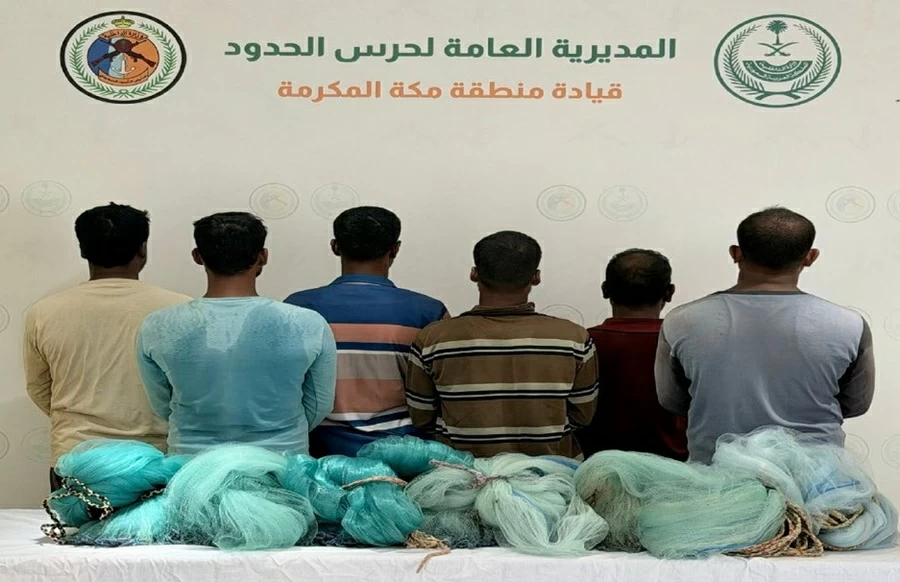

Illegal fishing in Saudi Arabia: Six detained in Al Lith coastal patrol
Saudi Border Guard coastal patrols in Al Lith, Makkah Region, recently detained six Bangladeshi residents for violating maritime safety and environmental rules by fishing without a permit and using prohibited equipment. The arrests were made during routine coastal surveillance, officials said, and the suspects were handed over to competent authorities for legal processing.
Details of the coastal patrol operation
The Border Guard statement indicates that the six individuals were intercepted while engaged in unlicensed fishing activities in Saudi territorial waters off Al Lith. Patrol units reported the discovery of banned tools and gear commonly associated with destructive fishing methods, which can harm marine habitats and protected species.
Therefore, authorities seized the equipment and initiated standard administrative and criminal procedures in coordination with other government entities responsible for maritime enforcement and immigration control, officials said. The operation is part of ongoing efforts by the Border Guard coastal patrols to enforce regulations in the kingdom’s marine zones.
Illegal fishing in Saudi Arabia: regulatory context and risks
Illegal fishing in Saudi Arabia undermines marine conservation and sustainable fisheries management, according to regional regulatory frameworks and statements from enforcement agencies. Unregulated gear and unpermitted harvest can damage coral reefs, seagrass beds, and juvenile fish stocks that underpin local fisheries and biodiversity.
Furthermore, the use of prohibited equipment increases the risk of incidental catch of protected species and exacerbates overfishing in sensitive coastal sectors. Officials emphasize that adherence to maritime safety and fishing permit rules is key to protecting living marine resources and the long-term economic interests of coastal communities.
Enforcement strategy and interagency coordination
Saudi Border Guard coastal patrols coordinate with local fisheries authorities, environmental regulators, and immigration agencies to ensure a comprehensive response to incidents of fishing without permit or other violations. According to the Border Guard, this multi-agency approach streamlines evidence collection, administrative actions, and potential criminal proceedings.
Additionally, authorities said seized items and documentation are examined to determine whether violations are isolated or part of wider networks that facilitate illegal entry, labor exploitation, or smuggling. Therefore, cooperation across ministries and regional offices is central to improving detection and prosecution rates for maritime offences.
Reporting channels and confidentiality assurances
The Border Guard urged the public to report any incidents that constitute environmental harm or illegal activity in Saudi marine areas. Callers in Makkah Region, Medina, Riyadh and the Eastern Region are asked to use 911, while callers in other regions may use 994, authorities said. Reports are handled confidentially and callers are not held liable for reporting violations.
Meanwhile, officials note that timely civilian reporting can speed response times and help enforcement teams locate and document ongoing offences. Therefore, community awareness and cooperation remain critical to protecting coastal ecosystems and deterring future violations.
Implications for migrant workers and employers
Incidents involving foreign residents underscore broader challenges related to labor compliance and the regulation of small-scale maritime enterprises. The Border Guard and partner agencies typically distinguish between criminal acts and administrative infractions tied to documentation or permit status, officials said.
Consequently, enforcement outcomes can range from fines and equipment confiscation to referral for immigration or criminal processing depending on the findings. Employers, vessel owners and crew operating in Saudi waters are reminded to ensure proper licensing and compliance with safety and environmental rules to avoid sanctions.
Secondary prevention and public outreach
Authorities have been increasing outreach to coastal communities and commercial operators to explain permit requirements, acceptable gear, and seasonal restrictions that protect spawning grounds. These initiatives are intended to reduce accidental noncompliance and foster voluntary adherence to conservation measures.
Furthermore, training and information campaigns aim to equip local fishers with alternatives to destructive practices and to promote registration and licensing procedures as part of long-term marine resource protection.
What to watch next
Officials said they will continue routine patrols and targeted inspections in Makkah Region and other coastal areas as part of a sustained enforcement effort. Observers should watch for follow-up releases from the Border Guard or cooperating agencies that provide details on legal outcomes and any broader enforcement patterns.
In the short term, stakeholders should monitor whether authorities announce additional measures, such as increased patrols, new reporting tools, or public education programs aimed at reducing illegal fishing in Saudi Arabia. These steps will indicate how enforcement and conservation priorities evolve in response to recurring maritime offences.
Forward-looking conclusion
The recent detention of six Bangladeshi residents by Saudi Border Guard coastal patrols highlights ongoing enforcement of maritime laws and the emphasis on marine resource protection. Going forward, authorities are expected to maintain coordinated inspections and public reporting channels to deter fishing without permit and other harmful activities.
Readers should watch for official updates on case outcomes and any policy adjustments from enforcement and fisheries bodies, as these will shape compliance expectations and the operational landscape for coastal operators in the kingdom.