






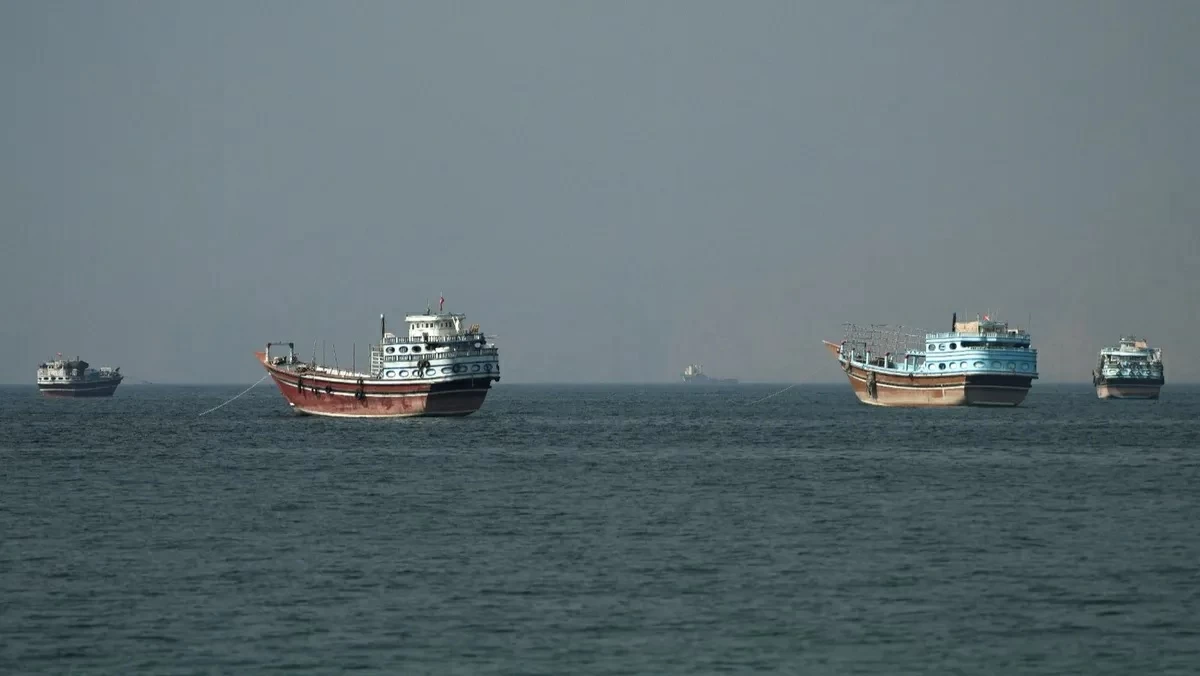

The Strait of Hormuz attack on a commercial tanker was reported Saturday, officials said, as maritime authorities and regional militaries scrambled to assess immediate risks to shipping. The Royal Navy-affiliated UK Maritime Trade Operations (UKMTO) said a vessel reported damage from an unknown projectile while transiting the strait; the report noted bridge damage but no crew injuries or pollution.
The incident follows a separate confrontation this week in which Iran’s forces struck a commercial ship, and the United States announced retaliatory strikes inside Iran. Authorities and shipping experts warn the sequence of events could further disrupt traffic through this vital oil and gas chokepoint.
Strait of Hormuz attack: reported damage and official accounts
According to a UKMTO statement posted on X, the master of the unnamed tanker reported that his ship had been struck by an “unknown projectile” while sailing in the Strait of Hormuz. The agency said the ship’s wheelhouse sustained damage but that there were no injuries among the crew and no immediate signs of environmental contamination.
Meanwhile, Iranian state media reported that additional vessels had sought permission from Iranian authorities to transit the strait after encountering what Tehran described as “unauthorized vessels” and receiving warning shots. These conflicting accounts reflect competing narratives from regional authorities and underscore the difficulty of independently confirming incidents in the busy waterway.
UKMTO guidance, shipping safety and Ever Lovely context
The UKMTO urged ships to “transit with caution” and to report any suspicious activity to maritime authorities, according to the advisory. Vessel operators were advised to follow established reporting mechanisms and to implement heightened watchkeeping measures while navigating the area.
Industry observers noted that the reported strike comes shortly after Iran was accused of attacking the container ship Ever Lovely during its passage near the Omani side of the strait. That earlier incident prompted the United States to carry out strikes against targets inside Iran, which U.S. Central Command (CENTCOM) said included missile storage sites, unmanned aerial vehicle facilities and coastal radar positions.
US strikes, CENTCOM statement and Iranian responses
The U.S. said its actions were aimed at degrading capabilities used in the Iranian attack on the commercial vessel, while Tehran claimed it had responded to American strikes by targeting U.S. military positions in the region. CENTCOM’s statement described the strikes as a “strong response” to the prior Iranian action, but U.S. officials did not immediately confirm Iran’s claim of additional retaliatory strikes.
These developments have raised concerns among shipping companies and insurers about the prospect of escalating exchanges that could affect commercial traffic. Furthermore, naval planners in the region may reassess transit corridors and force posture to protect merchant vessels.
Regional implications and maritime security risks
The Strait of Hormuz is a strategic maritime choke point through which a significant share of global oil and liquefied natural gas passes. Any uptick in hostile activity can drive higher freight rates, rerouting costs and insurance premiums, according to maritime analysts.
Furthermore, repeated incidents increase the risk of miscalculation between state forces and commercial mariners. Shipping companies may alter routes to avoid the strait, increasing voyage distances and delivery times, while naval escorts or convoy arrangements could be put in place temporarily to reduce exposure.
Secondary keywords and operational considerations
References to UKMTO advisories, the Ever Lovely incident and the recent U.S. strikes have already prompted several shipping registries and classification societies to review guidance for owners operating in the region. Maritime industry sources say that heightened watchkeeping, adjusted crewing protocols and contingency planning for medical evacuations and emergency repairs are prudent measures for vessels transiting the area.
What to watch next: investigations, advisories and diplomatic signals
Investigations into the most recent strike are ongoing, UKMTO officials indicated, and maritime authorities are coordinating with regional partners to determine the circumstances. Expect follow-up statements from CENTCOM, the U.S. State Department, Iranian military spokespeople and international shipping agencies in the coming days.
Diplomatic channels may also be active. The earlier memorandum of understanding reportedly signed between Tehran and Washington has not prevented these maritime confrontations, and governments will likely assess whether additional confidence-building measures or naval deconfliction protocols are needed to reduce the risk to commercial shipping.
For the shipping community and energy markets, the immediate indicators to watch are changes in maritime advisories, insurer war-risk premium adjustments, and any announcements of convoy arrangements or altered pilotage procedures through the Strait of Hormuz. These signals will inform whether the recent incidents represent episodic danger or the start of a more sustained period of tension.
Conclusion and expected next steps
The reported Strait of Hormuz attack on a commercial tanker adds to a string of incidents that have strained maritime security in the region. Officials have emphasized caution and investigation, but definitive attribution of responsibility remains uncertain. In the short term, readers should monitor updates from UKMTO, CENTCOM, and shipping advisory services as investigations continue and as regional leaders consider further diplomatic or military responses.