



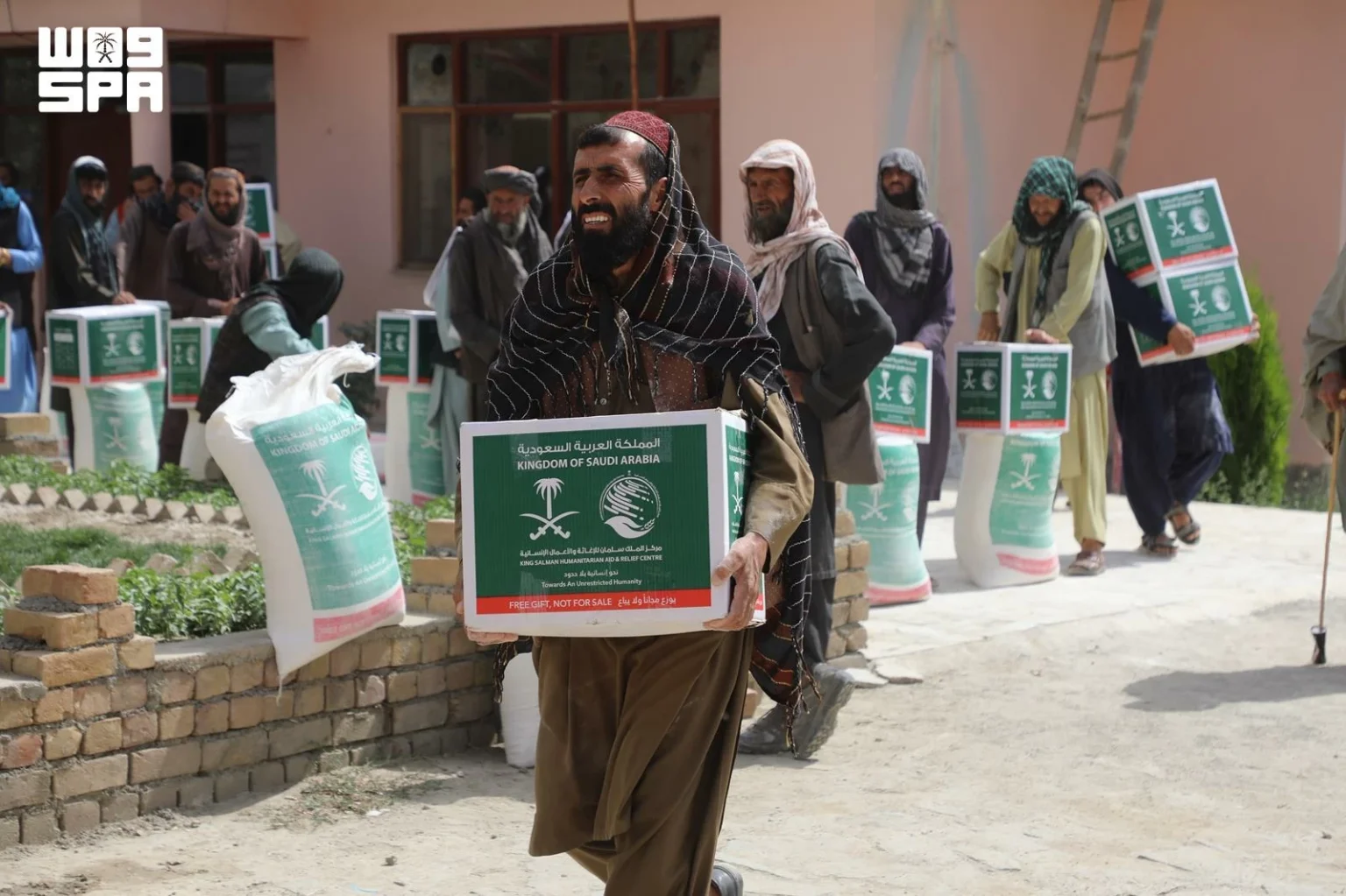

King Salman Humanitarian Aid and Relief Center expands food aid in Afghanistan
Saudi Arabia, through the King Salman Humanitarian Aid and Relief Center, recently distributed 60 food baskets to flood-affected families in Maidan Shahr in Maidan Wardak province, Afghanistan, benefiting 420 people from 60 households. The distribution forms part of a 2026 food security and emergency response project aimed at supporting communities hit by recent floods in central, eastern and southeastern Afghanistan.
Officials said the effort seeks to alleviate immediate needs among flood victims while the center coordinates further relief activities. Furthermore, humanitarian actors on the ground described the work as continuation of Saudi Arabia’s emergency relief support for the region.
King Salman Humanitarian Aid and Relief Center: immediate relief and scope
The King Salman Humanitarian Aid and Relief Center said the 60 food baskets included essential staples intended to cover basic household needs for several days. According to the center, the distribution targeted families whose homes and livelihoods were most affected by rising waters and seasonal storms in the area.
Meanwhile, local authorities and aid partners assisted with beneficiary identification and distribution logistics to ensure equitable delivery. Therefore, organizers emphasized monitoring to track needs and avoid duplication, officials said.
Context of the flood response and food security concerns
Afghanistan remains highly vulnerable to seasonal flooding, which compounds pre-existing food insecurity and displacement challenges. Flood victims often face damaged shelters, lost crops and interrupted supply chains, increasing demand for food aid and emergency assistance across affected districts.
Consequently, humanitarian groups have prioritized rapid distribution of food baskets and cash assistance to reduce the risk of further displacement. Additionally, the King Salman Humanitarian Aid and Relief Center’s project for 2026 is designed to address immediate nutritional needs while informing longer-term food security planning for vulnerable communities.
Distribution details and beneficiary impact
According to the center, the 60 food baskets reached 60 families, representing 420 beneficiaries in Maidan Shahr. Each basket included standard rations meant to support a household; distribution teams worked with community leaders to confirm recipient lists and arrange safe handover points.
Officials noted that such targeted distributions can stabilize household food access in the short term, reducing the urgency for families to resort to negative coping strategies. Furthermore, the assistance offers a bridge until markets recover and local harvests or income-generating activities are restored.
Coordination with local partners and operational challenges
Humanitarian operations in flood-affected areas require close coordination between international donors, local authorities and implementing partners. In this case, the King Salman Humanitarian Aid and Relief Center coordinated with provincial offices and community representatives to navigate damaged roads and limited storage facilities.
Logistical constraints, including access to remote villages and security considerations, remain challenges for sustained relief delivery. Therefore, aid agencies often combine in-kind food distributions with cash-based interventions and market assessments to adapt to changing conditions.
Secondary support measures and related initiatives
Beyond immediate food aid, relief efforts typically encompass shelter repair, water and sanitation services, and health referrals to reduce secondary humanitarian risks. The center’s stated project for 2026 aims to complement other emergency services to restore basic living conditions in affected districts.
Additionally, donor coordination forums and humanitarian clusters work to align relief with local needs assessments and seasonal preparedness plans. Such alignment seeks to improve efficiency and reduce gaps in service delivery to flood victims across central and southeastern Afghanistan.
What this aid means for local recovery
Short-term distributions like the 60 food baskets play a key role in stabilizing households after floods, but recovery requires sustained support and access to livelihoods. Officials said monitoring and follow-up will be necessary to determine further needs and to plan subsequent phases of assistance under the 2026 project.
Furthermore, effective recovery depends on restoring market access and rebuilding damaged infrastructure, which may take months depending on the severity of flood impacts. Therefore, humanitarian planners urge comprehensive assessments to guide medium-term recovery strategies.
Outlook and what to watch next
Observers should expect updates from the King Salman Humanitarian Aid and Relief Center on additional distributions or expanded assistance as the 2026 project progresses. Officials indicated the center will continue coordinating with partners to reach other vulnerable areas affected by flooding.
Meanwhile, readers should watch for assessments on longer-term food security conditions and announcements of complementary shelter or water, sanitation and hygiene interventions. In the coming weeks, further monitoring reports and beneficiary feedback will help shape the next steps in the humanitarian response.