






Service delivery outlets evaluation highlights top government performers
Al Buraimi and South Al Batinah governorates in Oman recently held ceremonies to recognize leading public entities following the 2025 service delivery outlets evaluation. The awards acknowledge institutions that scored highest on efficiency, citizen satisfaction and procedural quality. Officials said the recognitions aim to boost government service quality and to encourage continuous improvement across ministries and local administrations.
Who was honored and where the evaluations took place
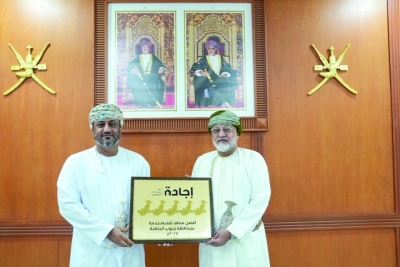
The Al Buraimi ceremony, presided over by Sheikh Saif bin Abdullah Al Maamari, Wali of Mahdha, celebrated the top five offices across the governorate. Winners included the Social Protection Fund office in Al Buraimi, the Al Buraimi Governorate office itself, the Directorate General of Housing and Urban Planning, the Directorate General of Agricultural Wealth and Water Resources, and the Directorate of Heritage and Tourism.
Meanwhile, in South Al Batinah, a separate event organized with the Ministry of Labour and attended by Dr. Yahya bin Suleiman Al Nadabi, Wali of Rustaq, honored four high-performing outlets. The list comprised the Social Protection Fund branch, the Directorate General of Labour, the Directorate General of Education, and the Directorate General of Agricultural, Fisheries and Water Resources for South Al Batinah.
Evaluation methodology and criteria used in the service delivery outlets evaluation
Officials explained that the service delivery outlets evaluation combined quantitative performance indicators with qualitative field observations to produce final scores. The methodology incorporated performance indicators, user satisfaction survey results, and in-person assessments of service processes and wait times. The process also included a visual presentation explaining how results were calculated and where improvements are most needed.
According to organisers, the approach is intended to identify both strengths and opportunities for enhancement. Therefore, the evaluation is positioned as a diagnostic tool to guide training, process redesign and resource allocation, all aimed at improving government service quality across governorates.
Recognition of trainers and implementation teams
Both ceremonies featured awards for certified trainers and administrative teams who supported the implementation of the national “Ejada” (Excellence) system in Al Buraimi and South Al Batinah. The recognition acknowledged their roles in delivering training programs and coordinating the institutional steps required to meet assessment standards.
Local directors and training staff were commended for facilitating capacity-building sessions and for helping frontline personnel adopt practices that directly affect citizen satisfaction. Organisers said sustained training will be critical to maintain gains and to spread best practices to lower-performing outlets.
Officials’ perspectives and implications for service improvement
Hilal bin Salem Al Shamsi, director of the Social Protection Fund office in Al Buraimi, noted that advancing service quality begins with understanding beneficiary needs and continually refining procedures. He said the award serves as motivation to pursue practical solutions that simplify access and improve outcomes for users. Officials emphasized that citizen feedback remains a primary driver of reforms.
Additionally, ministry representatives highlighted that repeated evaluations foster transparency and create benchmarks that other offices can emulate. Therefore, the program is expected to encourage inter-agency learning and to accelerate adoption of digital, customer-centred practices that reduce processing times and increase accountability.
How results will shape future policies and local initiatives
The feedback from field visits and satisfaction surveys will inform targeted improvement plans at the departmental and governorate levels. Authorities indicated that identified gaps will be addressed through tailored training, process automation where appropriate, and enhanced monitoring frameworks. The evaluations also offer a baseline for measuring progress in subsequent assessment cycles.
Furthermore, officials suggested that periodic publication of aggregated results could help the public track service delivery trends and hold institutions accountable. Therefore, the evaluation process is being positioned as an integral component of broader public sector reform efforts focused on measurable outcomes.
What citizens and stakeholders should expect next
Going forward, stakeholders should expect follow-up actions that include corrective measures for lower-scoring outlets and dissemination of best practice guides for frontline staff. Organisers said that additional training rounds and technical support will be scheduled over the coming months to consolidate improvements highlighted by the service delivery outlets evaluation.
Meanwhile, agencies that received awards will be encouraged to document process changes and share lessons learned with peer institutions. Citizens can watch for updated performance reports and new service channels as authorities implement recommended enhancements.
Conclusion and next steps
The governorate-level ceremonies in Al Buraimi and South Al Batinah underline a broader push to enhance government service quality and to elevate citizen satisfaction through structured assessments. According to official statements, the evaluation findings will guide training, digital initiatives and process reforms over the next year. Observers should watch for the next evaluation cycle and for published follow-up plans that detail timelines and measurable targets for service improvement.