






Qatar-Iran talks aim to revive US-Iran dialogue
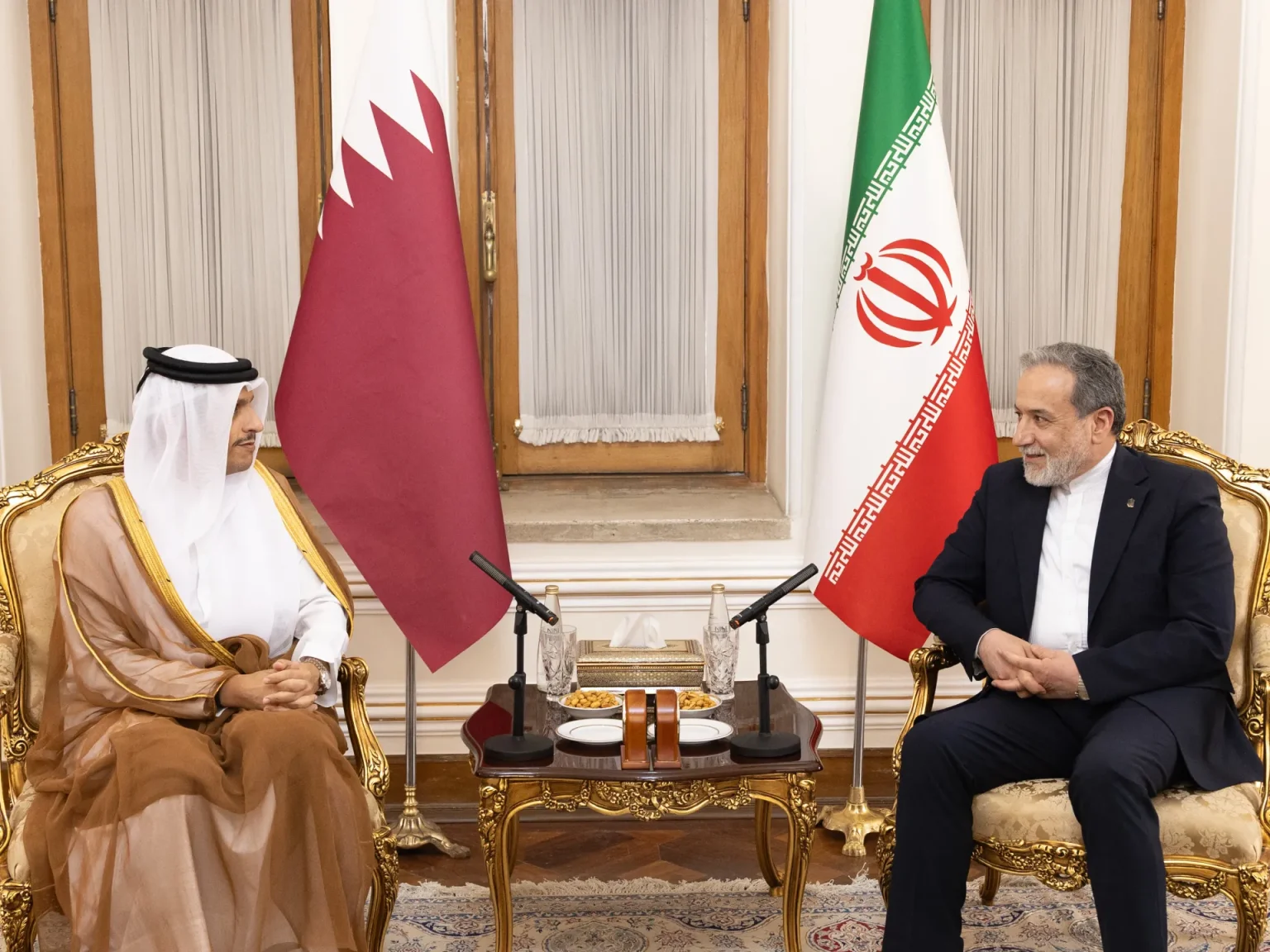
Qatar’s prime minister and foreign minister, Sheikh Mohammed bin Abdulrahman Al Thani, visited Tehran on Thursday in a bid to relaunch talks between Washington and Tehran, according to a statement from the Qatari foreign ministry. The Qatar-Iran talks in Tehran focused on lowering tensions, restoring freedom of navigation in the Strait of Hormuz and creating conditions for renewed diplomatic mediation between the United States and Iran.
During the visit, Sheikh Mohammed met Iran’s deputy foreign minister Abbas Araghchi to review regional developments and to discuss a proposed phased framework that includes establishing a temporary joint maritime corridor and a cooperative mine-clearing project in the strait, the ministry said.
Negotiations focus on Strait of Hormuz and maritime security
The agenda in Tehran centered on the Strait of Hormuz, where shipping and oil flows have been severely disrupted since the outbreak of hostilities in late February. Regional estimates indicate daily oil transit through the strait has dropped to about 5 million barrels from roughly 20 million barrels before the conflict. Therefore, assuring freedom of navigation is a priority for Gulf states and global markets.
Qatari officials emphasized the need to return maritime traffic to pre-crisis levels through coordinated measures. The proposed temporary maritime corridor and joint mine-clearance plan are intended to provide immediate confidence-building steps while diplomatic mediation continues, the Qatari statement said.
Meanwhile, Iranian officials reiterated their conditions for any de-escalation linked to maritime arrangements: an end to restrictions on certain Iranian ports and relief from U.S. economic pressures. Iran’s foreign ministry spokesman confirmed that discussions would also examine ways to expand bilateral ties and coordinate regional security steps.
Regional diplomatic mediation by Qatar, Oman and Pakistan
Qatar’s engagement follows a sequence of regional mediation efforts that began through Oman and advanced via a Pakistan-backed channel supported by Doha. Qatar has positioned itself as an active intermediary, drawing on a track record of facilitating talks in the Gulf and beyond. Qatari diplomats argue that sustained diplomatic mediation is the most feasible route to reducing risks of further escalation and restoring normal trade routes.
Observers note that Doha’s role complements other regional initiatives: Muscat has hosted earlier confidential talks and Islamabad has contributed senior-level outreach, including visits by military officials to Tehran. Therefore, the Qatar-Iran talks are part of a multi-track mediation approach aimed at producing incremental, verifiable steps rather than an immediate comprehensive settlement.
According to analysts, the key remaining obstacle is coordination with Washington. U.S. officials have shifted emphasis toward economic pressure and sanctions following a lull in direct military actions, and any maritime accord is likely to require some U.S. concurrence, particularly if it affects sanctions or port access.
Implications for energy markets and shipping
Restoring a predictable flow through the Strait of Hormuz would have immediate economic effects. Global energy markets are sensitive to route disruptions; therefore, even partial reopening of the strait could ease some upward pressure on fuel prices and reduce the need for costly rerouting. Shipping companies and insurers are closely monitoring the talks for signals about security guarantees and mine-clearance timelines.
Furthermore, a successful phased agreement would reduce the risk of broader regional spillover that could involve commercial and military assets. Diplomatic mediation that delivers concrete, verifiable measures could strengthen confidence among Gulf states, reassure international buyers, and stabilize supply chains that have been strained by prolonged uncertainty.
Challenges, conditions and diplomatic trade-offs
Despite cautious optimism from mediators, Tehran insists on connecting any maritime confidence-building to relief from economic constraints. Officials in Iran have framed de-escalation as contingent on addressing what they call the blockade of certain ports and the reinstatement of commitments that collapsed after earlier memoranda of understanding failed to be implemented.
Conversely, Washington has signaled that it will not quickly reverse punitive measures without reciprocal steps and robust verification. Therefore, negotiators face the delicate task of sequencing measures so that neither side feels it is conceding security or diplomatic leverage prematurely.
Diplomatic sources suggest negotiators are exploring a modular approach: immediate operational steps to secure navigation, followed by parallel political talks that could address sanctions and port access. Such sequencing would allow for measurable progress while keeping the broader negotiation framework flexible.
What to watch next
Key indicators to watch in the coming days are whether Tehran and Doha issue a joint communiqué detailing the maritime corridor plan, the timeline for mine-clearance operations, and any technical monitoring arrangements. Equally important will be statements from Washington indicating whether it views the proposed steps as sufficient to justify adjustments to economic pressure measures.
Regional governments and energy market participants will also follow subsequent meetings in Muscat, Islamabad or Geneva, where further trilateral or multilateral consultations could take place. Observers expect more talks over the next few weeks as mediators seek to consolidate incremental agreements into a sustainable de-escalation track.
Forward outlook: cautious diplomacy and phased progress
The Qatar-Iran talks in Tehran underscore Doha’s intensified diplomatic mediation efforts to defuse a crisis that threatens regional stability and global trade. While a breakthrough cannot be guaranteed, the focus on practical maritime measures — combined with multi-track consultations involving Oman and Pakistan — offers a pathway to stabilize navigation and open space for broader negotiations.
Readers should watch for concrete operational steps, any joint statements confirming timelines for mine-clearance and corridor implementation, and Washington’s public response. These elements will determine whether the current phase of diplomatic mediation translates into measurable reductions in risk and a credible reopening of the Strait of Hormuz.