






Quran memorization camps conclude in Ja’lan Bani Bu Ali
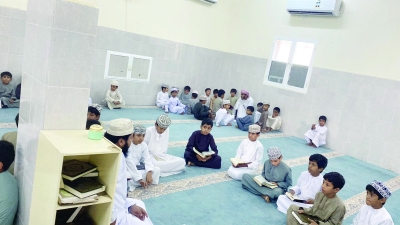
Quran memorization camps organized in the Wilayat of Ja’lan Bani Bu Ali concluded this week, drawing more than 1,000 students and over 40 instructors, officials said. The Department of Awqaf and Religious Affairs in South Al Sharqiyah Governorate supervised the sessions as part of wider summer programs that ran during school break. Participants included volunteer teachers alongside ministry staff who led memorization and recitation work.
Program scope and organization
The Quran memorization camps ran across multiple mosques and community centers in the wilayat, offering structured lessons focused on both preservation and proper recitation. The department stated the initiative aimed to combine memorization with tajweed, or recitation rules, while embedding ethical instruction drawn from the Quran. Furthermore, the sessions sought to make productive use of the summer holiday through organized religious education.
Officials noted that the camps operated daily with age-appropriate classes, assessment checkpoints, and supervised study periods. Volunteer teachers, supported by ministry employees, provided one-on-one coaching for students who showed aptitude in memorization and recitation. The initiative formed part of a broader set of summer programs implemented by the department across South Al Sharqiyah.
Curriculum emphasis and teaching methods
Leaders of the program emphasized a balanced curriculum that paired rote memorization with understanding and vocal proficiency. Instructors used short, repeatable lesson blocks, group recitation exercises, and personalized feedback sessions to help students internalize passages. Additionally, the curriculum included lessons on moral conduct and community service to reinforce the ethical dimensions of religious education.
According to the department, teachers assessed progress through regular oral tests and encouraged peer learning to build cooperation among students. The camps also incorporated activities designed to foster concentration and retention, while maintaining an environment that respected cultural and religious norms.
Community engagement and volunteer involvement
Volunteerism featured prominently in the camps, with more than 40 teachers drawn from local religious and community networks assisting ministry staff. The collaboration aimed to strengthen ties between families, mosques, and educational authorities. Parents reportedly participated in periodic review sessions, reinforcing home-based practice and supporting student progress.
Meanwhile, organizers said the program helped cultivate a culture of service by involving older students and volunteers in mentoring roles. This approach intended to raise leadership skills among youth while expanding the program’s capacity to reach a larger number of participants during the summer period.
Outcomes and student development
Preliminary assessments indicate the camps contributed to measurable improvements in memorization and recitation fluency for many participants. Teachers identified several students who displayed strong potential for continued study, and plans were discussed to provide advanced guidance for those learners. Furthermore, the camps reportedly strengthened students’ sense of discipline and communal belonging.
Officials also highlighted the role of the program in reinforcing the mosque’s position as a hub for education and social development. By integrating memorization and recitation with ethical instruction, the department sought to nurture a generation that combines knowledge of the text with practical application in daily life.
Policy context and institutional goals
The camps fit within the department’s strategic aim to promote religious education and enhance the role of mosques in youth development. The Department of Awqaf and Religious Affairs in South Al Sharqiyah Governorate described the initiative as part of ongoing efforts to support Quranic literacy and preserve religious heritage. Officials framed the project as a complement to formal schooling rather than a substitute for it.
Related secondary keywords tied to the effort include religious education, summer programs, and memorization and recitation, all of which reflect the multifaceted objectives of the camps. The department indicated that similar programs would be evaluated and potentially expanded based on results and community feedback.
Challenges and lessons learned
Organizers acknowledged logistical and pedagogical challenges, including coordinating volunteer schedules and tailoring instruction for varied learning speeds. The department said these issues informed adjustments during the sessions, such as grouping students by proficiency and increasing mentor-led practice slots. Additionally, maintaining consistent family engagement emerged as an area for further outreach.
Training for volunteer teachers received attention as a priority for future iterations, with officials suggesting enhanced orientation on teaching methods and student assessment. These refinements aim to standardize the quality of instruction across sites within the governorate.
Looking ahead: next steps and timeline
Officials said the department will review evaluation data and community feedback in the coming weeks to shape follow-up activities. Plans under consideration include targeted programs for high-performing students, expanded volunteer training, and more structured parent engagement components. Meanwhile, the department indicated it will announce any changes to the summer programs ahead of the next school vacation cycle.
Readers should watch for formal statements from the Department of Awqaf and Religious Affairs in South Al Sharqiyah Governorate regarding program expansion and future schedules. Continued monitoring will show whether the model is scaled to other districts and how it influences longer-term religious education efforts in the region.