






Gaza ceasefire roadmap moves forward after Qatari talks
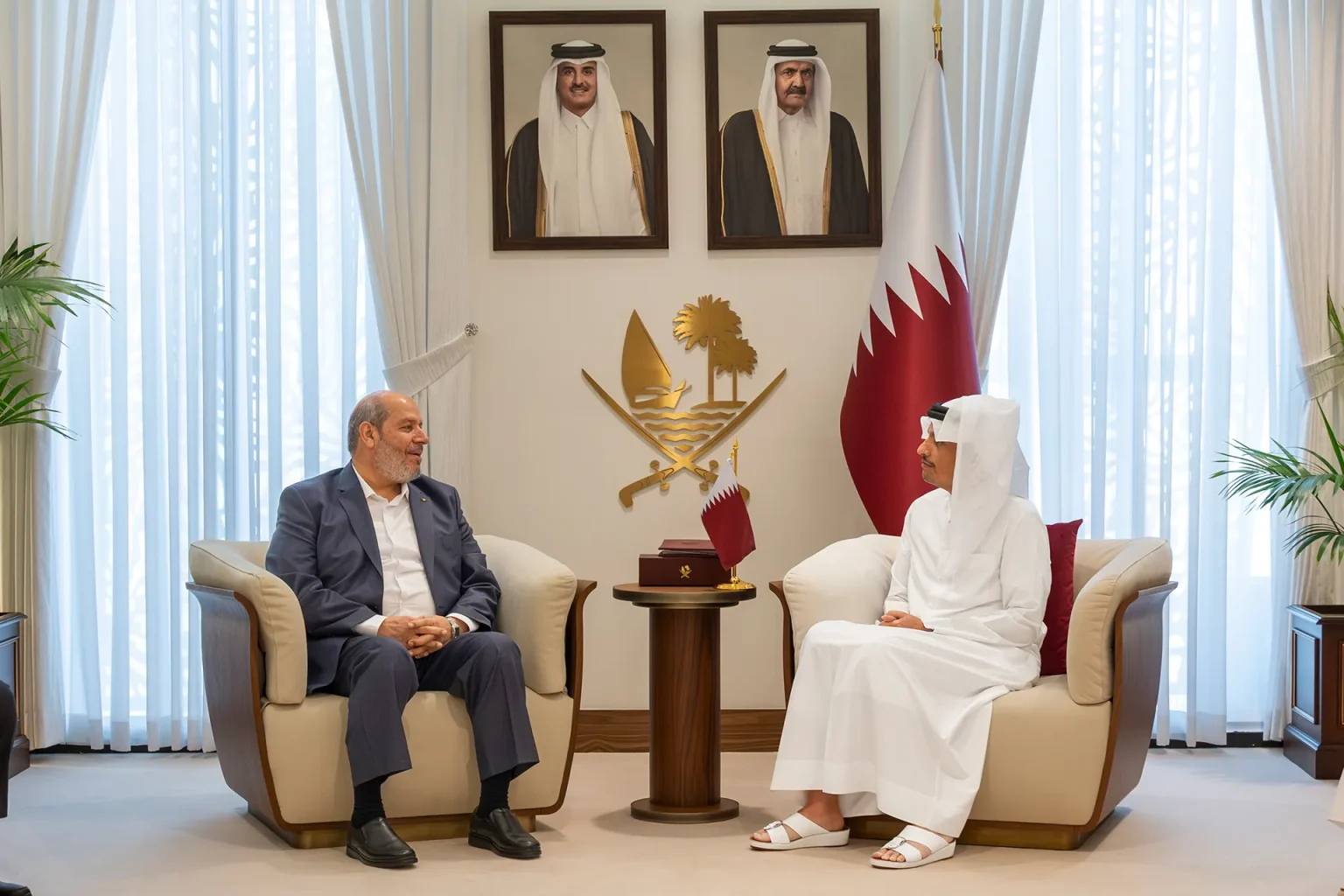
Qatar’s prime minister and foreign minister, Sheikh Mohammed bin Abdulrahman Al Thani, met on Wednesday with Khalil al-Hayya, head of Hamas’s political bureau, and other movement leaders to discuss developments in Gaza and the occupied Palestinian territories. The meeting, held in Doha, addressed the Gaza ceasefire roadmap and signaled Doha’s role in facilitating progress toward implementation of the next phase of the ceasefire agreement.
Details of the Qatari-Hamas meeting
According to a statement from the Qatari Foreign Ministry, Sheikh Mohammed praised Hamas’s decision to accept the roadmap designed to complete phase two of the ceasefire. The ministry said the discussions focused on operational steps to ease civilian suffering, allow humanitarian access, and move toward reconstruction efforts. Meanwhile, Hamas leaders outlined their conditions for compliance and coordination with mediators.
Qatar diplomacy has been central to these exchanges, the ministry added, with Doha acting as a principal interlocutor between Gaza representatives and international mediators. Additionally, officials highlighted that the roadmap acceptance reflects a willingness to move beyond temporary pauses in hostilities toward a more durable cessation.
International response and diplomatic hurdles
Regional and international actors have intensified diplomatic activity around the ceasefire agreement, with U.S. envoy Jared Kushner reported to have met Hamas leadership earlier with mediators present. However, progress toward the second phase has faced setbacks, as Israeli authorities reportedly rejected the 15-point roadmap adopted by the Peace Council, which calls for Israeli withdrawal, expanded aid deliveries, and the start of reconstruction.
Ministers from eight Arab and Muslim-majority countries publicly held Israel responsible for obstructing efforts to establish peace in Gaza and the occupied territories. These statements, officials said, underscore the political friction surrounding implementation and the need for sustained pressure on parties to meet their commitments under the ceasefire agreement.
What the roadmap contains
The roadmap, as presented by regional mediators, comprises a series of measures aimed at moving from a temporary halt in fighting to a structured phase two. Elements include phased Israeli withdrawal from populated areas of Gaza, scaled-up and uninterrupted humanitarian access, and mechanisms for monitoring compliance. Furthermore, the plan envisages initial steps for reconstruction and restoration of basic services for civilians.
Observers note that the roadmap is designed to be incremental, allowing international actors and local authorities to verify compliance at each stage before proceeding. Therefore, implementation depends on coordinated political will, security arrangements, and logistical support from donors and aid organizations.
Implications of Hamas acceptance and Qatar diplomacy
Hamas acceptance of the Gaza ceasefire roadmap carries political and humanitarian implications. For civilians in Gaza, officials said the transition to phase two could bring substantive relief through increased aid deliveries and the start of rebuilding critical infrastructure. In contrast, political acceptances do not automatically resolve underlying security and governance disputes, which require parallel diplomatic efforts.
Qatar diplomacy has sought to bridge gaps by hosting talks and conveying proposals among stakeholders. Doha’s engagement has included offering logistical and political channels for continued negotiation, according to the Qatari ministry. Therefore, Qatar aims to leverage its relationships to translate the roadmap into tangible steps on the ground.
Challenges to implementation and verification
Implementation faces several practical challenges: securing Israeli agreement to the withdrawal timeline, ensuring safe corridors for humanitarian convoys, and establishing impartial monitoring mechanisms. Humanitarian agencies have warned that access and security remain fragile, and that any disruption could reverse early gains. Additionally, the political legitimacy of enforcement mechanisms remains contested among regional actors.
Moreover, continued violations reported by Palestinian sources and international monitors complicate trust-building. Consequently, mediators are pushing for clear, verifiable benchmarks and international guarantees to reduce the risk of renewed hostilities as phase two unfolds.
What comes next and what to watch
Officials indicated that the next steps will involve coordination among mediators, the parties to the agreement, and international stakeholders to convert the roadmap into an actionable sequence. Observers should watch for formal endorsements or reservations from Israeli authorities, the timetable for humanitarian convoys, and specific commitments by donor states for reconstruction funding. Furthermore, monitoring arrangements and third-party verification will be crucial signals of whether phase two can proceed.
Looking ahead, expect further diplomatic rounds in Doha and other capitals, along with technical meetings to address logistics and protection of civilians. The pace of progress will depend on political concessions and operational capacities at the border crossings and within Gaza.
Conclusion: cautious optimism amid continuing uncertainty
The Qatari-hosted meeting and Hamas acceptance of the Gaza ceasefire roadmap mark a notable diplomatic step, yet significant obstacles remain before phase two can be realized. International pressure, verification mechanisms, and concrete security arrangements are essential to translate acceptance into relief for civilians and a more stable environment. Readers should watch for follow-up statements from mediators and any formal Israeli response in the coming days and weeks.