




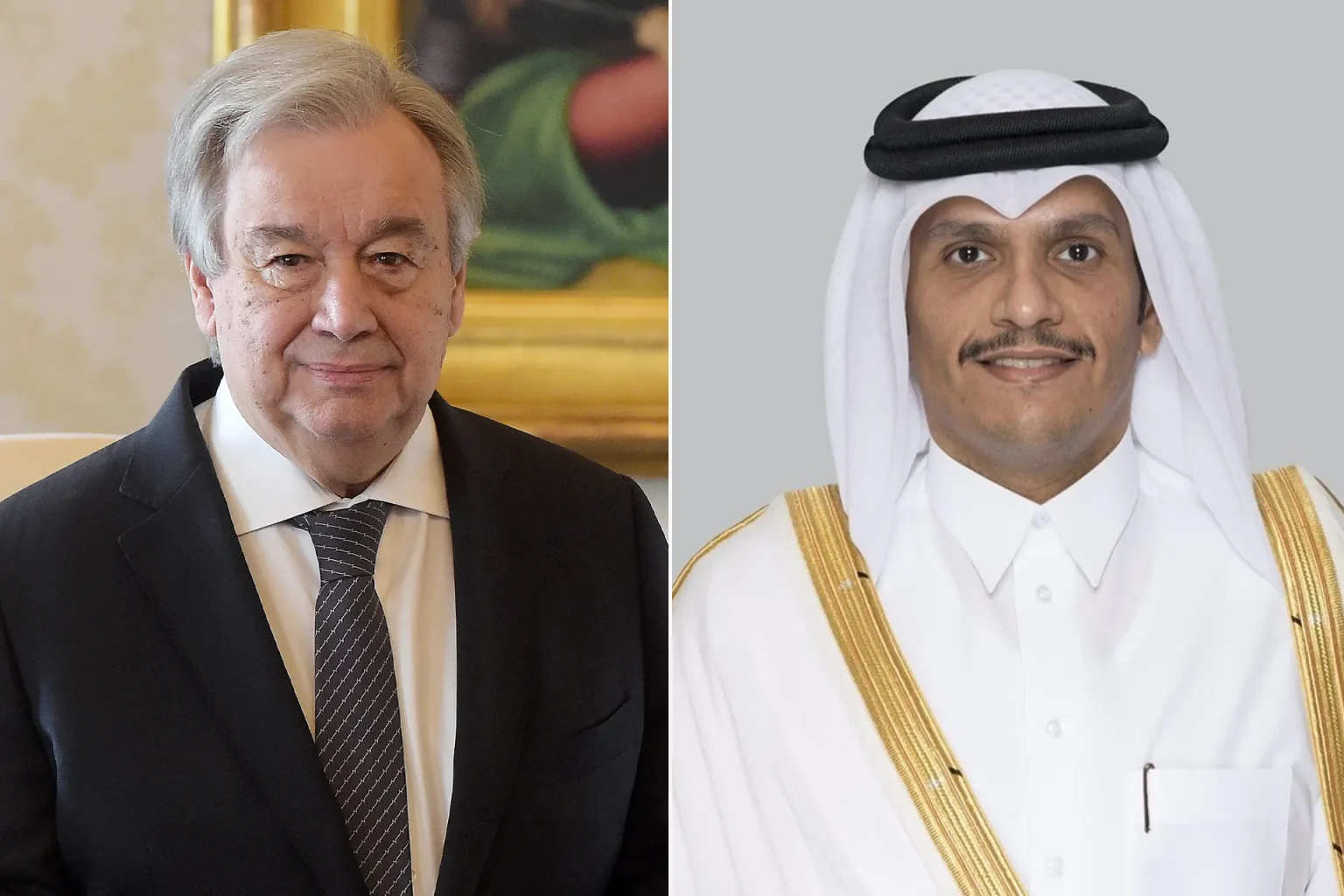

Qatar has publicly welcomed the US-Iran agreement after a telephone discussion on 15 June 2026 between Prime Minister and Minister of Foreign Affairs Sheikh Mohammed bin Abdulrahman Al Thani and United Nations Secretary-General António Guterres. The call focused on the new US-Iran agreement and broader efforts to reduce tensions, protect maritime routes and reinforce regional stability in the Gulf.
The discussion, confirmed by the Qatari Foreign Ministry, took place amid international efforts to consolidate a memorandum of understanding between Washington and Tehran. During the exchange, officials also reviewed diplomatic avenues for cooperation with the United Nations and reiterated support for peaceful dispute resolution in the Middle East.
Qatar response to US-Iran agreement
Qatar’s government issued a formal statement expressing approval of the US-Iran agreement, calling it a constructive step toward sustainable peace and economic recovery across the region. The Qatari Foreign Ministry noted the agreement’s potential to ease immediate security concerns and to open channels for political dialogue.
Furthermore, Doha highlighted the role of negotiation and diplomacy in resolving longstanding disputes, according to the ministry’s account. Meanwhile, Qatari officials underscored appreciation for third-party mediation efforts, including Pakistan’s contributions, which they said helped lower tensions and facilitate the understanding between the parties.
Details of the Doha call and international cooperation
During the call on 15 June, Sheikh Mohammed and Secretary-General Guterres discussed steps to strengthen cooperation between Qatar and the United Nations on peace-building and humanitarian coordination. Officials said the two leaders reviewed recent regional developments and explored ways the UN could support confidence-building measures.
In addition, the Qatari statement emphasized that Doha will continue to back multilateral approaches that align with international law and good-neighbourly relations. Therefore, Qatar signaled readiness to assist UN-led efforts aimed at de-escalation, mediation and the protection of civilian populations affected by regional tensions.
Regional actors and facilitation
According to official accounts, Pakistan and several other regional actors played a facilitative role in reaching the agreement between the United States and Iran. These diplomatic interventions, the ministry said, demonstrate how regional and international cooperation can produce pragmatic outcomes that limit the risk of wider confrontation.
Additionally, the exchange with the UN chief reflected Doha’s intent to coordinate closely with international partners on follow-up steps and implementation mechanisms. This will likely include confidence-building activities and monitoring arrangements to ensure compliance and reduce the risk of renewed escalation.
Implications for Gulf security and freedom of navigation
The US-Iran agreement includes provisions aimed at guaranteeing the safe passage of vessels through strategic waterways, notably the Strait of Hormuz, which is vital for global energy supplies. Doha welcomed this aspect of the deal as a measure to secure maritime trade and to reduce the economic fallout of heightened naval tensions.
Gulf security experts say that while the agreement may lower immediate risks to commercial shipping, it will require sustained verification and multilateral oversight to be effective. Furthermore, regional de-escalation depends on parallel diplomatic initiatives and confidence-building measures, according to analysts monitoring the situation.
Qatar stressed that protecting freedom of navigation is in the shared interest of regional states and global markets, and that cooperative patrols, transparent incident-reporting mechanisms and judicial frameworks could strengthen long-term maritime security. Therefore, the country called for continued dialogue among littoral states, international naval partners and the United Nations.
Why the agreement matters and possible challenges
Officials noted that the US-Iran agreement represents a diplomatic pivot that could reduce the risk of direct confrontation and enable renewed focus on political and economic priorities across the Middle East. For Qatar, the agreement aligns with Doha’s stated policy of promoting negotiation over confrontation.
However, observers caution that the agreement’s durability will depend on practical measures, mutual confidence and the avoidance of provocations that could undo progress. Additionally, questions remain about enforcement, third-party verification and how broader bilateral disputes will be managed going forward.
Qatar’s role and next steps for implementation
Qatar reaffirmed its support for initiatives that enhance regional security and stated its readiness to assist in mediation or follow-up diplomatic engagements, as appropriate. The Foreign Ministry indicated that Doha will remain engaged with UN forums and regional partners to help translate the agreement into concrete, lasting measures.
Officials said the immediate next steps will likely involve technical talks on maritime security arrangements and coordinated diplomatic outreach to ensure that all parties observe the accord’s terms. Meanwhile, the UN’s involvement is expected to focus on monitoring, reporting and offering mediation support where disputes persist.
Conclusion and what to watch next
Qatar’s welcome of the US-Iran agreement signals cautious optimism among regional states that diplomacy can reduce tensions and protect key trade routes. Observers should watch for formal implementation steps, UN monitoring plans and any follow-up consultations involving Qatar, Pakistan and other regional stakeholders over the coming weeks.
In the short term, attention will turn to practical measures to safeguard freedom of navigation, the establishment of verification mechanisms and continued high-level diplomacy to prevent setbacks. Therefore, monitoring statements from the Qatari Foreign Ministry, the United Nations and the parties to the agreement will be essential to assess whether the accord delivers sustained regional stability.