




Qatar mediation efforts in Washington-Tehran talks
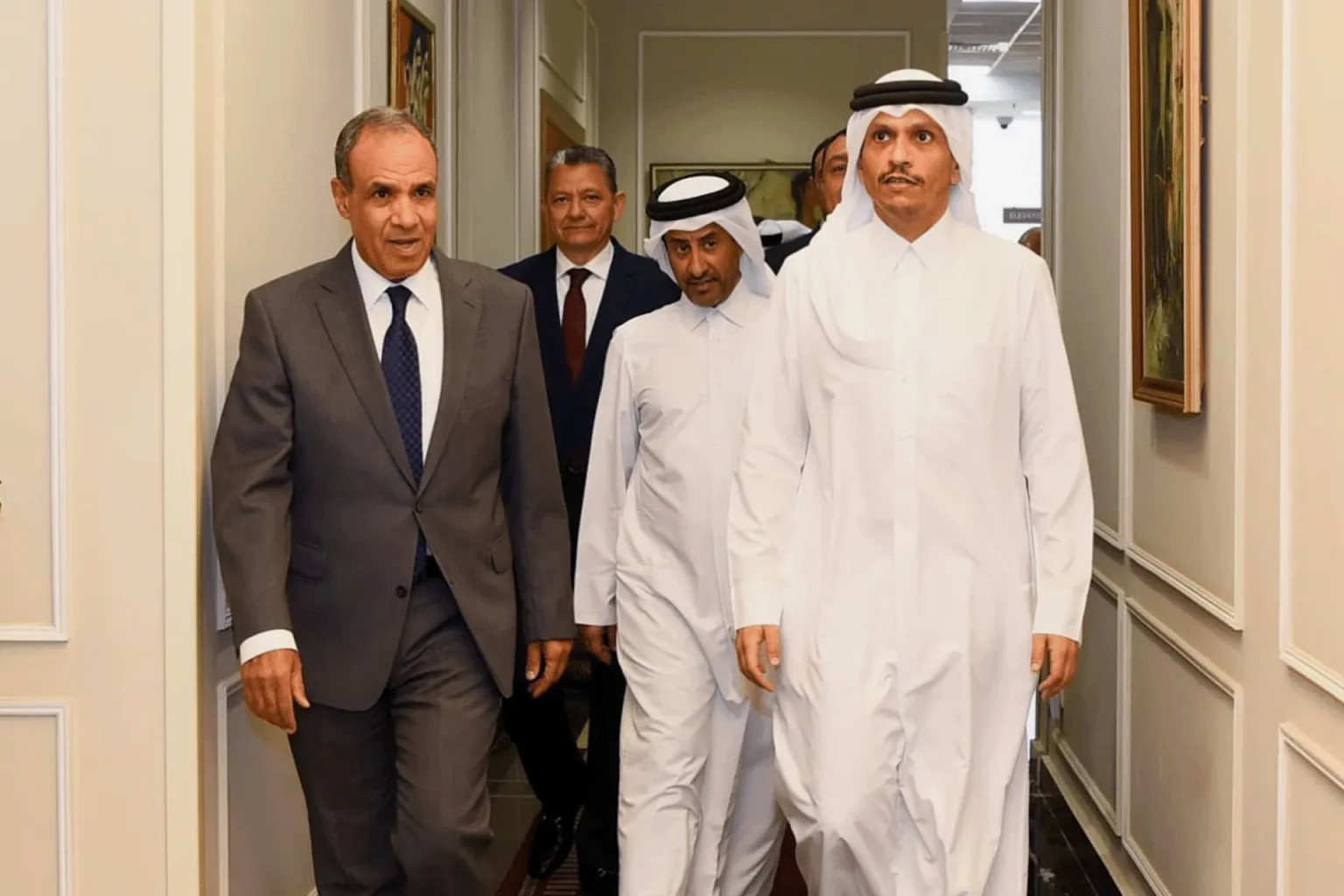
Qatar mediation efforts were at the center of a high-level meeting in Cairo on July 6, 2026, when Qatar’s prime minister and foreign minister, Mohammed bin Abdulrahman Al Thani, met Egyptian Foreign Minister Badr Abdelatty to coordinate support for ongoing U.S.-Iran talks. The discussion, officials said, focused on backing diplomatic channels that seek a durable agreement between Washington and Tehran.
Details of the Cairo meeting
The meeting took place in Cairo and was described in a statement from the Qatari Ministry of Foreign Affairs. Qatar’s prime minister emphasized the need for all parties to engage constructively with mediators in order to address the roots of the crisis through peaceful dialogue, the ministry said.
Additionally, the ministers reviewed recent developments in Lebanon and the occupied Palestinian territories and discussed ways to deepen bilateral cooperation. Meanwhile, both sides expressed hope that diplomacy will yield a sustainable settlement that prevents renewed escalation.
Diplomatic context and U.S.-Iran talks
Qatar has been active as a mediator in regional disputes and has played a recurring role in communications between Washington and Tehran. Furthermore, officials in Cairo and Doha signaled that they want any agreement to take into account Gulf security concerns as part of broader regional stability, according to participants and the Qatari statement.
The talks between the United States and Iran briefly paused before resuming, and attention returned to a possible memorandum of understanding after a short halt in exchanges. President Donald Trump stated on July 6 that the United States would not preemptively lift asset freezes or sanctions as part of any preliminary deal, while adding that Washington is near an agreement, according to U.S. statements.
Regional diplomacy and Gulf security
Egypt and Qatar stressed that any emerging accord must address the security anxieties of Gulf states, officials said. Therefore, the meeting in Cairo included discussions of how to ensure that a U.S.-Iran understanding would not undermine Arab regional security or national defense postures.
Related secondary keywords such as Gulf security and regional diplomacy were raised repeatedly by both sides as they assessed possible safeguards, confidence-building measures, and verification mechanisms that could accompany a diplomatic settlement.
Responses from Tehran and Islamabad
Reactions from Tehran were mixed. Iranian Parliament Speaker Mohammad Bagher Ghalibaf publicly questioned Washington’s seriousness about the talks, reflecting domestic skepticism in Tehran about the prospects of a comprehensive accord, according to regional reporting.
Separately, Iranian Foreign Ministry channels received Pakistan’s interior minister, Mohsin Naqvi, who delivered a message from Pakistan’s army chief, Asim Munir, to Iran’s leadership, Iranian media reported. That exchange underscores how neighboring states are engaging around the negotiations and highlights the interplay between bilateral ties and wider strategic concerns.
Why Qatar’s role matters
Qatar’s mediation efforts carry influence because Doha maintains working relations with a range of regional and international actors, allowing it to act as an interlocutor when direct U.S.-Iran communication is constrained. Moreover, Qatar’s position as host to international diplomatic platforms and its track record in shuttle diplomacy lend credibility to its facilitation role.
Therefore, Qatar’s involvement could help bridge gaps by relaying proposals, clarifying red lines, and promoting incremental confidence-building steps that support a larger diplomatic outcome, observers say.
Risks, verification and regional buy-in
Analysts caution that any U.S.-Iran understanding will need clear verification measures to satisfy skeptical domestic audiences on both sides. Furthermore, Gulf states and regional partners are likely to demand concrete security guarantees before endorsing an agreement, complicating swift implementation.
Consequently, mediators such as Qatar and Egypt have been working to ensure that the diplomatic process incorporates consultations with regional stakeholders, which could include security arrangements, limits on certain activities, and mechanisms for dispute resolution.
Implications for Lebanon and the Palestinian territories
During the Cairo meeting, ministers also discussed the latest developments in Lebanon and the occupied Palestinian territories. Cairo and Doha reiterated support for diplomatic efforts to de-escalate tensions and to promote humanitarian access, according to the Qatari foreign ministry statement.
These conversations reflect a broader regional agenda in which progress on U.S.-Iran talks is linked to wider stability objectives across the Levant and the Gulf.
Next steps and what to watch
Officials said the two countries will continue coordinating diplomatic outreach to support the mediation process. In the coming days, observers should watch for follow-up contacts between Doha, Cairo, Tehran and Washington, as well as any formal exchanges of proposals or timelines from mediators.
Meanwhile, U.S. and Iranian domestic statements will be key indicators of whether negotiators are converging on text that addresses sanctions, asset freezes, and regional security concerns. Therefore, diplomatic activity and official communiques remain the best immediate signals of progress.
Conclusion and outlook
Qatar mediation efforts in coordination with Egypt reflect a concerted regional push to back U.S.-Iran talks and to shape any outcome so it reinforces Gulf security and regional stability. Observers should expect incremental diplomatic steps, further consultations with regional partners, and periodic public statements in the coming weeks as mediators seek to solidify agreement terms.
For now, officials emphasize engagement and restraint, and the next milestone to watch is whether negotiators exchange concrete proposals or set a timetable for phased implementation that addresses verification and security guarantees.