






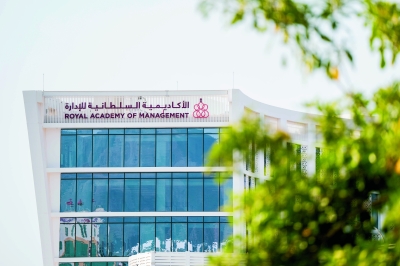

Zad for Promising Omani Leaders initiative launched
The Royal Academy of Administration, in partnership with the Ministry of Education, is launching the Zad for Promising Omani Leaders initiative to prepare outgoing scholarship students for study abroad programs. The program, announced for the current academic cycle, aims to ensure intellectual, cultural and personal readiness for Omani students abroad, equipping them with leadership skills and cultural adaptability before departure.
Officials said the initiative targets approximately 550 students from government-sponsored programs, various scholarship schemes and self-funded learners. The early readiness requirement will be integrated into pre-departure procedures to confirm that participants meet established leadership and self-management standards.
Zad for Promising Omani Leaders: program overview
The Zad for Promising Omani Leaders initiative is designed as a strategic readiness and leadership pathway rather than a conventional preparatory course. According to academy statements, the program reframes overseas study as an investment in leadership development and national capacity, extending beyond academic attainment to practical leadership competencies.
Furthermore, the initiative emphasizes behavioral and interpersonal development, cultural intelligence, and the capacity for independent decision-making. These elements are intended to enable Omani delegates to represent the country professionally at international institutions and adapt to diverse global learning environments.
Target participants and eligibility
The current rollout will include about 550 students across multiple cohorts, officials said. Participants comprise those sponsored by government entities, recipients of domestic and international scholarships, and students who finance their own studies overseas.
Additionally, participation has been mandated as part of the readiness and pre-departure requirements for beneficiaries enrolled in the academy’s preparation program. Therefore, the initiative will be a principal checkpoint to validate that candidates possess suitable leadership and administrative skills for contemporary scholarship contexts.
Blended learning model and curriculum focus
The academy will deliver the initiative through a blended learning model that combines intensive in-person engagement with ongoing virtual modules. The in-person component begins with a two-day practical workshop centered on simulations and interactive exercises, organizers said.
Following the workshop, participants will engage in a schedule of virtual, interactive sessions that reinforce leadership training, cross-cultural communication and personal resilience. The curriculum includes experiential learning, scenario-based assessments and peer coaching aimed at improving study abroad readiness and professional conduct.
Skills emphasis: leadership training and cultural intelligence
The program prioritizes leadership training, negotiation and communication skills, ethical decision-making, and cultural awareness. These competencies respond to reported needs for students to navigate academic, social and institutional settings abroad while preserving national identity and responsibilities.
Moreover, the initiative seeks to foster a competitive international mindset among Omani youth while encouraging them to contribute positively to Oman’s public and private sectors upon return. Officials emphasized that leadership development is integral to long-term institutional performance and national development objectives.
Strategic aims and expected national impact
Organizers say the initiative reflects a broader commitment to investing in young national talent as a pillar of sustainable development. By equipping students with advanced leadership and self-management capabilities, the program aims to enhance the quality of Oman’s human capital and support national economic goals.
In addition, the program is expected to strengthen institutional representation abroad by producing graduates who can advocate for Oman in global academic and professional networks. The ministry and academy indicated that this approach aligns with national strategies to elevate institutional effectiveness and civic responsibility.
Assessment, monitoring and potential expansion
The initiative will include metrics for participant progress and program effectiveness, according to official descriptions. Monitoring will likely combine formative assessments during the blended learning activities and summative evaluations before scholarships commence.
Officials have suggested that subsequent cycles could expand intake or adapt modules based on assessment outcomes and stakeholder feedback. Therefore, observers should watch for reports on participant performance and follow-up studies that measure the initiative’s contribution to post-study outcomes.
What to watch next
Readers should expect the initial cohort to complete the pre-departure readiness sequence ahead of international departures in the current academic cycle. The academy and the ministry will likely publish further details on schedules, evaluation frameworks and lessons learned after the first round concludes.
Meanwhile, policymakers and educational partners will be monitoring whether the blended leadership approach measurably improves integration and representation of Omani students abroad. The next expected step is public reporting on program results and any recommendations for scaling or modification in future academic years.