


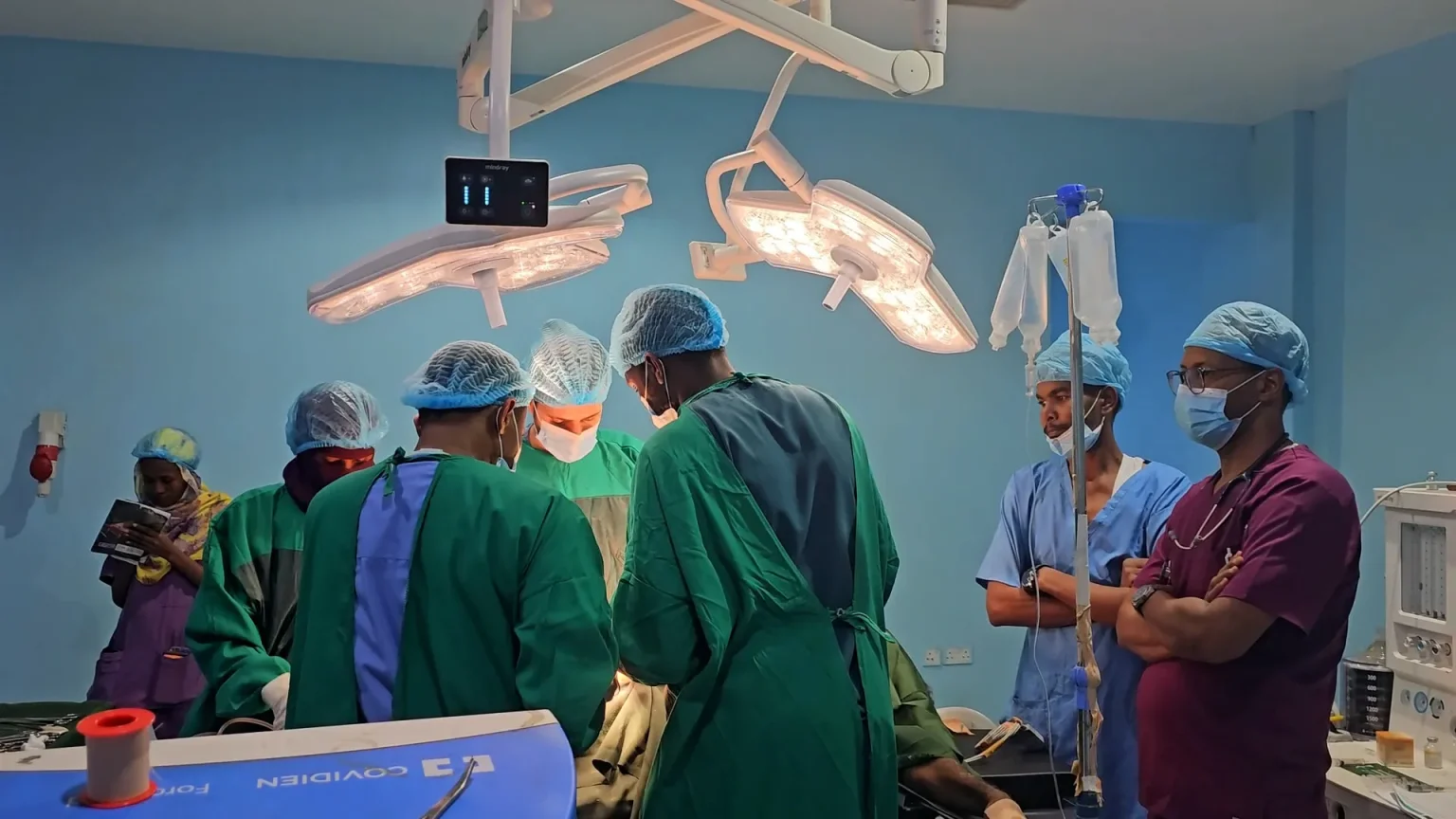

Sudanese and Qatari medical teams launched a free surgical campaign this week that brought specialized care to hospitals in Khartoum and the Northern state, according to organizers. The surgical camp in Sudan, organized by the Sudanese Doctors Association in Qatar with the Qatari Red Crescent and Kuwaiti support, began in early July 2026 and provided emergency and elective procedures as well as diagnostic endoscopies.
The initiative operated simultaneously at Omdurman Teaching Hospital in Khartoum and Al Wefaq Qatari Hospital in Al Dabba, the Northern state, delivering targeted urology and gastrointestinal services. Organizers said the campaign aimed to shorten waiting lists built up since armed conflict disrupted regular services in April 2023, while also offering training to local clinical teams.
Surgical camp in Sudan: scope, services and targets
The surgical camp in Sudan focused primarily on urology and endoscopic procedures, with teams conducting dozens of operations daily. According to the mission leadership, the current effort is the sixth medical convoy since the conflict began and included plans to perform about 150 urology surgeries and roughly 100 diagnostic and therapeutic endoscopies at Omdurman Teaching Hospital.
Earlier phases of the caravan recorded approximately 100 urology operations, covering conditions ranging from kidney stones to prostate tumors and pediatric urological cases. In addition to operating theatre work, the campaign set up specialty clinics for consultations, imaging, and post-operative follow-up, providing integrated care without charge to eligible patients.
Who is involved and how the partnership works
The campaign is a partnership between the Sudanese Doctors Association in Qatar, the Qatari Red Crescent Society and the Kuwaiti Patients Support Fund, with volunteer surgeons and specialists from Qatar and Sudan. Participating clinicians named by organizers included urology consultants Abdullah Al-Nuaimi and Ahmed Hassan Al-Maliki, supported by a roster of anesthetists, surgical nurses and endoscopy specialists.
Logistical support and medical supplies were coordinated through international and local channels to overcome supply chain barriers created by the conflict. Organizers emphasized that the medical convoy model pairs direct patient care with donations of equipment and pharmaceuticals, enabling short-term clinical throughput while mitigating some immediate shortages in affected hospitals.
Training and capacity building for Sudanese staff
A central aim of the campaign is training and capacity building to leave a sustainable impact after teams depart. Visiting surgeons ran hands-on workshops in the operating complex and anesthesia suites, while local residents and nurses observed procedures and practiced perioperative protocols under supervision.
Officials said the training emphasis includes endoscopy techniques, laser lithotripsy for kidney stones and perioperative care for complex urological cases. Furthermore, organizers noted that repeated camps and structured mentorship could gradually restore services that have been suspended or reduced during the crisis.
Patient stories and human impact
Patients who received treatment described relief after years of suffering and delays. According to Al Jazeera reporting, a 45-year-old woman who had recurrent kidney stones for three years underwent laser lithotripsy on the first day of the camp and was described by staff as recovering well.
Another patient recounted long waits and frequent hospital visits before the campaign enabled a definitive procedure. These individual accounts underscore the immediate value of free surgeries for vulnerable populations who cannot afford private care or travel abroad for treatment.
Health system context and challenges
The ongoing conflict that began in April 2023 has strained Sudan’s health system, leaving many hospitals partially functional or out of service, officials say. Shortages of personnel, equipment and medicines have limited the ability to perform complex surgeries, creating substantial backlogs of cases that the surgical camp seeks to address.
Khartoum state health minister Mahmoud Al-Badri told Al Jazeera that mobile medical efforts serve as crucial support to remaining public hospitals and send a message of solidarity to affected communities. However, he stressed that convoy-based interventions are stopgap measures and that sustained recovery will require restoring supply chains, workforce retention, and facility repairs.
Logistics, funding and expected next steps
Funding for the campaign comes from partnering humanitarian institutions, with in-kind donations of equipment and supplies arranged through international networks. Organizers said they aim to continue similar medical convoys to other hospitals across Sudan in the coming months, subject to security conditions and funding availability.
Officials also outlined plans for follow-up visits and remote support to local clinicians, including telemedicine consultations and referral pathways for complicated cases that need further management. Therefore, observers should watch for announcements about subsequent camps and any formal commitments from health authorities or donors to scale training initiatives.
Conclusion and what to watch next
The surgical camp in Sudan provided immediate relief to hundreds of patients while attempting to strengthen local capacity through targeted training and mentorship. In the near term, stakeholders will monitor whether repeated camps reduce surgical backlogs and whether logistical and security conditions allow the program to expand to additional facilities.
Readers should watch for official updates on the number of surgeries completed, planned follow-up camps, and any coordination agreements between international partners and Sudanese health authorities that might convert episodic support into longer-term recovery efforts.