






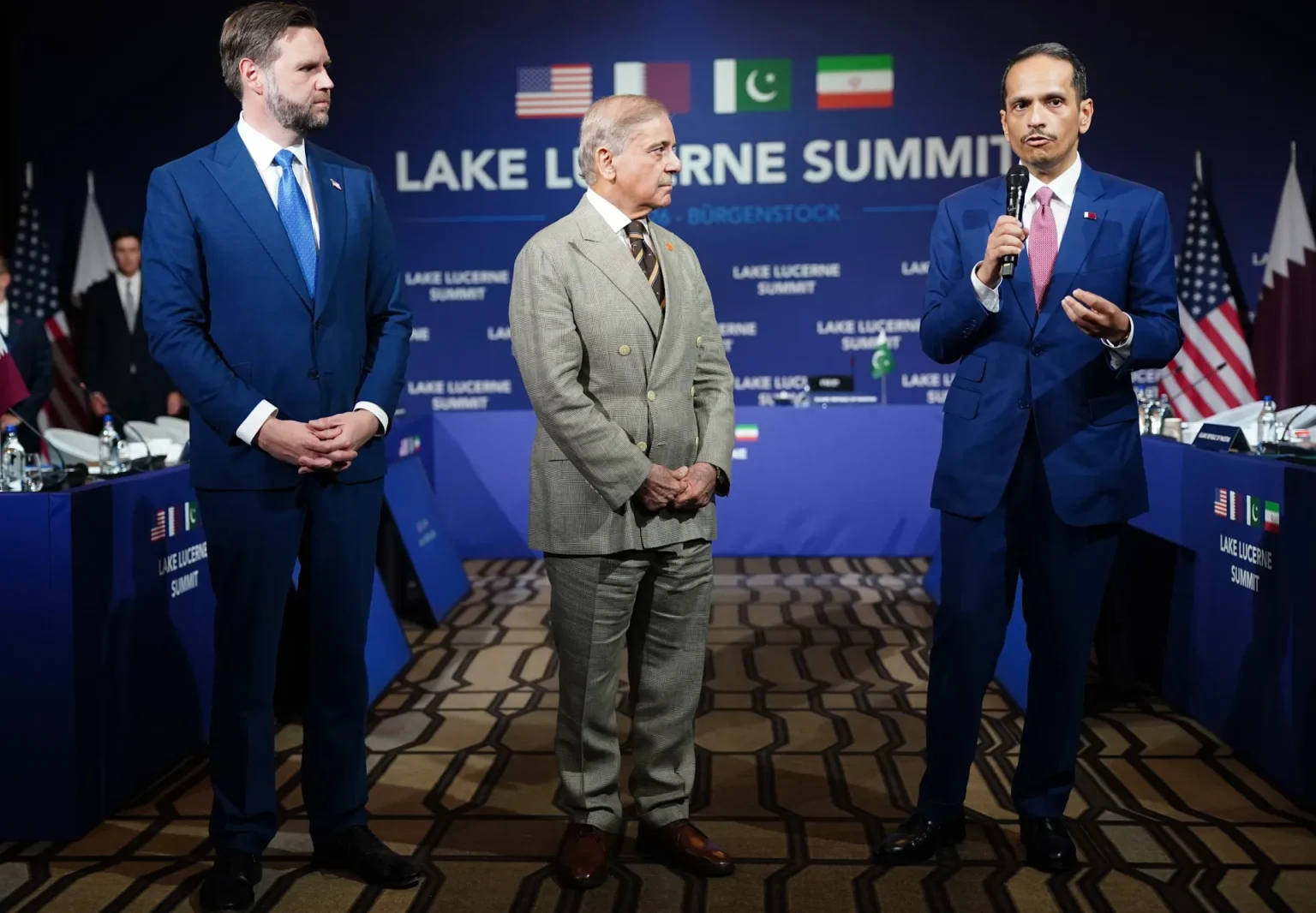

The US-Iran negotiations entered a critical 60-day window in late June as delegations met at a Swiss resort seeking a comprehensive, durable end to regional hostilities. The talks, hosted near Lake Lucerne, bring together US and Iranian officials with mediators from Qatar and Pakistan aiming to resolve core disputes on nuclear enrichment, navigation in the Hormuz Strait, frozen assets and broader conflict de-escalation.
Delegates opened structured talks that are expected to cover five main tracks: Iran’s uranium enrichment levels and stockpiles, guarantees for safe passage through the Hormuz Strait, terms for release and management of frozen Iranian assets, sanctions relief, and mechanisms to halt fighting across regional fronts including Lebanon. Officials said a high-level oversight committee and technical working groups have been established to keep negotiations on course.
US-Iran negotiations: structure and timeline
The negotiating framework sets a 60-day timeline with an oversight committee to supervise progress, according to a report by Mostafa Azrid for Al Jazeera and statements from involved delegations. The process pairs political-level supervision with three technical working groups concentrating on nuclear, sanctions, and conflict-settlement issues.
Qatar and Pakistan are serving as primary mediators, and both countries have said they will work to insulate the talks from external disruption. Meanwhile, Iran’s parliamentary speaker Mohammed Bagher Ghalibaf leads Tehran’s delegation, and Washington has sent senior diplomatic representatives, though names were not specified by officials. Observers note that the compact structure is meant to translate technical agreements into politically viable commitments.
Nuclear enrichment and verification challenges
At the heart of these talks is the question of Iran’s nuclear enrichment: how high enrichment levels will be allowed, how to reduce Tehran’s stockpile of highly enriched uranium, and what verification measures will be accepted. Technical experts in the working group will discuss monitoring arrangements, likely involving international nuclear inspectors, officials said.
Negotiators face the difficult task of crafting verifiable limits that Iran can accept while satisfying US and regional concerns about breakout risk. Furthermore, the talks must address timelines for rolling back enrichment and for sequencing sanctions relief tied to verification milestones. Analysts caution that resolving complex safeguards and inspection protocols could take longer than the initial political window allows.
Frozen assets and sanctions relief
Frozen assets and the shape of sanctions relief are another core topic. Tehran seeks access to funds held abroad, which it views as essential for economic stability and confidence-building, while Washington seeks robust assurances that money will not be diverted to destabilizing activities. Negotiators will explore escrow mechanisms, phased transfers, and international monitoring as possible compromises, according to participants.
Secondary keywords such as frozen assets and sanctions relief appear across several working group agendas, where technical teams will try to align banking, legal, and oversight mechanisms with political commitments. Officials have signaled caution: any agreement on assets will likely be conditional and tied to observable steps on nuclear limits and conflict de-escalation.
Security risks: Hormuz Strait and Lebanon ceasefire
Security arrangements for the Hormuz Strait and a ceasefire mechanism for Lebanon are prominent items on the agenda. The Hormuz Strait is a vital maritime corridor, and negotiators have agreed to set up a direct maritime hotline to reduce the risk of incidents and misunderstandings at sea, Iranian delegation members said.
On the Lebanon front, negotiators formed a working group including the United States, Iran and Lebanese representatives with Qatar and Pakistan acting as facilitators. The group will focus on establishing and monitoring a cessation of hostilities and preventing escalation. However, officials acknowledge a major obstacle: Israel has publicly expressed reservations about any deal that would limit military options in the region, and analysts warn that external actors could seek to undermine progress.
Risks to the talks and mitigation measures
Mediators have been clear that the process is vulnerable to spoilers. Qatari Prime Minister Mohammed bin Abdulrahman Al Thani warned that some parties might try to derail the negotiations, and both Qatar and Pakistan say they have worked to build contingency plans to protect the process from provocations, according to statements made during preparatory meetings.
To mitigate risks, the oversight committee is empowered to address crises and adjust sequencing, while the maritime hotline and dedicated conflict-management group aim to reduce triggers that could collapse talks. Observers stress that even with safeguards, diplomatic agreements remain fragile in a volatile regional environment.
What to watch next and possible outcomes
Over the next 60 days, parties will test whether technical compromises can be translated into durable political understandings. Key milestones to watch include agreement on verifiable limits for nuclear enrichment, an initial framework for phased release of frozen assets, and early confidence-building measures on maritime safety in the Hormuz Strait and a practical mechanism for a Lebanese ceasefire.
If negotiators make measurable progress, the oversight committee could propose a formal memorandum of understanding that sequences obligations and relief. Conversely, any serious incident in the Hormuz Strait or renewed fighting in Lebanon could quickly derail talks, officials cautioned. The report indicates that mediators are prepared to extend talks if necessary, but political momentum will be decisive.
Conclusion: short-term expectations and next steps
The US-Iran negotiations in Switzerland represent a narrowly timed, high-stakes effort to resolve interconnected nuclear, economic and security disputes. Over the coming weeks, negotiators will need to convert technical work into political commitments acceptable to capitals and regional stakeholders. Readers should watch for formal statements from the oversight committee, any provisional technical agreements, and developments in the Hormuz Strait and Lebanon that could shape the talks’ prospects.