








Global Security Forum Continues in Doha Amid Heightened Risks
The Global Security Forum in Doha, Qatar, is currently underway and will continue until the 21st of this month. The forum takes place in a highly sensitive regional and international context, where armed conflicts intersect with geopolitical fractures. This situation necessitates that policymakers and security experts shift from crisis management to proactive measures aimed at preventing humanitarian and security disasters from their roots.
Discussions at the forum have gained exceptional momentum due to an unprecedented rise in complex threats, including advanced artificial intelligence algorithms, deepfake technology, and financial encryption applications. These advancements have compounded risks, with criminal networks and armed organizations increasingly utilizing hostage-taking as a structural means of extortion rather than isolated security incidents.
The Intersection of Crime and Terrorism
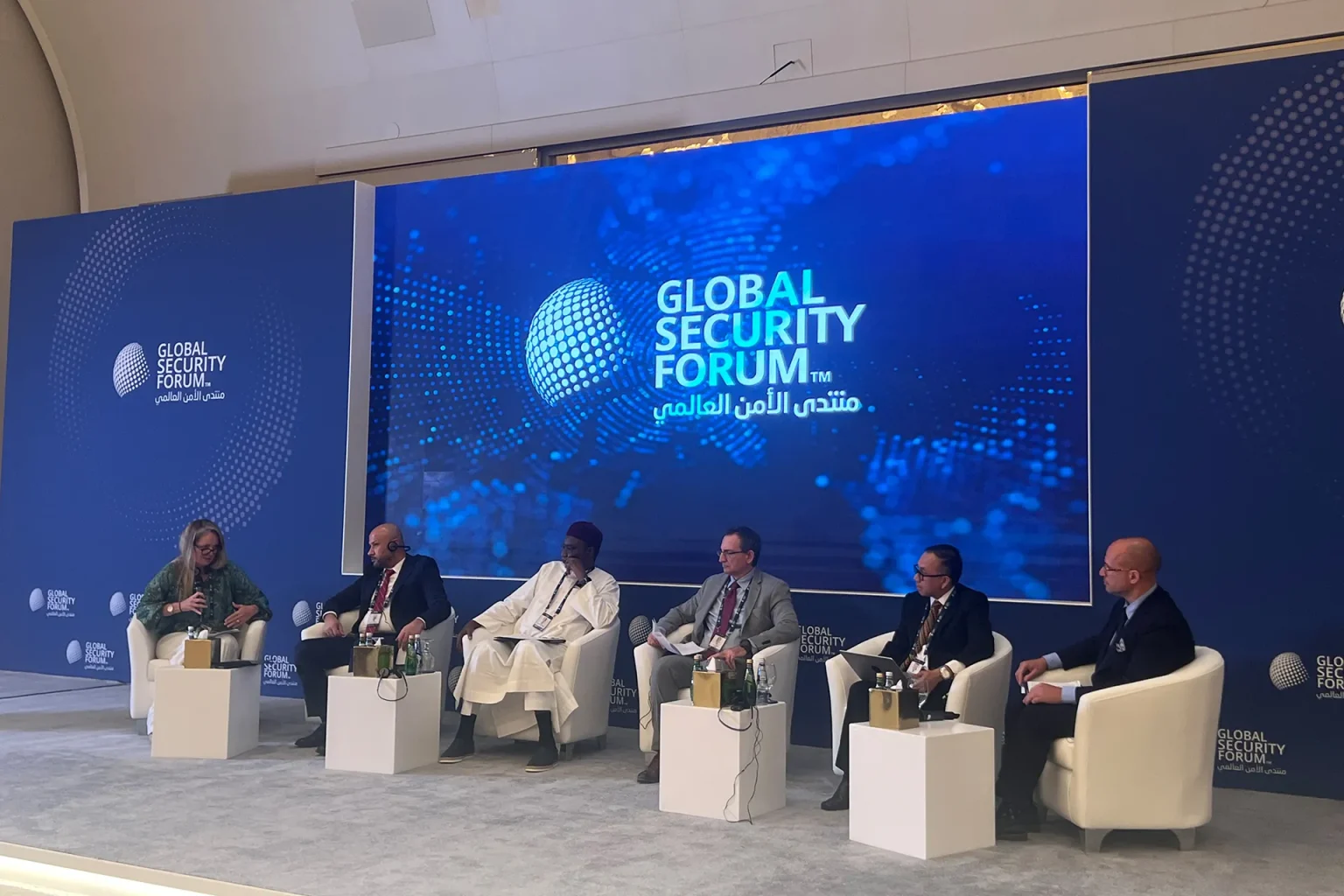
The forum has dedicated discussions to the topic of hostage situations, featuring high-level insights from officials with field, security, and legal expertise. Participants include Raed Saleh, Syria’s Minister of Local Administration and Disaster Management; Ahmad Rufa’i Abubakar, former Director-General of Nigeria’s National Intelligence Agency; Roberto Artiferi, Chief of UNCAC’s Office on Drugs and Crime’s Terrorism Prevention Branch; Dionisius Elvan from Indonesia’s National Counter-Terrorism Agency; and Hakim Rkaraki, Head of Crisis Negotiation at the International Committee of the Red Cross.
Hostage scenarios are rooted in fragile environments where the rule of law is absent, and state institutions have eroded. This situation fuels an underground economy relying on human trafficking and extortion.
Raed Saleh argues that hostage-taking flourishes as state authority diminishes and community protections disappear. Syria exemplifies this tragedy, particularly since 2012, when the collapse of security systems led to chaos. He highlights the Syrian government and its affiliated militias as direct perpetrators of systematic kidnapping operations, often linked to military checkpoints, with grave repercussions such as mass graves discovered near these sites.
Saleh warns of a serious trend where hostage-takers are beginning to employ artificial intelligence to create fabricated videos and images of victims, aimed at terrifying their families for financial extortion. He insists that understanding the motivations and structures of the abductors—whether they are extremist groups, armed militias, or criminal gangs—is crucial for any potential solution.
Hostage Crisis Tactics in Africa
Ahmad Rufa’i Abubakar highlights the Nigerian and Sahel regions as sites of a perilous pragmatic alliance between terrorist groups like Boko Haram and criminal organizations. This collaboration allows for high-profile kidnappings, exemplified by the attack on the Kaduna train where approximately 100 passengers were abducted, securing ransoms of between one to two million dollars.
Abubakar notes that kidnappings in Nigeria have evolved into a means for exchanging prisoners by targeting schools and places of worship, relying on local informants and complex payment systems that incorporate both informal exchange services and cryptocurrencies to launder extorted funds.
Roberto Artiferi provides an international perspective, identifying three strategic goals behind hostage-taking: generating immediate cash for arms and operations, exerting political pressure on governments, and undermining economic stability by targeting vital infrastructure and foreign investors.
The Dilemma of Ransom Payments
Governments and negotiators face a profound ethical and legal dilemma when addressing hostage situations. The humanitarian obligation to save lives is often at odds with the ramifications of yielding to ransom demands, which ultimately infuse millions into armed networks and grant them a sort of legitimized existence.
Artiferi underscores the need for a strict legal framework to treat hostage-taking as a mere criminal act devoid of political leverage. His insights draw from international precedents such as Colombia’s approach to dealing with the FARC rebels.
In contrast, Abubakar articulates the stark discrepancy between legal theory and the harsh realities in Nigeria, where families often feel compelled to pay ransoms to secure the release of their loved ones.
Elvan presents Indonesia’s zero-tolerance policy toward ransom payments, detailing the country’s strategy to combat hostage-takers in the Sulu Sea region. Jakarta’s refusal to meet ransom demands has been pivotal in disrupting the financial incentives for kidnappers, relying instead on joint military operations.
Community Solutions and International Cooperation
Experts at the forum unanimously agree that solutions rooted solely in military intervention or isolated security measures will remain inadequate without the support of vigilant community environments and cross-border intelligence cooperation. Effective strategies involve a combination of community engagement and swift intelligence-sharing that bridges the gap between information gathering and actionable responses.
Raed Saleh emphasizes the importance of local community dynamics, where civil society and regional leaders have successfully negotiated hostage releases in past crises, highlighting methods that can effectively counter criminal elements.
Dionisius Elvan notes that Indonesia’s intricate geographical landscape necessitates the establishment of trilateral security strategies with neighboring countries, which has included systematic naval and aerial patrols aimed at securing kidnappers’ routes.
Abubakar advocates for a collective approach, uniting communities to fortify defenses against infiltration by criminal networks, while also reviewing successful intelligence operations that allowed for rapid responses to rescue hostages.
Future Directions in Hostage Management
The forum has revealed a significant gap in how hostage situations are managed, reflecting a clash between the rapid operational pace of criminal networks and the bureaucratic nature of official institutions. Participants have stressed the need for immediate responses and swift intelligence sharing to save lives, reinforcing that solutions must be proactive rather than reactive.
The key takeaways from the forum include building trust and institutional coordination among humanitarian and security entities, adopting proactive measures to protect vulnerable borders, and decisively dismantling funding sources that support hostage-related crimes. Furthermore, strategies must ensure that psychological support for freed hostages and their families is a sustained effort.
As discussions continue in Doha, the international community is urged to adopt these recommendations to enhance their responses to the evolving landscape of global security and hostage crises.