








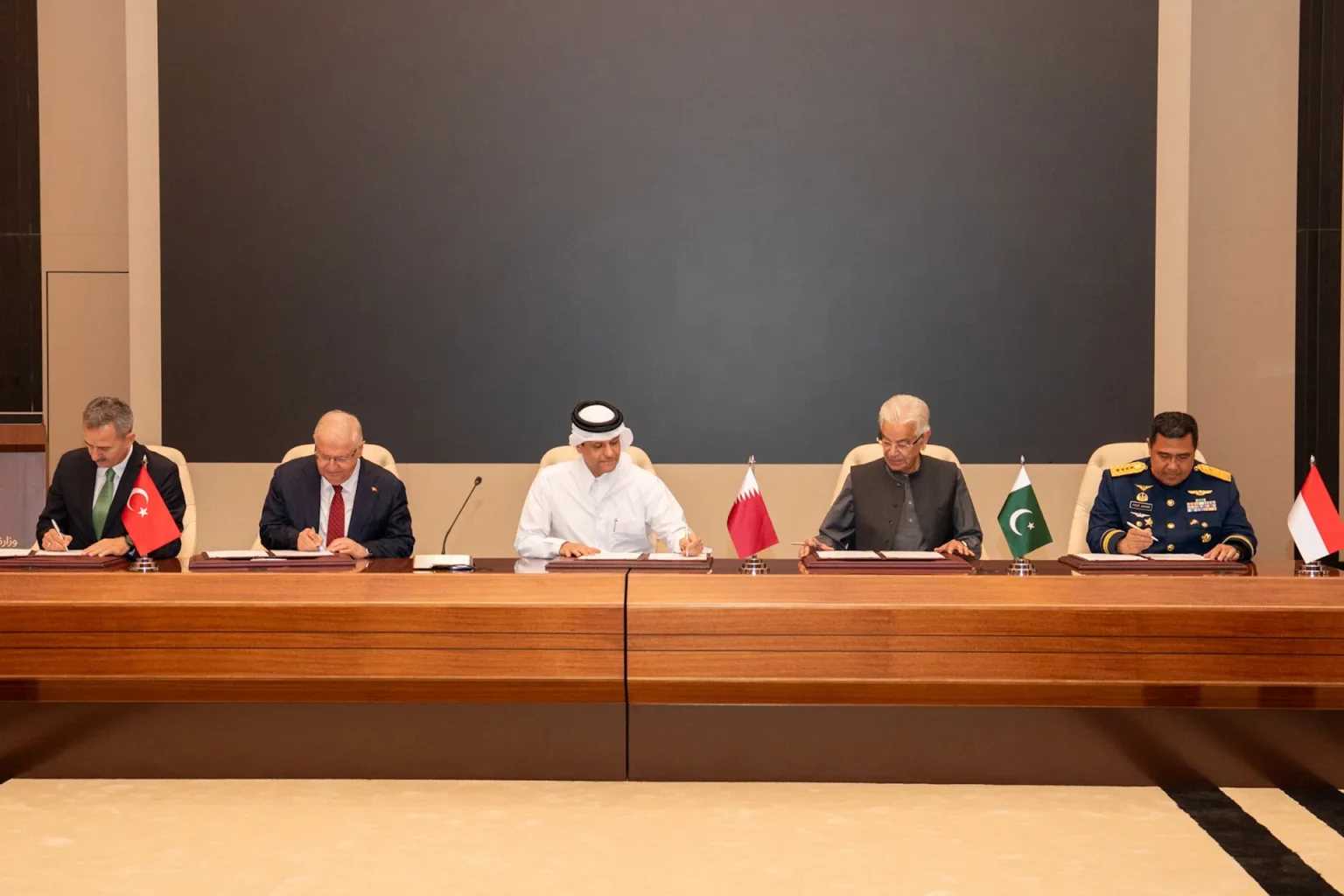

Quad Agreement For Defense Cooperation Signed Among Qatar, Turkey, Pakistan, and Indonesia
On October 21, 2026, a quadrilateral memorandum of understanding was signed in Doha by Qatar, Turkey, Pakistan, and Indonesia. This agreement aims to enhance cooperation in defense industries, military production, and the development of military capabilities among the four nations. According to statements from the Turkish Ministry of Defense, the initiative named “Badr,” symbolizing a full moon, illustrates how these countries complement each other under this memorandum.
The Qatar News Agency reported that the inclusion of additional friendly nations into the “Badr” memorandum is a possibility contingent upon agreed-upon criteria among the participating states.
What is the Badr Memorandum?
The Badr memorandum is a multifaceted agreement signed by the defense ministries of Qatar, Turkey, Pakistan, and Indonesia, with involvement from Pakistan’s Defense Production Regulatory Authority and Turkey’s Presidency of Defense Industries. This step reflects the commitment to enhancing cooperative efforts and developing strategic partnerships, as stated by Qatar’s Ministry of Defense.
The signing ceremony was attended by prominent figures, including Qatar’s Deputy Prime Minister and Minister of State for Defense, Sheikh Saud bin Abdulrahman Al Thani; Turkey’s Minister of Defense, Yasar Guler; and Pakistan’s Minister of Defense, Khawaja Muhammad Asif, among others.
Objectives of the Badr Memorandum
The Badr memorandum is designed to promote joint military production, enhance the defense capabilities of the four nations, and expand cooperation in technical training and research and development. Specifically, Qatar and Turkey’s defense ministries highlighted several key objectives:
- Cooperation in defense manufacturing.
- Enhancement of collective defense capabilities.
- Development of industrial solutions aligned with modern defense systems.
- Collaboration in defensive technical training and research and development.
Moreover, the ministries emphasized that the memorandum is not limited to military collaboration; it also holds significant economic importance.
- Economic Goals
The Qatari Ministry of Defense specified that the capabilities of each participating nation would be leveraged in defense production, fostering cooperation and integration to meet the needs of allied and friendly countries.
Abdullah Bandar Al-Ateibi, a professor of international affairs at Qatar University, noted the significance of expanding partnerships, stating that the four nations possess complementary strengths—Turkey’s experience in military manufacturing, Indonesia’s naval capabilities, Pakistan’s human resources, and Qatar’s expertise in international partnerships and financial strength. This collaboration could enhance their economies and create substantial employment opportunities while strengthening deterrence against growing threats.
Significance of the Timing of the Announcement
The Badr memorandum’s announcement arrives at a time when the Middle East is experiencing significant shifts that are reshaping alliances and conflicts in the region. Experts observe that traditional rivalries are fading, giving way to new considerations focused on security, economic interests, technological collaboration, and military strength.
For instance, on August 7, 2026, Turkey, Saudi Arabia, and Pakistan signed the Mecca Agreement, which classified any armed attack on one of the three nations as an aggression against all, aimed at bolstering mutual security through deterrence and collective defense.
Furthermore, the rising threats in the region, coupled with the declining costs of certain weapons such as drones, contribute to the drive for countries to invest in local manufacturing and build more sustainable defense capabilities. Qatar has already initiated similar paths through its partnerships and collaborations aimed at the development of drone technology.
Also, experts anticipate that this memorandum marks a pivotal step towards deeper defense cooperation among the four involved nations. The necessity for bolstering defense capabilities is increasingly seen as essential in a dynamic environment characterized by both collaboration and potential conflict.
Looking Ahead
As regional dynamics continue to evolve, the implications of the Badr memorandum will likely unfold in upcoming diplomatic discussions and defense initiatives. Observers should watch for the integration of additional countries into the memorandum and further developments in cooperative security measures. In the coming months, the emphasis will remain on mutual defense enhancement and bolstering economic collaboration aimed at achieving shared goals among the signatory nations.