






October Urbanism Forum Focuses on Urban Planning and Quality of Life
The October Urbanism Forum commenced today in the Al-Wusta Governorate, under the patronage of His Excellency Sheikh Ahmed bin Muslim Al-Khathiri, the Governor of Al-Wusta. The event gathered experts and academics in urban planning and urban development to discuss the future of cities, enhancing quality of life, and achieving urban sustainability.
During the forum, various sessions and papers addressed important topics related to humanizing cities, place sustainability, responses to climate change, and the application of modern technologies and spatial data to support urban planning and development decisions.
Conversations on Humanizing Cities and Quality of Life
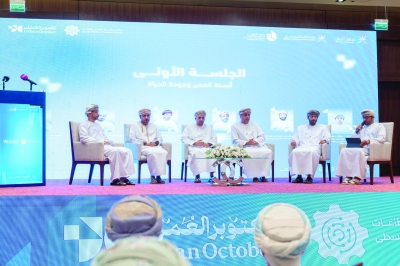
The first panel discussion, titled “Humanizing Cities and Quality of Life,” explored the role of urban planning in creating more human-friendly urban environments. It emphasized the need to enhance residents’ access to services and public spaces, which contribute to an improved quality of life. Specialists from relevant governmental and municipal planning entities, including the Special Economic Zone at Duqm, participated actively in the discussion.
Additionally, the second panel discussion, “Future Cities,” reviewed the transformations taking place within cities and the opportunities presented by knowledge and modern technologies. The focus was on developing more efficient and sustainable urban environments while examining innovative solutions in urban planning and management.
Papers Addressing Urban Sustainability and Innovations
The forum featured five significant papers. The first paper discussed the topic of “Making Urban Heritage More Livable.” The second paper examined “Climate-Responsive Urban Pathways,” highlighting the necessity of adapting urban designs in response to climate challenges. The third paper focused on “Human Resources, Artificial Intelligence, and Spatial Data,” showcasing how technology can enhance urban planning initiatives.
The fourth paper addressed “Place Renewal and Sustainability of Belonging,” arguing for revitalization efforts that foster community ties and place attachment. The fifth paper explored “Artificial Intelligence and Spatial Data in Supporting Urban Decision-Making for Future Cities,” emphasizing the importance of employing data and intelligent analysis to guide urban development and improve planning efficiency.
Implications for Future Urban Development
The deliberations at the forum underscore a crucial shift in urban planning strategies, advocating for the integration of sustainability and technology. As cities continue to evolve, the emphasis on creating livable and human-centered spaces is becoming increasingly vital. Officials suggest that collaboration among planners, government entities, and communities is essential to maintain progress towards smarter and more resilient cities.
Looking forward, the insights gained from the October Urbanism Forum are expected to influence future initiatives and conventions in urban planning. Stakeholders are urged to keep an eye on how these discussions will shape forthcoming policies and urban development strategies in the Al-Wusta Governorate and beyond.