








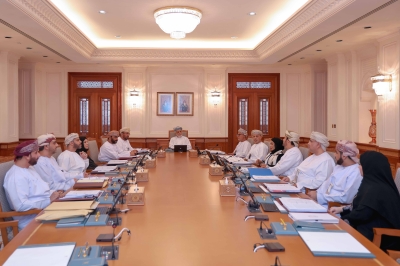

State Council office meeting reviews performance and business reforms
The State Council office meeting convened today in Muscat, chaired by His Excellency Sheikh Abdul Malik bin Abdullah Al-Khalili, President of the State Council, with bureau members and the council secretary in attendance. The session served as a platform to examine studies on government performance management and the business environment in Oman, aligning with priorities of Oman Vision 2040.
Agenda items and key attendees at the meeting
Officials said the bureau hosted Dr. Dhafir bin Awad Al-Shanfari, chair of the Economic and Financial Committee, and Mohammed bin Hassan Al-Shehi, the committee rapporteur, to present a study on a framework to develop government performance management. Meanwhile, Abbas bin Ali Al-Humaid, chair of the Special Committee, and Mohammed bin Abu Bakr Al-Ghasani attended to brief the office on a separate analysis of the business environment in Oman and entrepreneurship measures.
Additionally, the office reviewed reports from council members on regional and international engagements, a follow-up report on implementation of prior decisions, and an activity report covering the recent council period. Therefore, the meeting combined strategic policy review with operational oversight.
Study proposes integrated government performance management framework
The government performance management study outlines an institutional framework intended to strengthen planning methodology, monitor outcomes, and support the achievement of Oman Vision 2040 objectives. The report indicates the framework aims to improve public spending efficiency, raise productivity, and enhance service quality across ministries and agencies.
According to the study summary reviewed at the State Council office meeting, the proposed framework emphasizes measurable targets, cross-agency coordination, and periodic performance audits. Furthermore, it recommends capacity-building and digital tools to track progress, which officials say could help align resource allocation with strategic priorities.
Business environment analysis focuses on entrepreneurship and competitiveness
The second study examined the business environment in Oman and offered practical steps to boost entrepreneurship and competitiveness. The paper evaluated conditions across sectors and company sizes, highlighting regulatory, financial, and market-access challenges faced by startups and established firms alike.
Researchers presented a range of actionable recommendations reported to include regulatory simplification, targeted incentives for small and medium enterprises, and measures to expand access to finance and markets. Meanwhile, the analysis pointed to the need for public-private partnerships and capacity-building programs to foster innovation and scale promising enterprises.
Implications for policy and Oman Vision 2040
Linking the two studies, council members discussed how strengthening government performance management can create an enabling environment for business growth. Improved efficiency in public spending and clearer performance targets are expected to support the structural reforms envisioned under Oman Vision 2040, officials said.
Furthermore, participants noted that boosting entrepreneurship requires not only incentives but also predictable regulation and streamlined government services. Therefore, coordination between economic regulators and performance management bodies will be critical to translate policy into measurable outcomes.
Follow-up actions and oversight measures
The office reviewed reports on the implementation of previous decisions and on members’ participation in regional and international forums. The follow-up report indicates ongoing monitoring of earlier recommendations, with several action items carried forward for detailed review and interagency coordination.
As part of oversight, the bureau tasked secretariat teams to prepare implementation metrics and timelines for key recommendations stemming from both studies. In addition, the office requested that committees submit quarterly progress updates to ensure transparency and accountability.
Next steps and the coming session agenda
At the conclusion of the meeting, the State Council office meeting approved the agenda items for the ninth session of the third ordinary session of the eighth term and set the themes to be discussed. The approved agenda is expected to include detailed deliberations on operationalizing the proposed performance management framework and prioritizing entrepreneurship support measures.
Observers should watch for the committee follow-ups and the timetable for pilot implementations, which council officials indicated will be discussed in upcoming sessions. Therefore, the next meetings will focus on turning recommendations into concrete, monitored initiatives.
Context and international relevance
Public sector performance management and entrepreneurship reforms are common priorities for governments seeking economic diversification. International experience suggests that combining clear performance targets with business-friendly regulations can accelerate private sector development, though outcomes depend on consistent implementation and institutional capacity.
Accordingly, the council’s dual focus on government performance management and the business environment in Oman positions policymakers to address both supply- and demand-side constraints to growth. Furthermore, integrating these efforts with Oman Vision 2040 may help sustain reform momentum and attract domestic and foreign investment.
Looking ahead
In summary, the State Council office meeting advanced discussion on reforms intended to support Oman Vision 2040, with specific studies offering frameworks for government performance management and entrepreneurship promotion. The bureau’s approval of the next session’s agenda sets a clear path for follow-up work and monitoring.
Readers should expect committee-level implementation plans and progress reports in the coming months, with pilot initiatives and performance indicators likely to appear on the council’s agenda. Therefore, stakeholders will be watching for concrete steps that translate study recommendations into measurable improvements in public services and the business environment in Oman.