








Histocompatibility laboratory inaugurated at National Centre for Genetic Health in Oman
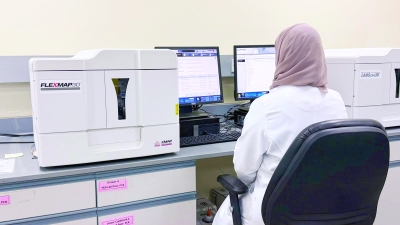
The National Centre for Genetic Health at the Royal Hospital in Muscat inaugurated a new histocompatibility laboratory today, officials said, marking a major step in Oman’s clinical diagnostics. The opening introduces in-country capacity for advanced tissue matching and includes the addition of the flow cytometry crossmatch test to local services.
The launch, held at the centre within the Royal Hospital, enables immediate processing of transplant compatibility tests that were previously sent abroad, according to a statement by centre officials. The move is intended to shorten turnaround times for organ transplant evaluations and strengthen national transplant programs.
Histocompatibility laboratory to bolster organ transplant services
The histocompatibility laboratory will provide a full suite of tissue-matching assays, officials said, enabling clinicians to assess donor-recipient compatibility more rapidly. Additionally, the laboratory is equipped for advanced serological and molecular testing commonly used in organ transplant testing, which supports better clinical decision-making.
Until now, certain advanced assays—most notably the flow cytometry crossmatch—were performed in laboratories outside Oman, necessitating sample shipment and longer waits for results. Therefore, the new facility is expected to reduce logistical delays and the operational costs associated with sending samples overseas.
New flow cytometry crossmatch testing and diagnostic capabilities
The addition of flow cytometry crossmatch testing represents the most notable upgrade in local diagnostic capability, health officials said. This assay is widely regarded as a critical component of pre-transplant immunological risk assessment because it can detect donor-specific antibodies with higher sensitivity than some traditional methods.
Furthermore, integrating flow cytometry crossmatch testing into routine organ transplant testing allows transplant teams to obtain more detailed immunological profiles. Consequently, clinicians can better stratify immunological risk, tailor perioperative immunosuppression strategies, and potentially reduce early graft failure linked to undetected incompatibilities.
Operational benefits: faster results, lower costs, and improved clinical workflow
Operating the histocompatibility laboratory locally is expected to cut the time between sample collection and result delivery substantially, hospital officials indicated. Faster test results can accelerate transplant evaluations, shorten waiting lists for eligible recipients, and support time-critical decision-making for deceased-donor transplantation.
In addition to clinical advantages, local testing reduces the financial and administrative burden of international sample transport, customs clearance, and external laboratory fees. Therefore, the new capability is framed as a strategic step toward improving the cost-effectiveness of national transplant services and boosting self-sufficiency in specialised diagnostics.
Background and regional context for specialised testing in Oman
Histocompatibility testing has been part of Oman’s transplant work for years, but some advanced assays were outsourced to laboratories abroad, the centre’s briefing noted. The establishment of an in-country facility follows global trends in decentralising specialised diagnostics to improve response times and clinical integration.
Regional and international clinical guidelines recommend comprehensive immunological assessment prior to organ transplantation. Therefore, the centre’s upgrade aligns local practice with contemporary standards for pre-transplant evaluation, according to the statement from centre management.
Workforce development, quality assurance and collaboration
Officials said staffing, training, and quality assurance will be priorities as the new laboratory moves to full operational capacity. Technical staff have received specialised training in flow cytometry techniques and tissue-typing methods, and the centre intends to follow recognised quality management practices to ensure reliable results.
Meanwhile, the centre indicated plans for collaboration with clinical transplant teams and other diagnostic units to integrate results into patient care pathways. This coordination is expected to enhance multidisciplinary decision-making and provide transplant clinicians with timely immunogenetics data.
Implications for patients and what to watch next
Patients awaiting transplantation in Oman could benefit from quicker compatibility assessments and potentially shorter waiting times, officials said, although the impact will depend on clinical rollout and case volumes. Watch for official updates on turnaround times, case numbers processed locally, and any reported changes in transplant outcomes as the service expands.
Next steps include phasing the laboratory into routine service, publishing operational benchmarks, and continuing staff development. Therefore, stakeholders and the public should look for subsequent announcements from the National Centre for Genetic Health and hospital leadership on performance metrics and broader implementation timelines.
Conclusion: advancing diagnostic self-reliance for transplant care
The new histocompatibility laboratory at the National Centre for Genetic Health represents a strategic enhancement of Oman’s organ transplant testing infrastructure. By introducing flow cytometry crossmatch and other specialised assays locally, the centre aims to improve clinical timeliness, reduce costs, and support safer transplant decision-making.
Officials recommend monitoring the phased integration of these services and forthcoming data on turnaround times and clinical impact. Therefore, the laboratory’s operational results over the coming months will be an important indicator of how this investment translates into improved access and outcomes for transplant patients in Oman.