






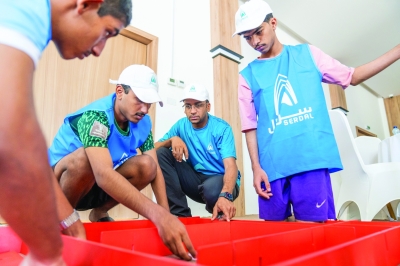

Sirdal leadership program concludes with 188 student participants
The Sirdal leadership program concluded this month after bringing together 188 government school students—94 boys and 94 girls—from North Al Batinah, South Al Batinah, North Al Sharqiyah and Al Dakhiliyah. The initiative, aimed at youth leadership and skills development, combined classroom guidance with practical challenges to prepare ninth- to eleventh-grade students for future academic and professional demands.
Program structure and educational approach of the Sirdal leadership program
The Sirdal leadership program was delivered through a partnership that involved OQ, the Ministry of Education, and Oman Sail, with the Ministry represented by its Career Guidance and Student Counseling Center. Organizers said the curriculum used blended learning methods, pairing theoretical instruction with hands-on exercises, simulations and team challenges to reinforce leadership and life skills.
Activities were designed to build communication, decision-making, problem-solving and teamwork skills, while also promoting initiative, self-confidence and a sense of national identity. Furthermore, program sessions encouraged students to discover personal strengths and broaden perspectives within a structured and motivational learning environment.
Partnerships and stakeholder roles
Officials confirmed that the program was implemented by Oman Sail under the supervision of the Ministry of Education and with financial and strategic support from OQ. According to public statements, OQ’s social investment division and the Ministry coordinated to target students in specific governorates to ensure geographic representation and gender balance.
Saeed bin Nasser Al Badai, General Manager of Social Investment at OQ, said the program’s outcomes underscore the importance of investing in young people’s capabilities. The ministry’s planning and vocational programs director, Zahran bin Nasser Al Maghdari, noted that combining learning and practice helps students build confidence in their abilities to meet future requirements.
Learning outcomes and student engagement
Program assessments observed active student engagement across sessions, with participants demonstrating improved collaborative skills and increased willingness to take leadership roles in team settings. The format included scenario-based challenges that required students to apply critical thinking and make collective decisions under time constraints.
Organizers reported that these practical components helped students translate abstract leadership concepts into tangible behaviors. Meanwhile, instructors emphasized values such as civic pride and the cultural identity of Oman to link personal development with broader national priorities.
Leadership development within national priorities
Ministry officials framed the Sirdal leadership program as aligned with Oman Vision 2040 priorities, which stress human-capital development and youth empowerment. The initiative is presented as one of several national efforts to nurture a generation equipped to contribute to economic diversification and social resilience.
Experts and program administrators suggested that such collaborations between public institutions and private sector partners can expand access to high-quality experiential learning, particularly in underrepresented regions. Therefore, the program serves both immediate educational aims and longer-term workforce readiness objectives.
Role of Oman Sail and event highlights
Oman Sail played a central role in executing the practical and outdoor components of the program, leveraging its expertise in experiential maritime education and team-based training. The closing event was attended by Dr. Khamis bin Salem Al Jabri, Chief Executive Officer of Oman Sail, who reviewed student projects and activities showcased on the final day.
Attendees from OQ and the Ministry observed demonstrations that illustrated the skills participants had acquired, noting visible improvements in teamwork and problem-solving during live exercises.
Implications for future youth skills development
Officials framed the Sirdal leadership program as a pilot for scaling similar initiatives across more governorates and age groups. The Ministry indicated that success metrics such as student participation, engagement and observed skill gains will inform subsequent programming decisions and resource allocation.
Program leaders highlighted the potential for partnerships to replicate the learning model in vocational streams and secondary education networks, which could extend opportunities for practical leadership training to larger student cohorts.
Next steps and what to watch
As a follow-up, organizers said they will analyze participant feedback and performance data to refine curriculum elements and logistical arrangements. Stakeholders recommended monitoring how former participants apply acquired skills in school leadership, community projects or vocational pursuits in the coming academic year.
Readers should watch for announcements from the Ministry of Education and OQ about expanded cohorts, updated program modules or new regional rollouts that would indicate broader adoption of the Sirdal leadership program model.