






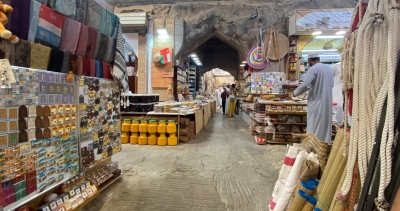

Five Centuries of Continuous Activity Amid Diverse Goods and Local Crafts
In the heart of Nizwa, where the echoes of history blend seamlessly with daily life, the “Sunsara” market stands as a testament to traditional commerce. It has maintained its role as a vital retail hub, showcasing a rich tapestry of the region’s past. This market is not just a collection of adjacent shops; it encapsulates an essential aspect of the economic and social fabric that has defined Nizwa over centuries.
Local narratives suggest that the history of the Sunsara market spans over five centuries. This long-standing presence reinforces its significance within the urban landscape of Nizwa and its connection to the commerce that has characterized the city throughout the ages.
Market at the Heart of the City
The Sunsara market derives its particular importance from its strategic location in Nizwa, adjacent to Al-Aqur neighborhood, one of the historic areas known for its heritage. This makes it an integral part of the daily scene in the city, drawing shoppers and visitors year-round.
Throughout the year, the shops in the market thrive with varying degrees of activity influenced by seasons and occasions. Nevertheless, the market sustains its vibrancy, leveraging its traditional character and the diversity of goods it offers. Customers find an array of products, from food items and consumer goods to perfumes, incense, and various essentials. Additionally, traditional crafts associated with Omani identity, such as pottery and silver handicrafts, attract those seeking a touch of authentic local culture.
Traditional Commercial Center
The Sunsara market can be described as a commercial center in an old-fashioned sense. The close-knit shops and the variety of goods provide shoppers with the chance to find different necessities in a compact space while retaining its traditional essence.
What sets the Sunsara apart is its unique experience shaped by age-old surroundings, direct interactions, closely situated shops, and products that reflect inherited crafts and customs. This assortment has also transformed the market into a destination for tourists and visitors curious about Nizwa’s history and culture. Unlike modern commercial centers, the Sunsara offers a lively scene that gives insight into facets of traditional business life.
Architecture that Preserves Memory
The value of the market is inherently tied to its architectural style. The ancient buildings and adjacent shops form a simple yet rich architectural tableau, as the close proximity of the stores and narrow passageways reinforces the market’s distinct personality. This architectural makeup remains a significant part of the area’s memory, bearing traces of continual commercial use and narrating the story of generations of vendors and shoppers who have frequented this landmark.
These historical structures are not merely remnants of the past; they represent a living heritage reflecting the city’s evolution over time. They are a reminder of how economic activities have shaped, and continue to shape, the identity of Nizwa.
Between the Past and the Present
Despite the significant transformations in shopping behaviors and the rise of modern retail spaces, the Sunsara market has effectively maintained its relevance. The market benefits from its prime location and a wide range of activities while holding historical significance that allows it to remain a constant in daily life in Nizwa.
For some, visiting the market is about acquiring everyday goods; for others, it serves as a means of reconnecting with the locality’s memory. Meanwhile, tourists view it as a window into the historical aspects of Nizwa, enjoying the architectural, commercial, and social details it embodies.
Community Perspectives and Market Dynamics
Ali bin Said Al-Batraani, a trader specializing in food products, herbs, and nuts at the market, emphasized the distinct charm of traditional markets like Sunsara. He noted that many shoppers prefer the simplicity and less chaotic atmosphere in these markets compared to bustling modern malls. Furthermore, unique items and reasonable prices add to its appeal.
Additionally, Al-Batraani explained that many customers seek out local produce and natural herbs that can be challenging to find in contemporary outlets. The social environment within the market fosters direct relationships built on trust and long-standing communication. He highlighted the necessity of supporting traditional markets through increased media promotions and community initiatives, suggesting that local markets and the young entrepreneurs within them need encouragement and patronage.
Conclusion: A Bridge to the Future
The Sunsara market continues to tread the line between tradition and modernization, fulfilling both commercial and cultural roles. Retaining markets like Sunsara is crucial not just for preserving old buildings, but also for maintaining a piece of the city’s economic and social history. As Nizwa enhances its tourism prospects, the market stands as an essential cultural landmark that reflects the city’s ability to merge its historical roots with contemporary needs.
Looking forward, continued support and initiatives to promote such markets are vital, allowing them to thrive amid changing times while inviting future generations to experience the rich history and culture they embody.