





Research skills forum continues second week in Oman
The research skills forum entered its second consecutive week as part of its fifth cycle, organized by the Research and Innovation Authority in partnership with the Arab Open University in Oman. The sessions, which began this week in Muscat, are focused on hands-on training for 50 postgraduate researchers enrolled from various higher education institutions.
During the week, trainers delivered practical modules on SPSS training and artificial intelligence applications for data analysis, aiming to improve researchers’ capacity to manage datasets and interpret statistical results for publication in peer-reviewed journals. Officials said the program aligns with the research priorities of Oman Vision 2040 and the authority’s broader strategy to bolster scientific output.
Practical training: SPSS training and AI-driven data analysis
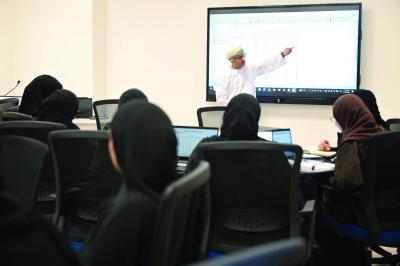
The forum’s curriculum emphasizes applied statistical methods and modern computational tools, with SPSS training forming a central component. Participants worked through data cleaning, descriptive analysis, and inferential tests using the software, while also exploring how artificial intelligence applications can streamline pattern detection and predictive modeling.
Trainers structured each session to balance theoretical explanations with lab-style exercises. Therefore, researchers had the opportunity to import real datasets, perform variable transformations, and validate model assumptions under trainer supervision. Additionally, modules introduced ethical considerations when using AI in research and guidance on reproducibility and documentation standards.
Who is participating and how sessions are structured
The second-group cohort comprises 50 graduate students and early-career researchers from a range of disciplines and institutions across Oman. The mixed cohort was intended to foster interdisciplinary exchange, officials said, enabling participants to compare approaches to data and study design across social sciences, health, and technical fields.
Sessions run daily and combine short lectures with extended practical labs. Meanwhile, peer-review exercises and group assignments encourage participants to critique analytical choices and improve reporting for potential submission to refereed journals. Trainers emphasized methods that increase the rigor and transparency of statistical reporting, which can enhance chances for publication.
Participant feedback and trainer perspectives on outcomes
Participants reported high engagement and a tangible increase in practical skills. Researcher Younis bin Salem Al-Hadidi described the experience as an opportunity to deepen understanding of statistical techniques and their applications, saying the hands-on component helped clarify how to process and analyze data more accurately.
Researcher Bushra bint Mohammed Al-Kalbani noted that the forum provided practical tools for data analysis and a platform to exchange insights with peers from diverse academic backgrounds. The cross-institutional setting, she said, broadened awareness of different methodological standards and publication expectations.
From the trainers’ perspective, Dr. Sami bin Khater Al-Mazrouei highlighted the importance of integrating theoretical instruction with applied practice. He said training postgraduate students in data analysis techniques is essential to developing their research capacities, as analytic rigor is a foundational stage of producing high-quality studies.
Implications for research capacity and publication prospects
The research skills forum is designed to raise the standard of empirical work produced within Oman’s higher education sector. By combining SPSS training with exposure to artificial intelligence applications, the program aims to equip researchers with tools to handle larger and more complex datasets, officials said.
Improved methodological competence is expected to translate into better-formulated research questions, more robust statistical inference, and clearer reporting—factors that reviewers often cite when assessing manuscripts for publication. Furthermore, emphasis on reproducibility and ethical AI use aligns with international best practices and strengthens credibility in peer review.
Next steps and what to watch for
Organizers indicated that the forum will continue across remaining cohorts in the coming weeks, with additional modules planned to address advanced modeling, data visualization, and manuscript preparation strategies. Stakeholders said they will monitor participants’ progress and may offer follow-up sessions focused on publication workshops and grant-writing support.
Readers should watch for announcements from the Research and Innovation Authority and the Arab Open University about future cycles and related capacity-building initiatives. Meanwhile, institutions involved are expected to integrate lessons from the forum into postgraduate curricula to support sustained improvements in research output.
Conclusion: Building long-term research skills in line with national priorities
The ongoing research skills forum aims to strengthen methodological proficiency among postgraduate researchers through targeted SPSS training and the introduction of artificial intelligence applications. According to organizers, this practical, hands-on approach supports Oman Vision 2040 objectives by enhancing the quality and visibility of domestic research.
Looking ahead, participants and trainers will likely pursue additional specialized training and publication-focused support. Observers should expect periodic reporting on participant outcomes and follow-up activities designed to convert improved analytical capacity into measurable gains in peer-reviewed publications and research impact.