






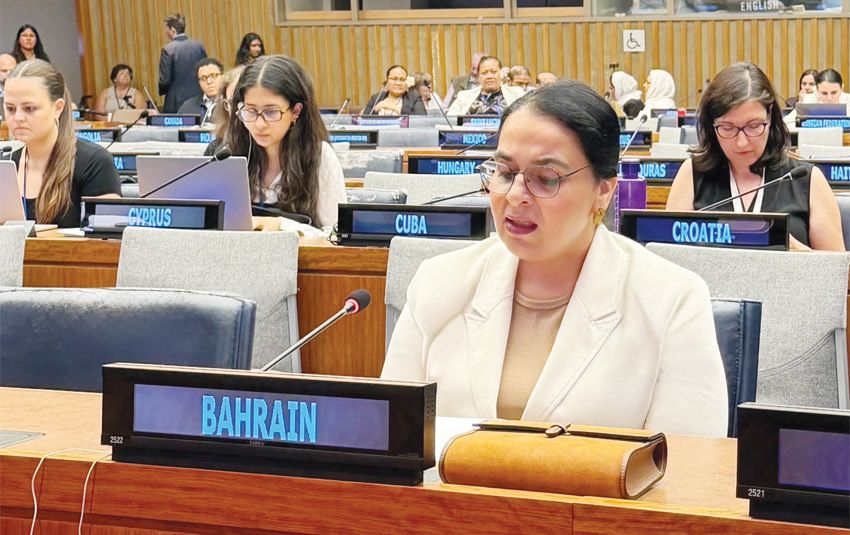

Bahrain disability rights conference participation
The Kingdom of Bahrain participated in the nineteenth session of the Conference of States Parties to the Convention on the Rights of Persons with Disabilities at United Nations Headquarters in New York from June 9 to 11, 2026. Bahrain delivered a formal statement reaffirming its commitment to the treaty’s principles and to advancing the full participation of people with disabilities. The delegation emphasized that empowering persons with disabilities remains a core development priority under national leadership, officials said.
Statement highlights and national priorities
In its statement, Bahrain stressed that promoting human dignity and protecting the rights of people with disabilities are central to its development agenda. The Permanent Mission to the United Nations read a message noting ongoing efforts to align the country’s legislative and institutional frameworks with the Convention on the Rights of Persons with Disabilities (CRPD), according to the statement delivered at the conference.
Furthermore, the delegation attributed recent reforms to directives from His Majesty King Hamad bin Isa Al Khalifa and Crown Prince Salman bin Hamad Al Khalifa, the crown prince and prime minister, saying national leadership continues to prioritize inclusion. Officials emphasized that Bahrain’s comprehensive national strategy aims to remove barriers and expand opportunities across education, employment and public services.
Gulf Cooperation Council joint statement and regional cooperation
Ambassador Nancy Abdullah Jamal, speaking on behalf of the Kingdom and in the name of the Gulf Cooperation Council, delivered a joint regional statement during the session. The joint statement, presented while Bahrain chairs the GCC for the current cycle, underscored that protecting and promoting the rights of people with disabilities is both a humanitarian obligation and a development imperative for member states.
The GCC statement highlighted coordinated regional efforts to update national laws, improve accessibility and broaden services in education, health and rehabilitation. Additionally, the statement noted regional priorities such as economic empowerment, support for entrepreneurship and the expansion of assistive technologies and digital accessibility to enhance independence and quality of life.
Implementation progress and legal reforms
Bahrain told delegates that progress over recent years includes revamping policies and strengthening institutional mechanisms to implement the CRPD’s standards. The delegation outlined steps to expand inclusive education, improve vocational training and facilitate labor market entry for persons with disabilities, aligning national practice with international obligations.
Officials also emphasized initiatives to enhance accessibility of public spaces and digital services, and to develop targeted social and economic programs. These measures, the statement said, are intended to promote autonomy and reduce barriers that limit participation in civic, economic and social life.
UN CRPD conference context and global implications
The UN CRPD conference marked two decades since the treaty’s adoption and focused on celebrating achievements while setting priorities for the next phase of implementation in a changing global environment. Bahrain’s participation, and the GCC joint statement, contributed to regional perspectives on strengthening rights-based approaches and cross-border cooperation.
Delegates at the conference discussed monitoring mechanisms, data collection and inclusive policymaking as essential tools for measuring progress. Observers said that enhanced international collaboration and capacity-building will be critical to translating conference recommendations into measurable outcomes for people with disabilities.
Technical cooperation and capacity building
Discussions in New York also highlighted the role of technical cooperation in scaling inclusive services, including assistive technology, accessible health care and adapted educational materials. Meanwhile, participants emphasized the importance of involving persons with disabilities in policy design and evaluation to ensure that solutions reflect lived experience.
What this means for Bahrain and the region
Bahrain’s visible role at the conference signals an intention to lead regional efforts on disability inclusion and to align national policies with international standards. The GCC joint statement reinforces a shared regional commitment to expand access, strengthen legal protections and enhance socio-economic participation for people with disabilities.
For domestic stakeholders, the conference outcome points to continued policy focus on accessibility, employment initiatives and digital inclusion. For international partners, Bahrain’s engagement suggests opportunities for cooperation on technical assistance, research and pilot programs that can be scaled across the region.
Conclusion and next steps to watch
Bahrain’s participation in the UN CRPD conference reiterated its long-term commitment to disability rights and regional cooperation, according to official statements. Readers should watch for follow-up actions such as national implementation reports, regional working group outputs and the scheduling of the next Conference of States Parties, which will track progress on the commitments discussed in New York.
Ultimately, the conference emphasized measurable implementation, inclusive policymaking and international partnership as priorities going forward. Stakeholders are likely to monitor how Bahrain and its Gulf neighbors convert conference pledges into concrete programs that improve daily life and autonomy for people with disabilities.