






Bahrain UK customs agreement signed during WCO council meetings
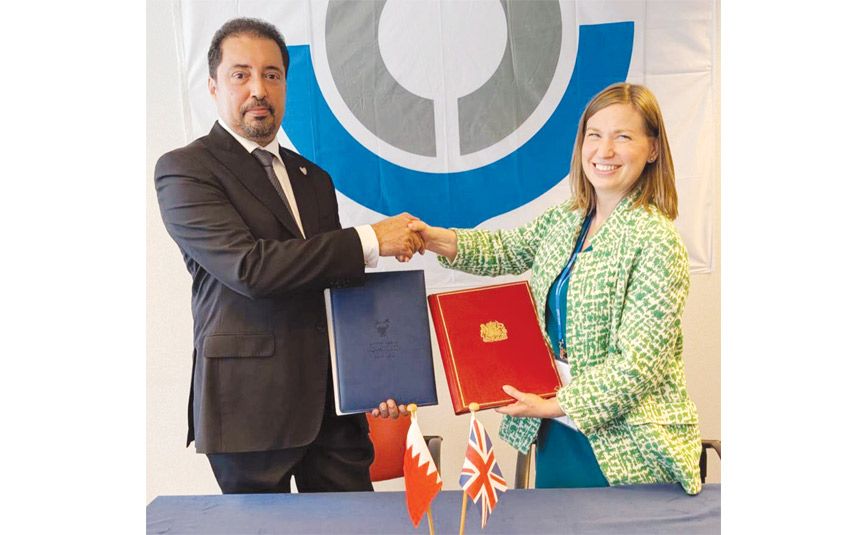
The Bahrain UK customs agreement was signed by Bahrain’s Customs President Sheikh Ahmed bin Hamad Al Khalifa and Meaghan Shaw, Head of Customs for International Affairs and Border Engagement at the United Kingdom’s HM Revenue and Customs. The signing took place on the sidelines of the World Customs Organization council meetings in Brussels, Belgium, and aims to deepen bilateral cooperation on customs matters.
Officials said the agreement formalizes a joint commitment to enhance information exchange, harmonize procedures, and support legitimate trade while protecting supply chains. The move reflects longstanding ties between the two countries and aligns with global efforts to modernize customs operations.
Terms and objectives of the Bahrain UK customs agreement
The agreement is designed to support and expand existing cooperation frameworks between Bahrain and the United Kingdom, according to a joint statement released after the signing. It seeks to promote the exchange of expertise, share best practices in customs administration, and strengthen institutional capacity on both sides.
Therefore, the accord foregrounds several priority areas: improving risk management, facilitating trade clearance for lawful consignments, enhancing border engagement strategies, and coordinating on customs legislation and implementation. Officials said a regular exchange of information and views will help align procedures with international standards promulgated by the World Customs Organization (WCO).
Joint technical committee and cooperative mechanisms
An important element of the agreement is the establishment of a joint technical committee composed of representatives from both administrations. The committee will coordinate programs, organize study visits, and oversee collaborative activities intended to transfer knowledge and operational skills.
Furthermore, the committee is expected to design capacity-building workshops, joint training modules, and technical exchanges that target areas such as digital customs systems, risk profiling, and anti-smuggling operations. Officials indicated that these measures will be developed in phases and evaluated through periodic reviews.
How the agreement will affect trade facilitation and supply chains
The pact aims to facilitate legitimate trade by streamlining customs processes and reducing administrative friction for traders operating between Bahrain and the United Kingdom. In practice, this could mean faster clearances for compliant shipments and clearer procedures for businesses engaged in bilateral commerce.
Meanwhile, the agreement also underscores the need to protect supply chains against illicit activity. By improving information sharing and harmonizing enforcement standards, the two customs authorities hope to enhance the resilience of regional and international supply networks. Trade facilitation and supply chain security are presented as complementary objectives in official statements.
Context: why the agreement matters now
Global trade continues to face pressures from shifting regulations, technological change, and evolving security threats. The WCO meetings provided a forum for both parties to align on contemporary customs priorities, officials said. The new bilateral agreement is positioned as a practical step to translate those broader discussions into concrete cooperation.
Additionally, the agreement supports Bahrain’s broader economic diversification goals and the United Kingdom’s international engagement on trade and border security. In this context, customs cooperation serves both economic and security policy aims, reinforcing cross-border business confidence and regulatory predictability.
Implementation timeline and expected next steps
According to the joint announcement, the two parties will begin by convening the technical committee and mapping shared priorities. Therefore, the initial phase will focus on an action plan that schedules exchanges, defines training curricula, and sets benchmarks for measuring progress.
Officials said that visits and technical workshops will commence in the coming months, subject to logistical arrangements and approval processes. Meanwhile, the agreement establishes channels for ongoing dialogue on legislative developments and emerging customs challenges.
What stakeholders should watch next
Businesses and logistics providers should monitor the committee’s work plan and any procedural changes that may affect import and export documentation, risk assessments, or transit arrangements. Customs brokers and freight forwarders, in particular, may see opportunities to streamline operations as bilateral measures take effect.
Furthermore, observers should watch for announcements regarding digital cooperation or pilot projects that test data-sharing protocols and joint risk assessments. Such initiatives, if pursued, could serve as models for similar bilateral agreements between other customs administrations.
Conclusion: practical benefits and future outlook
The Bahrain UK customs agreement formalizes a shared intent to modernize customs cooperation, improve trade facilitation, and safeguard supply chains. Officials described the accord as a reflection of strong historical relations and a mutual desire to align customs practices with international standards promoted by the WCO.
Looking ahead, the next expected step is the activation of the joint technical committee and the rollout of initial training and exchange programs within months. Stakeholders should watch for detailed implementation schedules and any pilot initiatives that demonstrate the agreement’s operational impact.