






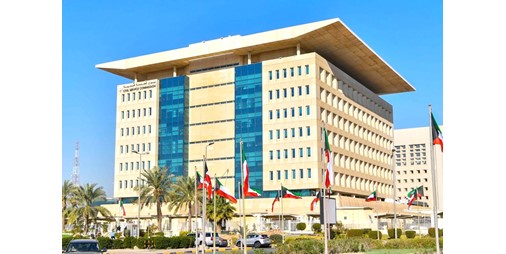

Hijri New Year holiday 1448: Official public sector schedule announced
The Diwan of the Civil Service announced the official arrangements for the Hijri New Year holiday 1448, outlining two alternative schedules depending on the lunar calendar confirmation. The circular, signed by Acting Undersecretary Salah Al-Saqabi, sets public sector closures for mid-June 2026 and specifies resumption dates for government departments and institutions.
The announcement applies to all ministries, government entities and public institutions nationwide, with exceptions for agencies that have special operational needs. Officials said the circular follows prior Council of Ministers decisions and provides contingency dates to accommodate moon-sighting outcomes.
Details of the Hijri New Year holiday 1448 schedule
The circular provides two scenarios tied to the length of Dhu al-Hijjah 1447. If Dhu al-Hijjah is determined to be 29 days, Tuesday, June 16, 2026, will be observed as the official holiday for the Hijri New Year, and normal work will resume on Wednesday, June 17, 2026. In this case, public sector closures will be limited to a single official day off.
Alternatively, if Dhu al-Hijjah is declared to be 30 days, the Diwan stated that Wednesday, June 17, 2026, will be the official holiday for the Hijri New Year, and Thursday, June 18, 2026, will be treated as a bridging rest day occurring between official holidays. Under that scenario, public sector work will resume on Sunday, June 21, 2026.
Who is affected and how exceptions are handled
The circular addresses public sector closures broadly but allows agencies with unique operational requirements to set their own leave schedules. Agencies that provide essential services, security, or continuous operations are instructed to determine their own holiday arrangements in coordination with the competent authority responsible for their sector, officials said.
Therefore, residents and businesses that rely on government services are advised to check directly with the specific ministry or authority for service availability during the announced period. Furthermore, the Diwan emphasized that the public interest should guide any adjustments made by entities with special work patterns.
Legal basis and government context
The circular cites the legal framework underpinning public holidays, including the Council of Ministers Decision No. 42 of 1979, dated July 22, 1979, and subsequent amendments. It also references Council of Ministers Decision No. 252 taken at Meeting No. 2008/9 on March 3, 2008, concerning certain official holidays, and the Council decision reached on June 10, 2026, regarding the Hijri New Year holiday for 1448.
According to the Diwan, the guidance is issued in conformity with those cabinet decisions and serves to provide clear operational guidance to ministries, government entities and public institutions. The circular format reflects standard civil service practice for announcing national holiday observances.
Practical implications for public services and businesses
Public sector closures for the Hijri New Year holiday 1448 will affect administrative services such as licensing, permit issuance, and routine processing that are handled by government offices. Businesses that depend on those services should plan in advance to avoid delays, officials advised. Additionally, financial and commercial institutions should plan staffing to match anticipated client demand and regulatory timelines.
Private-sector employers often align their leave policies with official public sector closures. Therefore, private businesses may adjust work schedules or customer service hours for the dates specified in the civil service circular. Meanwhile, logistics and transport providers are likely to see changes in demand patterns tied to the holiday period.
How the decision aligns with regional practice and moon-sighting
Using two contingency scenarios tied to whether Dhu al-Hijjah is 29 or 30 days reflects common regional practice for Islamic lunar holidays, which depend on moon-sighting or astronomical calculations. The Diwan’s dual-scenario approach is intended to reduce uncertainty and give agencies and the public advance notice of possible dates.
Observers noted that providing both outcomes in a single circular helps businesses and public service providers prepare for either schedule. Furthermore, the arrangement avoids last-minute disruptions by clarifying the resumption of official work under each scenario.
What officials say and what to watch next
Acting Undersecretary Salah Al-Saqabi’s circular reiterates that competent authorities should consider the public interest when setting exceptions, according to the Diwan’s statement. The public is advised to monitor official announcements and communications from their specific ministries or public institutions for confirmation following the lunar determination.
Authorities will likely issue a follow-up notice confirming which of the two scenarios applies once the moon-sighting or official astronomical determination is complete. Citizens and businesses should watch for that confirmation in the days immediately preceding June 16–17, 2026.
Conclusion and forward-looking guidance
The Diwan of the Civil Service’s circular establishes clear options for the Hijri New Year holiday 1448 and sets expectations for public sector closures and resumptions. Residents and service providers should prepare for either the June 16 single-day closure or the extended break beginning June 17, depending on the lunar determination.
Next steps include the official lunar confirmation and any sector-specific notices from ministries and agencies with special operational needs. Observers and affected parties should monitor official channels for the final determination and adjust plans accordingly to minimize disruption.