







Private higher education governance under review at State Council meeting
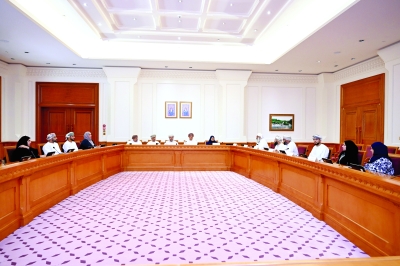
A subcommittee of the State Council’s Education and Research Committee met today at the State Council headquarters in Muscat to examine management of private higher education institutions, focusing on government oversight and self-governance. The session, chaired by Dr. Hamad bin Hilal Al Yahmadi and attended by committee members, forms part of a broader study on strengthening links between higher education and the private sector.
Representatives from Mohammed Al-Browani Company attended to present perspectives and proposals on expanding the private sector’s role in supporting universities, improving graduate employability, and responding to market needs. Officials said the meeting reviewed collaboration mechanisms, curriculum alignment and financing options for joint programs.
Strengthening private higher education governance
The committee concentrated on options to enhance private higher education governance through clearer regulatory frameworks and stronger institutional self-governance. According to the subcommittee, reforms could balance necessary government oversight with incentives for private institutions to adopt corporate governance practices and quality assurance measures.
Furthermore, participants discussed how updated governance models might promote transparency, accountability and performance measurement in private higher education, while allowing academic autonomy where appropriate. The dialogue reflected concerns about governance affecting program quality and the capacity of graduates to meet employer expectations.
Key meeting outcomes and stakeholder input
During the meeting, Mohammed Al-Browani Company outlined proposed roles for employers in curriculum advisory boards and internship schemes to drive closer university-industry partnership. Committee members examined these proposals alongside international examples of employer-led curriculum development and co-funded vocational pathways.
Discussion covered multiple strands: cooperative program financing, joint oversight arrangements, and metrics to evaluate educational outcomes. Officials emphasized that decisions should aim to increase the relevance of academic programs while maintaining academic standards and regulatory compliance.
Aligning programs with labor market needs and Oman Vision 2040
Committee members reviewed how academic offerings match the needs of promising economic sectors, with particular reference to strategic priorities linked to Oman Vision 2040. Analysts at the meeting noted gaps in graduate-ready skills and recommended targeted interventions to improve graduate employability across priority fields.
Participants weighed proposals to introduce industry-recognized competencies, modular training, and mandatory work-based learning components for degree programs. These measures were discussed as ways to narrow the skills gap and better prepare graduates for roles in emerging sectors, according to officials present.
International practices, practical training and funding mechanisms
Attendees examined international best practices in practical training and vocational qualification pathways that facilitate smoother transitions from study to work. The committee looked at examples of apprenticeship models, employer-sponsored labs, and sectoral training consortia used abroad to enhance job readiness.
Financing options for joint academic-industry programs also featured prominently, including shared-cost models, grant-supported partnerships and potential incentives for employers to invest in curriculum development. The subcommittee noted that sustainable funding arrangements are critical to scaling successful pilot programs.
Employer engagement and curriculum design
There was agreement that stronger employer engagement in curriculum design could improve alignment between course content and workplace realities. Officials indicated that formal mechanisms—such as advisory councils and practicum requirements—should be encouraged under any new governance framework for private higher education.
Challenges, proposals to bridge the skills gap and implementation considerations
Participants identified several challenges, including uneven coordination between recruitment firms, educational institutions and public agencies, and the limited uptake of practical training in some fields. The committee examined proposals aimed at reducing these barriers and raising the readiness of national talent pools for the labor market.
Suggested measures included clearer accreditation standards tied to employability outcomes, enhanced data-sharing on graduate trajectories, and incentives for private institutions to adopt competency-based assessments. Officials cautioned that reforms must be phased and supported by capacity-building for smaller institutions.
Next steps and expected timeline
The subcommittee will continue a series of meetings as it prepares recommendations intended to improve institutional governance, align academic outputs with economic needs, and boost sustainable employment prospects for graduates. Committee representatives said a draft report will consolidate stakeholder input, international models and policy options for review by the full council.
Observers should watch for the committee’s forthcoming recommendations and any follow-up consultations with ministries, industry partners and private providers. The council aims to deliver practical, evidence-based guidance that supports stronger private higher education governance and contributes to national development objectives.