








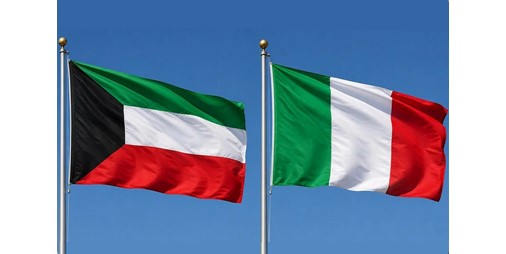

Kuwait-Italy defense agreement approved under Decree-Law No. 60 of 2026
Kuwait Today reported that Decree-Law No. 60 of 2026 has approved a Kuwait-Italy defense agreement signed in Rome on January 13, 2026. The agreement, attached to the decree and published in the official gazette, establishes a framework for defense cooperation, including military training, equipment exchanges, and information protection between the two governments.
The decree instructs relevant ministers to implement the agreement and states that it enters into force upon publication. According to the explanatory memorandum, the treaty spans 14 articles and frames consultations, practical arrangements and modalities for cooperation.
Key provisions of the Kuwait-Italy defense agreement
The agreement outlines core forms of defense cooperation such as providing courses and educational programs, exchanging expert visits by civilian and military delegations, and joint activities in military training and information technology. Furthermore, it specifies categories of materiel that may be transferred, including tanks, military-use vehicles, and military training materials.
Article summaries in the memorandum indicate that transfers and purchases of material may occur either through direct state-to-state transactions or via private companies licensed by the respective governments. Therefore, procurement channels are flexible but subject to licensing and national oversight.
Training programs and exchanges
Under the pact, training and educational exchanges are a central pillar of the cooperation. Officials said the arrangement is intended to promote interoperability and shared expertise in areas such as logistics, IT modernization, and tactical training. Additionally, exchanges are designed to include both civilian defense officials and military personnel to broaden institutional capacity.
Costs related to training and accommodation are generally borne by the sending state unless otherwise agreed, while participants remain subject to the host country’s customs and tax regulations. This financial framework aims to clarify responsibilities and avoid ad hoc disputes over program expenses.
Security, legal and financial mechanisms
The agreement establishes detailed safeguards for classified information shared between Kuwait and Italy. It calls for a separate mutual information protection arrangement to ensure that secret information produced, processed or exchanged under the agreement remains protected during and after the agreement’s term.
Liability and compensation clauses require the party whose personnel cause damage to provide compensation, with amounts to be agreed bilaterally. In contrast, the host state assumes responsibility for losses or damages to third parties on its territory arising from implementation of the agreement, subject to agreed compensation mechanisms.
Arms transfer rules and procurement channels
One notable feature of the Kuwait-Italy defense agreement is the explicit classification of transferable categories and the processes for arms transfer. Tanks and military vehicles are listed among permitted items, along with materials intended for military training. However, transfers remain subject to licensing and the laws of the receiving state, as well as any international obligations.
The memorandum clarifies that purchases essential to the armed forces may occur through direct intergovernmental sales or via private firms authorized by both governments. This dual-track approach allows for state-to-state strategic deals while enabling commercial suppliers to participate under governmental oversight.
Legal conformity, dispute resolution and intellectual property
The agreement is to be implemented in accordance with applicable international law and, for Italy, consistent with obligations arising from European Union membership. In case of disputes over interpretation or implementation, the parties commit to seeking an amicable settlement through diplomatic channels and consultations before pursuing other remedies.
Protection of intellectual property and personal data is also covered. The parties commit to taking measures to protect intellectual property rights resulting from cooperative activities, including patents, and to safeguard personal data processed under the agreement’s scope.
Exceptional cases, timeline and implementation steps
The treaty provides for exceptional measures, including the right of the host state to terminate training and repatriate personnel who violate local laws or regulations. This safeguard is intended to preserve public order and ensure compliance with host-nation legal frameworks.
Implementation steps outlined in the decree require relevant ministers to enact the agreement’s provisions. Observers should watch for subsequent implementing arrangements that define operational details such as licensing procedures, training schedules and the first rounds of bilateral exercises or courses.
Implications for regional security and bilateral relations
Analysts note the agreement strengthens bilateral defense ties by institutionalizing exchanges and procurement channels. Therefore, it may lead to enhanced interoperability and technology transfer, particularly in areas like military training and information systems.
Meanwhile, the pact signals Kuwait’s intent to diversify strategic partnerships and Italy’s interest in expanding defense cooperation in the Gulf. The arrangement does not appear to conflict with Kuwait’s broader international obligations, according to the explanatory memorandum attached to the decree.
Conclusion and what to watch next
The Kuwait-Italy defense agreement, approved by Decree-Law No. 60 of 2026, creates a structured path for defense cooperation involving military training, arms transfer guidelines, and protection of classified information. The next steps include ministerial implementation, issuance of licenses for material transfers, and detailed implementing arrangements.
Observers should monitor announcements of the first joint training programs, the publication of licensing procedures, and any bilateral procurement contracts that may follow. These milestones will indicate how quickly the two governments move from agreement text to operational defense cooperation.