








Bird Migration in Kuwait Shows Unexpected Shifts, Environmental Group Reports
The Kuwait Environmental Protection Society said on Sunday that field teams have documented notable shifts in bird migration in Kuwait, with sudden increases in sightings, unexpected breeding records and changes in seasonal behavior. According to the society and the Kuwait News Agency (KUNA), the observations span coastal and inland sites and reflect broader environmental monitoring trends.
Field data collected by the society’s bird monitoring and protection team indicate recent atypical patterns in timing, distribution and breeding activity of several species. Team member Mohammed Al-Hudaina told KUNA that Kuwait remains an important and relatively safe corridor for certain rare birds and migrating populations.
Coastal Surprises: Marine Species Appear More Frequently
One of the most striking developments involves a short-tailed shearwater, a marine species first recorded off Ras Salmiya in May 2014 and later in 2021 near Zour and Qarouh Island. In the latest season observers noted unprecedented flocks: a group of 20 near Al-Ahmadi Port last year and a separate flock of 24 near Shuaiba this year.
Furthermore, the species has been detected in sheltered waters such as the Jabir Bridge area, with a single survey recording up to 10 individuals in an estuarine setting. These coastal records suggest short-tailed shearwaters are exploiting local currents and marine productivity to extend their presence inside Kuwait Bay.
Landward Changes: Resident and Transient Birds Showing New Behaviors
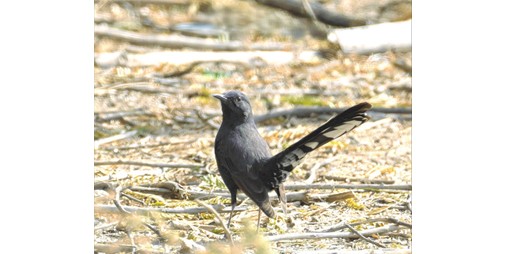
On land, observers reported significant behavioral shifts in what had been presumed purely transient species. A wading or passerine species known locally as the black wheatear was historically recorded intermittently during spring and summer, with the first documented individual in 2006. Recent monitoring shows the species now appearing during atypical winter months and, notably, a breeding pair has been observed since 2025.
Field teams confirmed the presence of a fledgling at the site, which, if the pair remains, would qualify the species as a confirmed breeder in Kuwait. This development is significant for regional breeding records and may reflect habitat or climatic changes that make inland areas more hospitable during cooler months.
Winter Visitors: Purple Sunbird Establishes Regular Presence
Another notable trend is the increasing regularity of the Purple Sunbird as a winter visitor. First documented in January 2008 at Ras Al-Subiya and later in November 2014 near Khor Al-Khiran, the species has been recorded repeatedly at multiple urban and agricultural locations in recent years, including early 2025 and 2026 surveys.
The Purple Sunbird now appears consistently from November through March, frequenting ornamental plantings, public gardens and residential green belts. Observers cite sites such as Martyr’s Park, the Sheikh Jaber Cultural Center area, and residential districts from Abdullah Al-Salem to Abu Hsania as regular wintering locations.
Role of Urban Landscaping and Agriculture
Environmental monitoring indicates that coordinated urban planting and managed green spaces have created microhabitats that support wintering passerines. Additionally, irrigation and food resources in gardens and farms may provide reliable sustenance through colder months, aiding the adaptation of some species to Kuwait’s modified landscapes.
Implications for Conservation and Monitoring Programs
Experts say these observations carry implications for conservation planning, biodiversity inventories and habitat management. The Kuwait Environmental Protection Society emphasized that systematic monitoring helps distinguish between isolated vagrancy and genuine range shifts or new breeding populations.
According to the society, these records should prompt targeted surveys, habitat assessments and, where necessary, protective measures. Furthermore, the appearance of rare birds and novel breeding records enhances Kuwait’s importance along migratory flyways and underscores the need for continued environmental monitoring.
Data-Driven Responses
Field data gathered by volunteer and professional observers will be essential to inform policy decisions. Officials and researchers said sustained monitoring, paired with habitat protection and public awareness campaigns, can help manage human-wildlife interactions and safeguard critical stopover and breeding sites.
What This Means for Birdwatchers and Policymakers
For birdwatchers, the emerging patterns offer new opportunities to observe rare birds and document changing migration phenology. For policymakers, the records signal potential shifts in ecosystem dynamics that may require updated management strategies for coastal zones, urban parks and agricultural lands.
Secondary keywords such as rare birds and breeding records are appearing more frequently in official logs, which suggests researchers will prioritize these topics in upcoming assessments. Stakeholders are advised to coordinate monitoring efforts and share validated sightings with national databases and regional conservation networks.
Looking Ahead: Monitoring, Research and Next Steps
Moving forward, the Kuwait Environmental Protection Society plans to maintain enhanced field surveys and expand citizen science initiatives to confirm trends and detect new developments. Observers will focus on verifying breeding status, mapping seasonal distribution and assessing habitat quality at key sites.
Readers should watch for formal reports and annual summaries from the society and national agencies later this year. Continued documentation through 2026 and beyond will clarify whether current observations represent short-term anomalies or longer-term shifts in bird migration in Kuwait.