






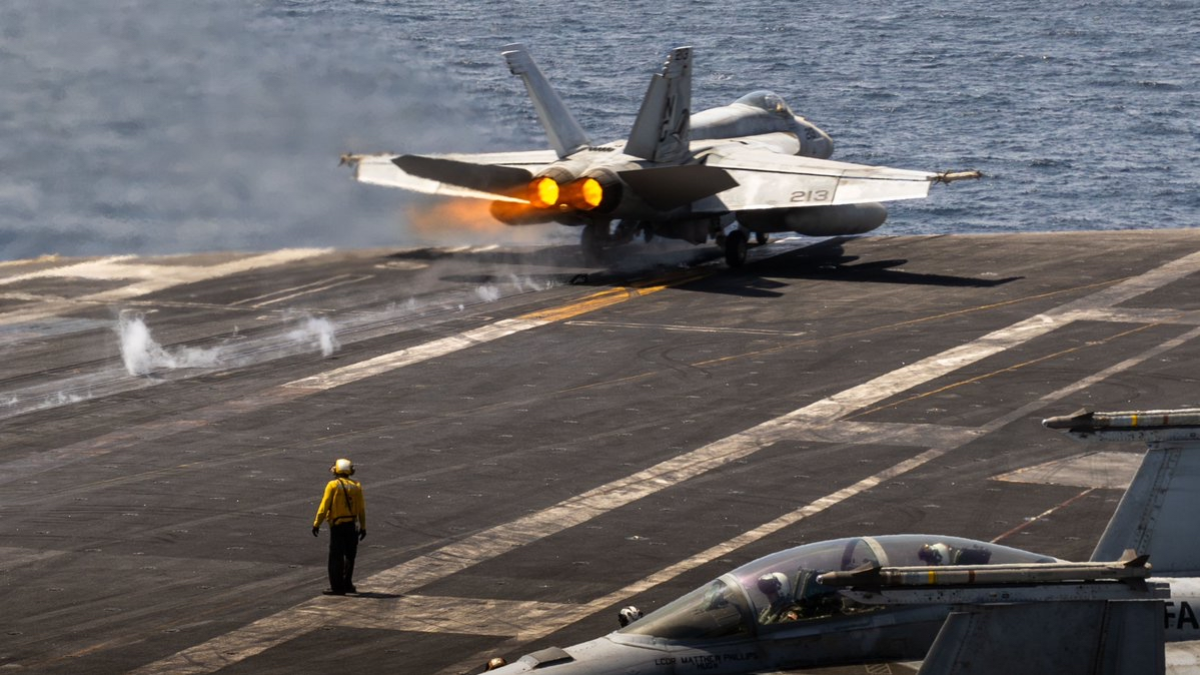

Iran accused the United States on Tuesday of breaching a ceasefire after what U.S. Central Command said were overnight strikes on sites in southern Iran, and Tehran vowed retaliation while regional diplomacy intensified. The allegation centers on strikes in the Hormozgan region near the Strait of Hormuz, and officials on both sides said talks were continuing to salvage a broader deal.
U.S. Central Command (CENTCOM) said its forces struck missile and boat-launch sites in southern Iran during the early hours, while Iranian state media and the foreign ministry described the incident as a “serious violation” of the ceasefire. Tehran has not detailed the specific incident it cited but warned it would respond if national interests were threatened, according to official statements.
U.S. airstrikes in Iran
CENTCOM reported the strikes targeted what it called launch infrastructure for missiles and small craft, saying the actions were taken to reduce threats to regional shipping and forces. Iran’s foreign ministry, however, framed the strikes as illegal and inconsistent with the truce brokered in April, according to state outlets. Meanwhile, local reports cited skirmishes and claims of aircraft and drones near Larak Island in Hormozgan province in the same timeframe.
U.S. officials have not released detailed imagery or a full assessment publicly, and Iranian authorities gave limited description of the alleged violation beyond the ministry’s statement. The apparent confrontation underlines how fragile the ceasefire remains and why diplomats are racing to lock down a more comprehensive agreement.
Diplomatic push and Doha talks
Despite the renewed tensions, senior Iranian negotiators traveled to Doha for indirect talks, and reports say the delegation returned to Iran after meetings with Qatari interlocutors. Officials including Mohammad Bagher Ghalibaf and Abbas Araghchi were reported by Iranian state media to have engaged Qatari hosts as part of a mediated process that seeks to expand the current cessation of hostilities into a broader accord.
Asset demands and negotiating priorities
One core sticking point remains access to frozen Iranian assets. Iranian outlets cited negotiators seeking release of roughly $24 billion in frozen funds, with a reported proposal to free half upon signing a preliminary memorandum of understanding. The asset release demand and the separate nuclear file are described as sequencing issues in the talks, according to the reports.
Qatar and Pakistan are both reported to be active in mediation, and regional leaders held multiple phone contacts on Tuesday to support de-escalation. Sources indicated seven diplomatic calls that day involving Arab and Iranian leaders, reflecting a concentrated regional push to prevent renewed escalation.
Regional security incidents and maritime risks
The Islamic Revolutionary Guard Corps said it shot down a U.S. drone and fired on other aircraft attempting to enter Iranian airspace, a claim that Iranian outlets published without providing independent evidence. U.S. and coalition sources have disputed or not corroborated some of these specific accounts, underscoring the information uncertainty in contested incidents.
Compounding tensions at sea, the U.K. Maritime Trade Operations center reported an explosion on the Greek-owned tanker Olympic Life about 60 nautical miles from Muscat, Oman. The vessel reported a hull explosion and a fuel leak but the crew was confirmed safe, according to the maritime agency and ship-tracking data from MarineTraffic.
Investigators have not publicly determined the cause of the tanker strike, and authorities cautioned against drawing immediate links between that incident and the wider military exchanges. Nonetheless, the incident highlights ongoing risks to commercial shipping in the Gulf of Oman and the Strait of Hormuz amid the wider confrontation.
Implications for the ceasefire and negotiations
The latest strikes and counterclaims test the limits of the interim cessation reached in April, and they complicate efforts to translate a temporary halt into a lasting settlement. U.S. officials have signaled willingness to negotiate framework terms, while Iranian leaders, including the supreme leader’s office, have publicly called for regional cooperation to curb foreign military presence.
Diplomats say momentum toward a framework deal remains possible but fragile, with timelines described in days rather than weeks by some participants. Key variables include agreement on verification measures, sequencing on the nuclear file, and mechanisms for phased release of frozen assets as a confidence-building measure.
What to watch next
Observers should monitor follow-up diplomatic activity in Doha and Islamabad, any publicly released CENTCOM assessments or imagery, and statements from Tehran clarifying the foreign ministry’s accusation. Expect regional leaders and mediators to continue shuttle diplomacy in the coming days to prevent further military escalation and to advance the asset-release negotiations.
If talks do not yield a rapid framework, analysts warn the risk of episodic strikes and maritime incidents could rise, affecting commercial traffic and regional security. Conversely, a limited memorandum of understanding could unlock partial asset transfers and a path to broader talks, a development negotiators in the region say remains the immediate objective.