







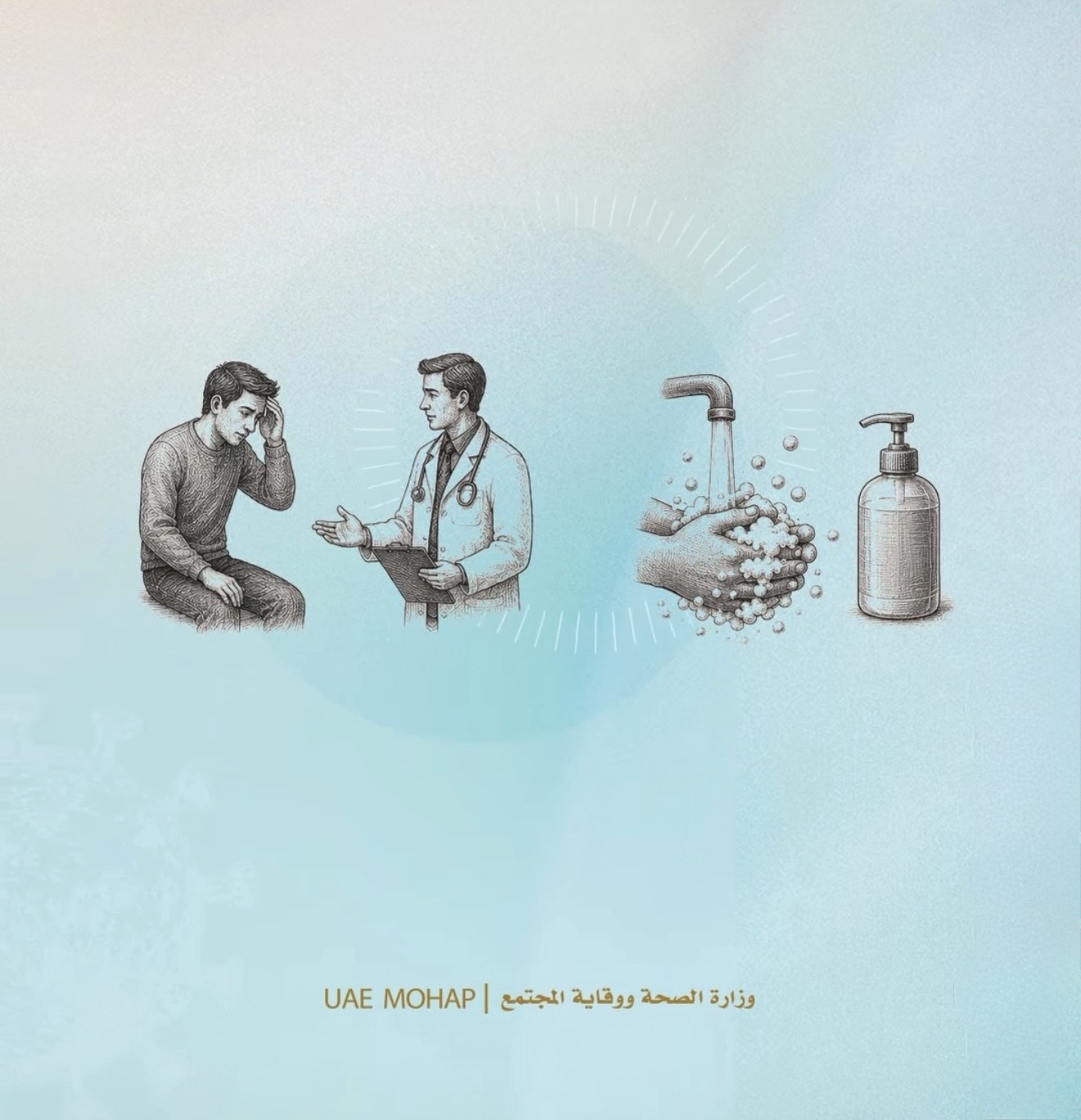

The UAE Ministry of Health and Prevention urged reliance on verified information about the Ebola virus amid reports of a current outbreak in parts of central Africa, the ministry said Monday. Officials described how the disease spreads, summarized early warning signs and advised the public to consult official health assessments to avoid unnecessary concern.
The ministry noted that the World Health Organization has classified the ongoing event linked to the Bundibugyo strain as a public health emergency of international concern, and that cases remain concentrated in areas of the Democratic Republic of Congo with some imported cases reported in neighbouring Uganda, according to official statements.
Ebola virus: transmission and early symptoms
The ministry emphasized that the Ebola virus spreads through direct contact with bodily fluids from an infected person or contaminated materials, and it does not transmit through the air like seasonal influenza or SARS-CoV-2, officials said. Therefore, standard respiratory routes are not the primary concern when assessing exposure risk.
Symptoms typically begin within two to 21 days after exposure, and the ministry identified six early signs that can resemble flu-like illness: fever, fatigue, headache, muscle pain, vomiting and general weakness. Additionally, officials stressed that individuals are not considered contagious before symptoms appear, which affects both contact tracing and screening strategies.
Current outbreak and international response
According to the ministry, international health authorities are treating the outbreak with heightened attention, and the World Health Organization continues to monitor and reassess global risk levels. The ministry reiterated that WHO’s classification helps coordinate cross-border readiness and support, and it called for relying on WHO and other official evaluations for guidance.
Meanwhile, public health teams in affected countries are mobilizing surveillance, case investigation and laboratory confirmation efforts. Therefore, the international response focuses on rapid detection, isolating confirmed cases, and tracing contacts to limit further spread, the ministry statement indicated.
UAE precautions and travel advisory
The Ministry of Health and Prevention said the United Arab Emirates has stepped up early-detection measures, increased readiness at airports and border points, and reinforced preparedness in hospitals and laboratories. Furthermore, interagency coordination and response protocols have been activated to ensure a timely public health response if needed.
The UAE Ministry of Foreign Affairs advises avoiding nonessential travel to the Democratic Republic of Congo, Uganda and South Sudan at this time, and recommends consulting the latest government travel guidance before booking or undertaking trips. Additionally, travellers are urged to monitor official updates and follow instructions from health authorities in both departure and destination countries.
Guidance for travellers and the public
Officials outlined four practical steps for travellers: follow official health guidance, maintain strict personal hygiene, monitor health after travel, and review up-to-date travel advisories before departure. These measures aim to reduce individual risk and support broader public-health monitoring, the ministry said.
In particular, practising hand hygiene, avoiding contact with bodily fluids and seeking immediate medical attention if symptoms develop are key precautions. Therefore, health providers should be notified about recent travel to affected areas when assessing patients with compatible symptoms.
Testing, treatment and vaccine context
The ministry encouraged the public to consult official sources for accurate information on diagnostics and care options rather than relying on social media reports. According to officials, laboratory testing remains essential to confirm cases and guide clinical management and public-health actions.
While treatment primarily involves supportive care to manage symptoms and complications, international health agencies are involved in deploying medical countermeasures where appropriate. Furthermore, research and vaccination efforts continue to inform prevention strategies in outbreak settings, as noted by the World Health Organization.
Communications and combating misinformation
The ministry warned against spreading unverified reports and urged the public to use only trusted sources such as official government channels and the World Health Organization for updates. Inaccurate information can generate undue panic or false reassurance, complicating public-health responses, officials said.
Therefore, journalists, community leaders and health professionals are encouraged to reference authoritative assessments and to clarify the nature of transmission, incubation periods and symptom profiles when informing the public. This approach supports measured individual decisions and effective community-level interventions.
Related considerations
Secondary keywords such as travel advisory and symptoms are relevant for those planning trips or monitoring personal health. Additionally, awareness of the Democratic Republic of Congo and regional dynamics helps contextualize why neighbouring countries may heighten surveillance and border screening activities.
For clinicians, early recognition of compatible symptoms coupled with a travel history to affected areas remains central to timely diagnosis and containment. Meanwhile, laboratories play a crucial role in confirming cases and supporting epidemiologic investigations.
Conclusion: The ministry reiterated that accurate, official information is the best defence against unnecessary alarm and that preparedness measures in the UAE and internationally are ongoing. Watch for further updates from the Ministry of Health and Prevention and the World Health Organization as surveillance continues and as authorities reassess risk and response priorities in the coming days and weeks.