







Saudi graduates in Boston honored at Harvard ceremony
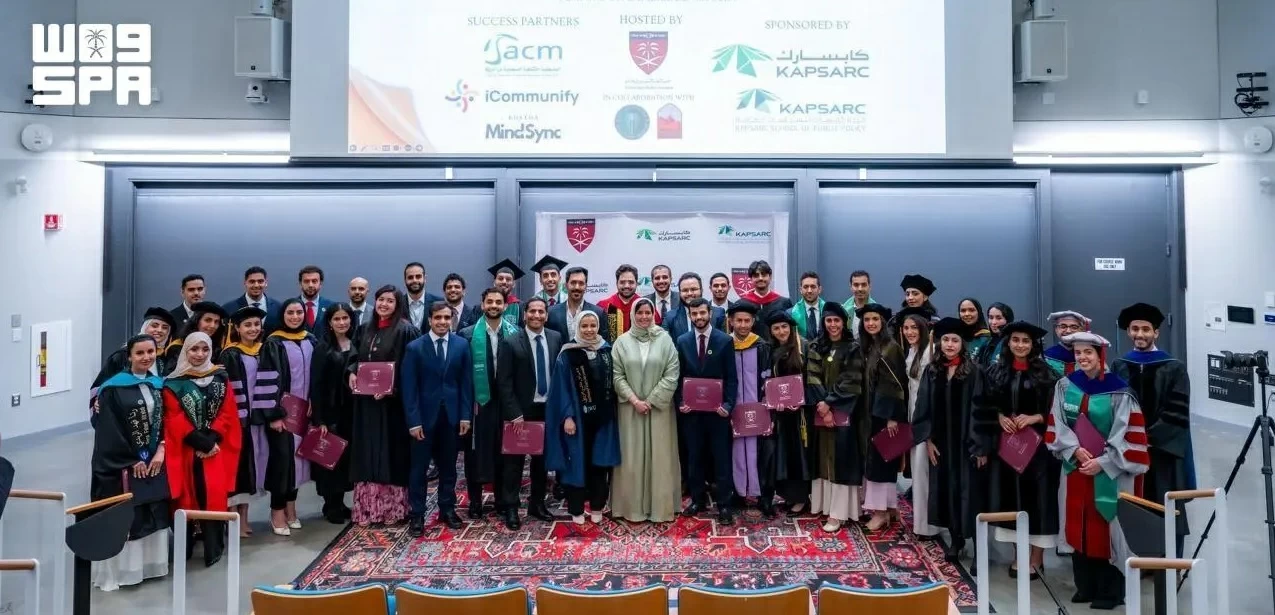
Seventy Saudi students were celebrated yesterday at a graduation ceremony held at Harvard University, where Dr. Tehany bint Abdulaziz Al-Biz, the Saudi cultural attaché to the United States and Canada and supervisor for South America, presided over the event. The ceremony honored Saudi graduates in Boston from several leading institutions, with families, peers and academic staff in attendance.
Who attended and which universities were represented
The attaché noted that the cohort included graduates from Harvard, the Massachusetts Institute of Technology, Boston University and Tufts, among others, according to official statements. The list comprised 29 graduates from Harvard, nine from MIT, 19 from Boston University and ten from Tufts, with additional graduates from the University of Massachusetts Boston and Johnson & Wales University.
Furthermore, Abdulrahman Al-Naqshbandi, president of the Saudi Club at Harvard, publicly thanked the attaché for attending and sharing the students’ milestone. Officials said the presence of the cultural office signaled ongoing institutional support for Saudi students abroad and highlighted community ties in the Boston academic region.
Academic fields and program levels among the graduates
The graduation group represented a broad range of disciplines that the attaché described as aligned with national development priorities and the Kingdom’s Vision 2030. Areas of study included medicine, public health, dentistry, specialized medical fields, engineering, computer science and artificial intelligence, as well as business administration, public policy, law, finance and supply chain management.
Additionally, the attaché emphasized a strong showing of advanced medical training in the cohort. The program list featured residents, fellows, doctoral candidates and clinical research participants, in addition to master’s and bachelor’s degree recipients in technical and managerial fields. This pattern, officials said, reflects a strategic emphasis on building national human capital with transferable research and clinical skills.
Main keyword: Saudi graduates in Boston — implications for human capital
Dr. Al-Biz underscored that the achievements of Saudi graduates in Boston demonstrate the Kingdom’s long-term investment in human capital. The attaché said the results reflect the returns on government-supported scholarship initiatives, adding that graduates are positioned to support the public and private sectors upon return to Saudi Arabia.
Moreover, the graduation ceremony served as a practical example of how overseas education fits into broader workforce planning. The attaché linked the graduates’ fields of study to sectors prioritized under Vision 2030, noting that graduates in health, STEM and policy areas are likely to contribute directly to national modernization efforts.
Scholarship strategy and alignment with Vision 2030
Officials referenced the Custodian of the Two Holy Mosques Scholarship Program and recent strategic updates launched by Crown Prince Mohammed bin Salman as central to the shift in scholarship priorities. The attaché said the program’s new strategy aims to improve global competitiveness, match specialties to evolving labor market needs and support the sectors targeted by Vision 2030.
In this context, secondary keywords such as scholarship program and Saudi students abroad describe ongoing reforms. The attaché noted specific scholarship tracks — including Ruwad, Imdad, Waed and the Research & Development track — that are intended to cultivate leaders, researchers and skilled professionals who can scale up national capabilities.
How the graduates fit into research, healthcare and industry needs
University-level training in Boston’s research ecosystem was highlighted as a significant factor in the graduates’ preparedness for technical and clinical roles. According to the attaché, exposure to advanced laboratories, clinical environments and interdisciplinary research teams equips graduates with experience that can be transferred to Saudi institutions.
Therefore, officials said graduates involved in clinical research, doctoral studies and medical residencies are expected to strengthen Saudi healthcare systems, while those trained in AI, computer science and engineering may support digital transformation and industrial diversification. The attaché suggested that this cross-sector capacity will help sustain innovation and economic resilience.
Community and institutional support
The cultural office’s active engagement with students and alumni was presented as part of a comprehensive support framework. The attaché’s attendance and the club’s statements reflect an ongoing partnership between Saudi educational offices, student organizations and host institutions in the United States.
Meanwhile, attendees observed that such events reinforce networks that extend beyond graduation, facilitating professional mentorship, research collaboration and reintegration into Saudi workforce pathways. Officials indicated continued outreach and follow-up services for returning graduates.
What to watch next
Observers should monitor forthcoming scholarship cycles and updates to the scholarship program’s implementation guidelines, which officials have said will further align study fields with market demands. Furthermore, stakeholders will likely track the deployment of returning graduates into priority sectors and measure outcomes related to healthcare capacity, research output and digital transformation.
Lastly, the attaché’s office is expected to continue hosting convocation and alumni events that connect current students with institutional and industry partners. Readers should watch for official reports or ministry statements that outline metrics and timelines for how graduates will be integrated into national development plans.
Conclusion
The Harvard ceremony for Saudi graduates in Boston highlighted a cohort trained across clinical, technical and managerial fields deemed vital to the Kingdom’s strategic goals. According to the attaché, these graduates embody the objectives of the scholarship program and Vision 2030 by building national competencies.
As universities and the cultural office follow up, stakeholders will assess how these graduates contribute to healthcare, research and economic priorities in the coming year. Therefore, upcoming policy updates and placement data will be key indicators of the program’s short-term impact and the longer-term trajectory of Saudi students abroad.