






Arabic cultural understanding
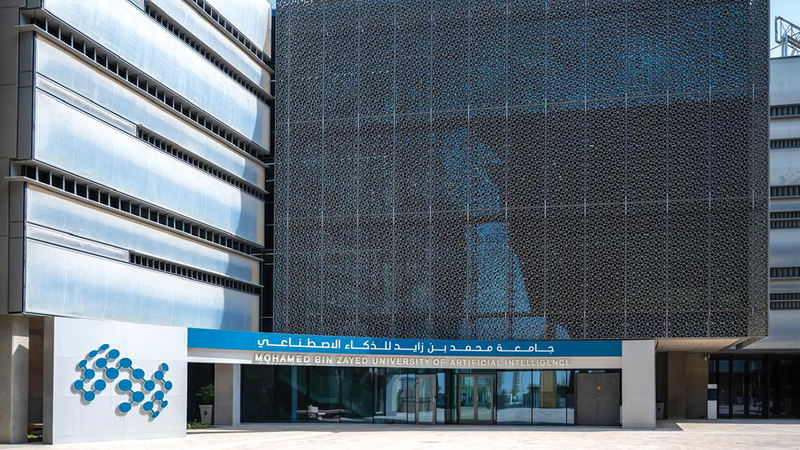
Researchers at Mohamed bin Zayed University for Artificial Intelligence have released a new benchmark aimed at measuring Arabic cultural understanding by large language models. The ArabCulture-Dialogue dataset evaluates models across Modern Standard Arabic and 13 local dialects, based on dialogues collected from native speakers in 13 Arab countries. The study highlights a gap between comprehension and natural dialect use.
Who developed the benchmark and what it covers
The benchmark, called ArabCulture-Dialogue, was created by a team at Mohamed bin Zayed University for Artificial Intelligence (MBZUAI). According to the university study, the dataset was built with contributions from 26 native Arabic speakers—two from each of 13 countries—each having lived at least a decade in their home country. Researchers drew on everyday cultural scenarios to ensure realistic speech patterns.
How the ArabCulture-Dialogue benchmark was created
The research team started from culturally grounded situations and expanded them into short, multi-turn dialogues. Participants then rewrote those dialogues in their local dialects. The corpus spans 12 everyday topics, including weddings, food, child-rearing, agriculture, arts and games. The goal was to capture not only lexical differences but also culturally specific phrasing and social conventions.
Dataset design and participant criteria
Each contributor produced dialogues in their native dialect alongside Modern Standard Arabic (MSA) renderings. The study prioritized naturalness: speakers had at least ten years’ residence in their country and two native speakers represented each locale. This design aimed to reduce noise from second-language influence and to reflect authentic conversational usage.
Evaluation tasks and methodology
Researchers tested models on three main tasks to probe cultural competence. Models first selected the most culturally appropriate reply from multiple options. Second, they performed translation between MSA and a specific dialect in both directions. Third, they were asked to continue a conversation in the target dialect. Evaluations were designed to separate understanding from generative fluency.
Findings: strong comprehension, weak dialect production
Results show a notable divide. State-of-the-art models performed well at identifying culturally appropriate responses, with accuracy scores approaching 95 percent even when dialogues moved from MSA into a local dialect. However, performance dropped sharply when the task required producing dialectal language, whether translating into a dialect or continuing a conversation within it.
These outcomes indicate that large language models often retain broad factual and cultural knowledge but struggle to reproduce the fluency, idioms and register of everyday speech across Arabic dialects. Therefore, the challenge is not simply semantic understanding but maintaining dialect identity and cultural nuance in generation.
Implications for AI products and research
For developers of chatbots, virtual assistants and localized services, the study underlines an urgent need to close the production gap. Models that can comprehend cultural context but cannot generate authentic dialectal responses may appear stilted or inauthentic to users. Meanwhile, content moderation, education platforms and conversational agents require both high comprehension and natural production to be effective in Arab-speaking markets.
Additionally, the benchmark highlights the limits of training data that is heavily weighted toward Modern Standard Arabic. Researchers such as Assistant Professor Fajri Koto and researcher Mohammed Diehan note that reliance on MSA during training can create systems that perform well on formal tasks but fail in routine social interactions.
Related keywords and broader context
Beyond Arabic cultural understanding, the study touches on related topics such as Arabic dialects, cultural benchmarking and the behavior of large language models in low-resource linguistic varieties. The researchers suggest that targeted data collection, dialect-aware training and evaluation, and community involvement will be necessary to improve real-world performance.
What researchers plan next and what to watch
According to the study, the immediate next steps include expanding the benchmark to cover additional dialects and settings, increasing participant diversity, and integrating more multi-turn conversational contexts. The researchers indicated plans to refine evaluation protocols so that models are measured not only on semantic adequacy but also on dialectal fidelity and cultural appropriateness.
Observers should watch for public releases of the ArabCulture-Dialogue benchmark, subsequent papers detailing model training strategies that prioritize dialectal production, and industry adoption in products serving Arab-speaking users. Progress is likely to be incremental, with improvements emerging as datasets and modeling techniques become more dialect-aware.
Conclusion and outlook
The ArabCulture-Dialogue benchmark provides a first structured way to measure Arabic cultural understanding in conversational AI, showing that comprehension and generation are distinct challenges. Going forward, researchers and developers will need to combine richer dialectal data, community validation and specialized training objectives. Readers should expect follow-up work and dataset releases in the coming months as teams refine methods to close the gap between understanding and natural dialectal speech.