






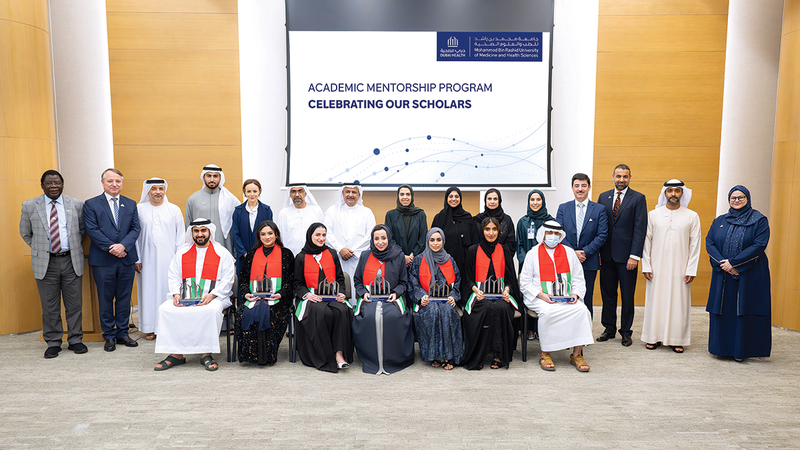

Dubai Health residency program expands North American placements
Dubai Health announced the sponsorship of a new cohort of seven Emirati doctors to join specialized residency and fellowship programs in North America for the 2026–2027 academic year. The Dubai Health residency program places physicians in accredited training sites across the United States and Canada as part of a long-term effort to build national clinical capacity and strengthen the emirate’s healthcare workforce.
Who is being sent and where they will train
The selected cohort includes Emirati physicians entering specialties such as neurology, urology and internal medicine, as well as fellowships in neurobehavioral medicine and pediatric emergency care. According to Dubai Health and Mohammed Bin Rashid University of Medicine and Health Sciences (MBRU), placements will span multiple leading hospitals and academic centers in both the United States and Canada, with program lengths ranging from three to five years depending on specialty.
Furthermore, officials said the initiative aligns with the broader academic mentorship program run by MBRU’s Deanery of Graduate Medical Studies, which supports candidates throughout the application, matching and accreditation processes for international medical residency positions.
Selection process and academic mentorship at MBRU
MBRU’s graduate studies office evaluates applicants through a multi-criteria assessment that includes academic performance, research output, clinical experience and the relevance of prior training to the intended specialty, university officials said. The selection framework prioritizes specialties that meet national healthcare needs and seeks candidates likely to attain board certification in the United States or Canada.
Meanwhile, the mentorship component offers targeted career guidance, interview preparation, standardized exam support and application coaching tailored to the requirements of North American residency programs. Program leaders said this layered support is intended to increase match success and readiness for postgraduate medical training abroad.
Program scale, goals and past outcomes
Launched three years ago, the Dubai Health residency program has supported more than 30 Emirati trainees to date, who are currently enrolled in postgraduate training at international universities and medical centers. Dubai Health has set an ambition to sponsor roughly 100 Emirati students within 10 years of the program’s inception to address future workforce needs in Dubai’s health sector.
According to official statements, this scale-up aims to deliver a sustained pipeline of clinicians who combine clinical excellence with academic and research competencies. Therefore, Dubai Health and MBRU emphasize that success is measured not only by the number of placements but also by trainees’ progression to board certification and their subsequent contributions to local care delivery and medical education.
Specialties, durations and workforce implications
The newly announced specialties reflect a strategic focus on high-priority fields for the emirate’s healthcare system, including adult and pediatric acute care, surgical subspecialties and neurobehavioral medicine. Residency durations will vary: typical internal medicine and surgical residencies last three to five years, while fellowship training such as pediatric emergency medicine may involve additional subspecialty years.
Healthcare planners noted that graduates are expected to return with advanced clinical skills and eligibility for international board credentials, which can help raise clinical standards, expand specialist services and support academic training locally. Furthermore, the initiative is positioned as a long-term investment in national capacity building rather than a short-term staffing solution.
How the program supports accreditation and board readiness
Officials said the mentorship program helps candidates navigate licensing exams and credentialing pathways required for U.S. and Canadian residency programs. Support includes study resources for the USMLE and Canadian equivalents, guidance on clinical observerships and assistance compiling portfolios for residency applications and interviews.
Additionally, the program fosters links between MBRU faculty and host institutions to facilitate smoother transitions for trainees and to promote collaborative research opportunities that may continue after trainees return to Dubai.
Secondary benefits and research integration
Beyond clinical training, program leaders highlighted benefits such as exposure to research ecosystems, advanced clinical protocols and interdisciplinary teamwork models. In turn, returning physicians can contribute to curriculum development, mentor junior clinicians and engage in translational research aligned with Dubai’s health priorities.
Therefore, the initiative aims to strengthen both frontline care and the academic base that supports ongoing professional development within Dubai’s healthcare system.
Program outlook and next steps
Dubai Health and MBRU expect the 2026–2027 cohort to begin clinical placements in time for the respective North American residency start dates. Officials said monitoring will continue throughout trainees’ placements, with progress reports and readiness assessments informing future selection cycles.
Readers should watch for updates on match results, board exam performance and announcements about additional sponsorships as the program moves toward its 10-year target. Meanwhile, Dubai Health indicated it will continue refining selection criteria and expanding partnerships to align postgraduate training opportunities with national health workforce needs.
What to watch next
Observers can look for follow-up statements from Dubai Health and MBRU about individual match outcomes and progress metrics, including the number of trainees obtaining board certification and returning to practice in Dubai. In addition, further rounds of sponsorship and expanded specialty coverage are likely as the program scales toward its long-term goals.