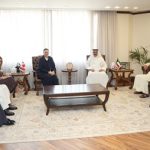



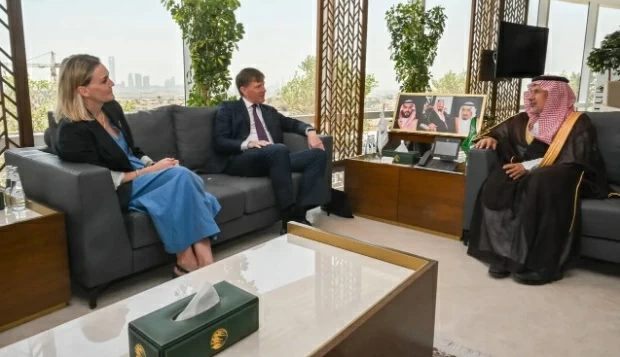

The King Salman Humanitarian Aid Center was the focus of a high-level meeting in Riyadh today when Dr. Abdullah Al Rabeeah, adviser at the Royal Court and supervisor general of the center, hosted the United Kingdom’s Special Representative for Sudan, Richard Crowder. The UK representative praised Saudi relief efforts and commended the professional performance of the center and its field teams in delivering aid globally.
The meeting at the center’s headquarters reviewed ongoing efforts to assist affected populations in Sudan, discussed coordination mechanisms, and explored expanding joint responses. Officials said the talks sought to strengthen collaboration on Sudan humanitarian aid and to identify practical next steps for field operations.
King Salman Humanitarian Aid Center Receives Praise from UK Special Representative
During the Riyadh meeting, the UK representative highlighted the King Salman Humanitarian Aid Center’s evolving operational capacity, citing its rapid deployments, logistics networks, and field coordination as factors behind the commendation. According to statements released by the center, the delegation examined recent missions and the center’s capacity to scale up support in crisis settings.
Dr. Abdullah Al Rabeeah and the UK representative discussed the center’s standards for humanitarian response and the professional development of its field teams. Furthermore, officials noted the role of multilateral cooperation in ensuring aid reaches vulnerable communities in Sudan and elsewhere.
Meeting Details and Agenda
The agenda covered humanitarian priorities, operational challenges, and opportunities to enhance information sharing between Saudi and British agencies. Topics included logistics, medical assistance, food distribution, and protection services in affected areas of Sudan, the participants said.
Additionally, the meeting reviewed coordination protocols to reduce duplication and speed up delivery. The center’s leadership presented recent operational data and described how its emergency hubs and partner networks have supported rapid responses in complex environments.
Humanitarian Operations and Global Reach
The King Salman Humanitarian Aid Center has increasingly been involved in large-scale relief operations, deploying teams and supplies to multiple countries. The UK representative’s praise emphasized not only humanitarian operations in Sudan but also the center’s broader international footprint, officials said.
Field teams affiliated with the center have carried out emergency medical missions, water and sanitation projects, and food distributions, according to public statements. In contrast to single-sector efforts, the center has sought to integrate multiple forms of assistance to address immediate needs and support early recovery.
Implications for Sudan Humanitarian Aid
Enhanced cooperation between Saudi and UK officials could translate into more coordinated assistance for displaced families and host communities in Sudan. Humanitarian analysts said alignment on logistics, airlift capacity, and funding channels would improve the speed and reach of relief convoys.
Moreover, combined technical support for needs assessments and monitoring can help direct supplies to priority areas. Therefore, closer ties could reduce bottlenecks on the ground and improve accountability in distribution, according to aid practitioners familiar with the region.
Challenges and Coordination Needs
Despite praise for operational improvements, stakeholders cautioned that the humanitarian situation in Sudan remains complex, with access constraints, security risks, and large displaced populations. Humanitarian operations will require sustained funding, negotiated access, and robust supply chains to remain effective.
Efforts to coordinate with local authorities, United Nations agencies, and non-governmental partners will be essential. The meeting underscored the need for shared situational awareness, common standards for assistance, and contingency planning for potential escalations.
Logistics and Field Team Support
Participants discussed logistics solutions, including prepositioning supplies and expanding medical teams, to reduce response times. The center’s experience in organizing field teams and mobile clinics was highlighted as a model for integrated emergency response.
Officials also noted that technology and data-sharing tools can improve beneficiary targeting and reduce overlap among aid providers, thereby maximizing the impact of available resources.
What to Watch Next
Observers should look for follow-up actions such as joint field assessments, memoranda of understanding, or coordinated funding announcements in the coming weeks. The UK representative and the center agreed to maintain channels for technical dialogue, according to the meeting notes.
Furthermore, stakeholders will monitor how enhanced collaboration influences on-the-ground delivery in Sudan and whether it results in measurable improvements in aid access and timeliness.
In conclusion, the Riyadh meeting signaled a commitment to deepen cooperation on Sudan humanitarian aid and to leverage the King Salman Humanitarian Aid Center’s operational capabilities alongside UK technical support. Readers should watch for planned joint missions and public updates from the center and British diplomatic channels as the next indicators of progress.