




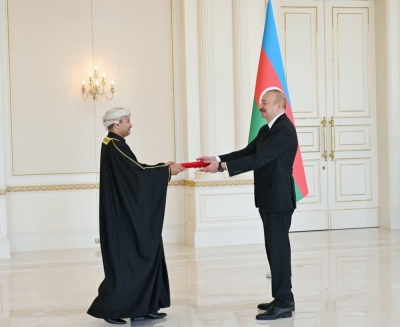

Recently, President Ilham Aliyev of Azerbaijan received Seif bin Rashid Al-Jahouri, who presented his diplomatic credentials as non-resident ambassador of Oman to Azerbaijan at the presidential residence in Baku. The presentation of credentials completes a formal step in renewing diplomatic representation and signals an official start to the envoy’s duties in strengthening Oman-Azerbaijan relations.
During the meeting, the ambassador conveyed greetings from His Majesty Sultan Haitham bin Tariq and extended wishes for continued progress and prosperity for the Azerbaijani people, the presidential office said. President Aliyev reciprocated those greetings and expressed similar hopes for the advancement of ties between the two friendly countries, according to official statements.
Oman-Azerbaijan relations: Diplomatic renewal in Baku
The credentialing ceremony is a customary diplomatic milestone that allows a non-resident ambassador to operate officially, present credentials and begin formal engagement. As a non-resident ambassador, Seif bin Rashid Al-Jahouri will be expected to coordinate bilateral activity from his base while making periodic visits to Baku to advance shared priorities. Officials described the event as part of a broader effort to maintain and expand bilateral links.
Oman-Azerbaijan relations have been characterized by cordial political contact and increasing interest in trade, investment and cultural exchange. While the two countries do not share a geographical border, their interaction has grown within regional and international forums, and both capitals have signaled interest in elevating cooperation across several sectors, the ministry indicated.
Diplomatic credentials and the role of a non-resident ambassador
Presenting diplomatic credentials is the formal act by which a host country accepts an ambassador’s authority to represent their sending state. In this case, the ceremony in Baku authorizes the Omani envoy to pursue official business, arrange bilateral meetings and oversee initiatives that support mutual interests. The non-resident ambassador model is frequently used to balance diplomatic coverage with resource considerations while sustaining bilateral engagement.
Seif bin Rashid Al-Jahouri’s accreditation follows established diplomatic practice and provides a platform for institutional contacts, including between foreign ministries, trade promotion bodies and cultural institutions. Therefore, observers expect the ambassador to prioritize practical steps that translate diplomatic goodwill into tangible cooperation.
Areas of potential cooperation and mutual interest
Both governments have signaled opportunities for expanded engagement in areas such as energy, trade, investment, tourism and cultural exchange. Azerbaijan’s role as an energy producer and Oman’s strategic location and logistics capabilities suggest a complementarity that officials say merits closer examination. Additionally, business delegations and trade missions could identify niche opportunities in logistics, agriculture and small-scale manufacturing.
Furthermore, tourism and cultural ties are seen as low-barrier avenues for enhanced people-to-people contact. Academic and cultural institutions in both countries could pursue exchange programs, while joint participation in regional economic forums may help attract investment. Officials did not announce specific projects at the ceremony, but statements suggest an intent to explore sectoral cooperation in the months ahead.
Economic and strategic implications for bilateral engagement
Strengthening Oman-Azerbaijan relations may yield practical economic benefits, particularly if the two sides move from high-level statements to memoranda of understanding and concrete agreements. Trade facilitation measures, investment promotion and logistics cooperation could increase bilateral flows. Meanwhile, deeper ties can broaden political dialogue on regional issues where both countries have overlapping interests.
That said, translating diplomatic momentum into measurable outcomes typically requires follow-up mechanisms such as joint working groups, sector-specific task forces and scheduled visits by ministers or trade delegations. The ambassador’s non-resident status may slow some processes, but it also offers flexibility to prioritize issues that show immediate promise.
Next steps and what to watch
Officials indicated the credential presentation marks the start of a period of increased engagement rather than the conclusion of a process. In the coming weeks and months, watch for announcements of bilateral meetings between foreign ministries, the scheduling of trade or investment delegations, and any proposed memoranda that outline cooperation frameworks. These steps would demonstrate movement from diplomatic goodwill to concrete collaboration.
Observers should also monitor whether Oman and Azerbaijan launch sectoral dialogues on energy partnerships, logistics corridors or tourism promotion. The establishment of technical committees or the signing of framework agreements would be the next predictable milestones in expanding the diplomatic relationship.
Conclusion: Practical diplomacy and the road ahead
The presentation of credentials by Seif bin Rashid Al-Jahouri to President Ilham Aliyev reinforces a mutual intention to nurture Oman-Azerbaijan relations. While the ceremony itself is ceremonial, it opens a pathway for substantive work on trade, investment and cultural exchange. Therefore, stakeholders should look for follow-up meetings, planned delegations and formal agreements as indicators of progress in the months ahead.