




Rukiza program launches second season in North Al Batinah
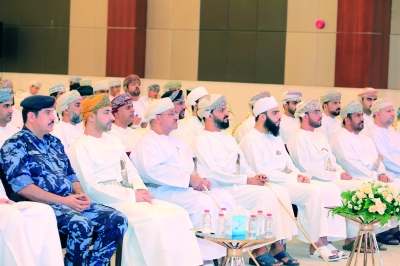
The Rukiza program was launched in its second season during the closing ceremony of the model summer centers for students, held at Majan Hall in Sohar on Tuesday. The event, organized by the Directorate of Endowments and Religious Affairs in North Al Batinah Governorate and held under the patronage of Engineer Ahmed bin Saleh Al-Rashdi, marked a renewed focus on “Religion for Peace and Development.”
Officials said the launch aligns with the Ministry of Endowments and Religious Affairs’ priorities for the Year of Excellence and aims to strengthen the role of religion in promoting civic values, peaceful coexistence and sustainable development through targeted education and outreach programs.
Closing ceremony highlights summer centres’ achievements
The closing ceremony reviewed the outcomes of the model summer centers, which delivered an integrated program of educational, scientific and cultural activities. According to the governorate’s endowments authority, the model summer centers contributed to knowledge development, skills refinement and enhanced national identity among participating students.
Program coordinators reported a curriculum that combined classroom sessions, practical workshops and civic engagement activities designed to reinforce citizenship values and balanced thinking. Furthermore, the centers sought to cultivate social responsibility and tolerance, officials said, contributing to broader community cohesion goals.
Rukiza program to emphasize religion’s role in peace and development
The Rukiza program will pursue a thematic approach under the slogan “Religion for Peace and Development,” aiming to translate ministry-level directives into local action. The initiative is positioned as a vehicle to embed moderate religious discourse within educational settings and community outreach, ministry statements indicate.
In practical terms, the second season of the Rukiza program will integrate workshops on ethical leadership, conflict resolution and volunteerism into the summer center framework. Additionally, organizers plan targeted training for teachers and youth leaders to sustain the program’s impact beyond the summer months.
New endowment projects aim for financial sustainability
As part of the event, officials placed the foundation stone for a sustainable endowment project that will occupy 772.66 square meters and is budgeted at 124,000 Omani rials. The project, classified as an investment endowment, is scheduled for completion in approximately 15 months and is intended to grow endowment assets and generate stable funding for community and charitable initiatives.
Additionally, the inauguration of the Ihsan Charity Endowment building was celebrated during the ceremony. The new facility is described by local officials as a strategic addition to the governorate’s endowment system, expected to enhance the delivery of charitable services and improve institutional performance.
How the initiatives fit wider ministry goals
The launch of the Rukiza program and the associated endowment projects represents a coordinated effort to align local activity with national priorities set by the Ministry of Endowments and Religious Affairs. The ministry has emphasized institutional excellence and resource sustainability as core objectives for the Year of Excellence, and the governorate’s actions reflect a practical application of those policies.
Endowment development is cited as a mechanism to secure long-term funding for social programs, while the Rukiza program is intended to weave religious education into civic development objectives. Together, officials contend, these measures can support peaceful social relations and contribute to human capital development.
Implementation and community engagement
Operational plans for the new projects include donor outreach, capacity building for endowment management and partnerships with educational institutions involved in the model summer centers. Meanwhile, community engagement activities will continue to emphasize tolerance, coexistence and civic responsibility, according to program briefs shared by the directorate.
Stakeholders said monitoring and evaluation frameworks will be put in place to assess the Rukiza program’s influence on participants’ knowledge, attitudes and community involvement. The governorate aims to produce evidence-based reports to inform future programming and scaling decisions.
What to watch next
Residents and observers should watch for the construction milestones of the sustainable endowment project over the next 15 months and for programmatic updates as the Rukiza program rolls out its seasonal modules. Officials indicated that progress reports and further announcements will be issued through the governorate’s communications channels as they become available.
Furthermore, the directorate plans to evaluate the second season’s outcomes and refine the Rukiza program for subsequent cycles, potentially expanding topics and partnerships based on lessons learned. Therefore, stakeholders interested in education, religious moderation and endowment development are likely to find the coming year significant.