






By using this site, you agree to the Privacy Policy and Terms of Use.
Accept
Gulf PressGulf Press
  • Gulf News
    • Saudi Arabia
    • UAE
    • Oman
    • Kuwait
    • Qatar
    • Bahrain
  • Business
  • Technology
  • Real Estate
  • Sport
  • Travel
  • Lifestyle
  • Rankings
  • Explained
  • Opinion
Search
Countries
More Topics
Site Links
  • Newsletter
  • Terms
  • About Us
  • Advertise with us
  • Contact Us
© 2023 Gulf Press. All Rights Reserved.
Reading: EU exporters of heavy goods to start paying for their CO2 emissions
Share
Notification Show More
Latest News
Taif Governor Inspects Historic District, Vows Heritage Preservation
Saudi Arabia
National Committee Reviews Government Policy for Sustainable Endowments and Zakat Funds Wednesday
UAE
Are Rising Living Costs Changing Life in Gulf Countries?
Opinion
Saudi Arabia National Team Fixtures 2026 Match Schedule Results and FIFA World Cup Preparation
Sport
Families Swap Late Nights for Discipline Ahead of School Reopening
Saudi Arabia
Aa
Gulf PressGulf Press
Aa
  • Gulf News
  • Business
  • Technology
  • Real Estate
  • Sport
  • Travel
  • Lifestyle
  • Rankings
  • Explained
  • Opinion
Search
  • Gulf News
    • Saudi Arabia
    • UAE
    • Oman
    • Kuwait
    • Qatar
    • Bahrain
  • Business
  • Technology
  • Real Estate
  • Sport
  • Travel
  • Lifestyle
  • Rankings
  • Explained
  • Opinion
Have an existing account? Sign In
Follow US
  • Terms
  • About Us
  • Advertise with us
  • Contact Us
© 2023 Gulf Press. All Rights Reserved.
Gulf Press > Gulf News > EU exporters of heavy goods to start paying for their CO2 emissions
Gulf News

EU exporters of heavy goods to start paying for their CO2 emissions

News Room
Last updated: 2026/01/01 at 9:07 AM
News Room
Share
5 Min Read
SHARE

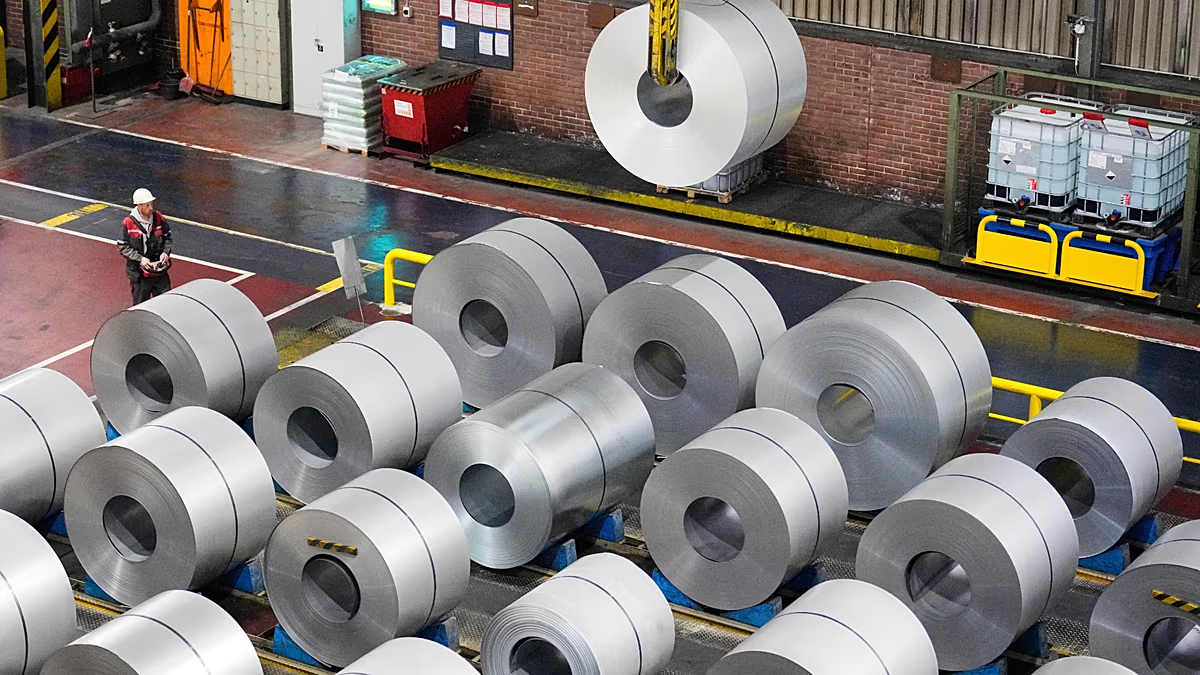
The European Union’s Carbon Border Adjustment Mechanism (CBAM) went into effect January 1, 2024, placing a carbon levy on imports of carbon-intensive goods like steel, aluminum, cement, and fertilizers. This new policy aims to level the playing field for EU manufacturers who already face strict carbon emission regulations, and prevent “carbon leakage” – the relocation of production to countries with less stringent environmental standards. The implementation of this groundbreaking climate policy is already sparking international trade tensions.

Contents
International Reactions and Trade DisputesChallenges and Concerns Regarding Implementation

The CBAM initially requires importers to report greenhouse gas emissions embedded in their products. From 2026, importers will be required to purchase and surrender CBAM certificates, priced in line with the EU’s carbon market, which currently ranges from €70-€100 per tonne of CO2. This move is intended to encourage global adoption of carbon pricing and cleaner production methods, but has drawn criticism from several major economies.

Understanding the EU’s Carbon Border Adjustment Mechanism

The CBAM is a three-phase process. The initial phase, beginning in 2023, focused on data collection and reporting. This transitional period allows industries to adapt to the new requirements and refine methodologies for calculating embedded emissions. The current phase, starting January 1, 2024, continues the reporting requirements. The final phase, beginning in 2026, introduces the financial obligation of purchasing CBAM certificates.

According to the United Nations Framework Convention on Climate Change (UNFCCC), heavy industry accounts for up to 15% of total EU energy-related greenhouse gas emissions. The EU hopes the CBAM will incentivize these industries globally to reduce their carbon footprints.

International Reactions and Trade Disputes

The implementation of the CBAM has not been without opposition. The United States, China, India, Russia, and South Africa have all voiced concerns, arguing that the mechanism amounts to protectionism and could violate World Trade Organization (WTO) rules. The US, in particular, has pressured the EU to withdraw the law, following increased tariffs on EU goods earlier this year.

Egypt has become the first country to formally request an exemption from the CBAM, citing the potential impact on its iron and steel industry, which could bear 74% of the financial burden. Cairo is currently developing its own domestic carbon tax to mitigate the effects of the EU’s policy.

Challenges and Concerns Regarding Implementation

Critics of the CBAM highlight the complexities of accurately measuring embedded carbon emissions. Jaime Amoedo, executive director of The ESG Institute, notes that importers will likely face material cost increases, especially when relying on default values due to incomplete emissions data. Accurate and verifiable emissions data is becoming a crucial commercial requirement for exporters seeking to maintain access to the EU market.

Additionally, some industry representatives, like Jean-Marc Germain, CEO of Constellium, express concerns that the CBAM could weaken European competitiveness without significantly reducing global emissions. The aluminum industry, for example, anticipates increased costs as a result of the new levy.

Mitigating Impact with the Decarbonisation Fund

Recognizing the potential financial strain on European industries, the EU Commission proposed a temporary €1.5 billion fund, backed by CBAM revenues, on December 17. This fund aims to help industries cope with the implementation phase and invest in decarbonization technologies.

Ed Collins, managing director at InfluenceMap, suggests the fund is a result of “intense lobbying from incumbent industry actors” seeking reimbursement for carbon costs. While the fund is intended for decarbonization investments, it may partially offset the financial burden of the carbon border tax for some companies.

The EU’s CBAM represents a significant step towards a more sustainable global economy, but its success hinges on international cooperation and addressing the concerns of trading partners. Businesses should closely monitor developments and prepare for the evolving landscape of carbon-related trade regulations. Further details on implementation and potential adjustments to the system are expected throughout 2024 and beyond.

United Nations Framework Convention on Climate Change provides further information on global climate action.


Sign Up For Daily Newsletter

Be keep up! Get the latest breaking news delivered straight to your inbox.
[mc4wp_form]
By signing up, you agree to our Terms of Use and acknowledge the data practices in our Privacy Policy. You may unsubscribe at any time.
News Room January 1, 2026
Share this Article
Facebook Twitter Copy Link Print
Previous Article WWICS celebrates 32 years of immigration services
Next Article His Majesty the Sultan issues two Royal Decrees
Leave a comment Leave a comment

Leave a Reply Cancel reply

Your email address will not be published. Required fields are marked *

Stay Connected

235.3k Followers Like
69.1k Followers Follow
56.4k Followers Follow
136k Subscribers Subscribe
- Advertisement -
Ad imageAd image

Latest News

Taif Governor Inspects Historic District, Vows Heritage Preservation
Saudi Arabia June 5, 2026
National Committee Reviews Government Policy for Sustainable Endowments and Zakat Funds Wednesday
UAE June 5, 2026
Are Rising Living Costs Changing Life in Gulf Countries?
Opinion June 4, 2026
Saudi Arabia National Team Fixtures 2026 Match Schedule Results and FIFA World Cup Preparation
Sport June 4, 2026

You Might also Like

Saudi Arabia

Taif Governor Inspects Historic District, Vows Heritage Preservation

June 5, 2026
UAE

National Committee Reviews Government Policy for Sustainable Endowments and Zakat Funds Wednesday

June 5, 2026
Saudi Arabia

Families Swap Late Nights for Discipline Ahead of School Reopening

June 4, 2026
UAE

UAE Weather Tomorrow: Mostly Clear Skies Across the Emirates

June 4, 2026
Bahrain

Works Minister Inspects Sewer Network Progress at Al-Lawzi and Madinat Hamad

June 4, 2026
Kuwait

Pilgrims Tell Al-Anbaa Hajj Was Smooth and Exceptionally Organized

June 4, 2026
Oman

Oman Unveils Geneva Report Documenting Social Protection Redesign

June 4, 2026
Qatar

Iran Accuses Washington of Truce Breach Amid Regional Mediation Talks

June 4, 2026
//

GulfPress is a modern Gulf media platform delivering trusted news, business insights, technology updates, real estate trends, travel stories, explainers, and rankings from across the GCC and the Middle East.

Quick Link

  • About Us
  • Editorial Policy
  • Corrections Policy
  • Advertise with us
  • Contact Us
  • Privacy Policy
  • Terms of use

How Topics

  • Gulf News
  • Business
  • Lifestyle

Sign Up for Our Newsletter

Subscribe to our newsletter to get our latest news instantly!

[mc4wp_form]

Gulf PressGulf Press
Follow US

© 2023 Gulf Press. All Rights Reserved.

Join Us!

Subscribe to our newsletter and never miss our latest news, podcasts etc..

[mc4wp_form]
Zero spam, Unsubscribe at any time.

Removed from reading list

Undo
Welcome Back!

Sign in to your account

Lost your password?