








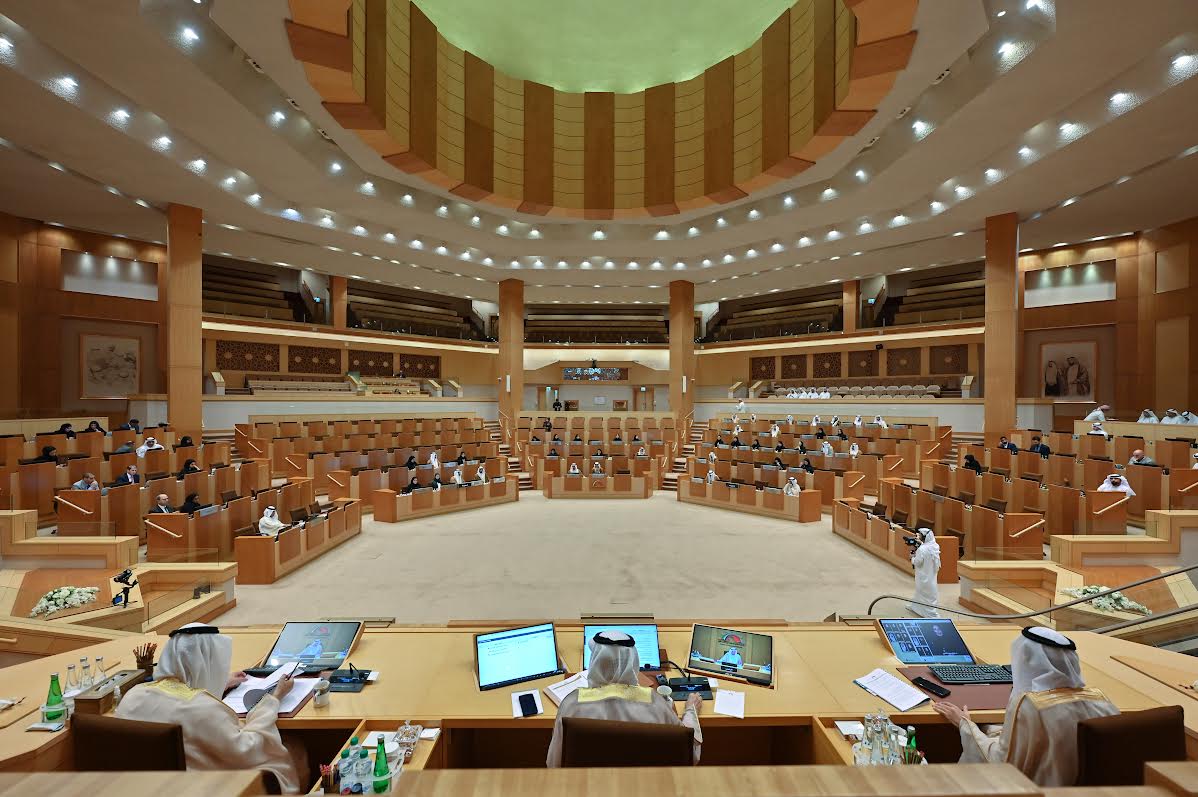

Federal National Council session to review awqaf and zakat funds
The Federal National Council session convenes Wednesday, 7 May 2025, in Zayed Hall at the Council’s Abu Dhabi headquarters to debate the government’s policy on the management and sustainability of awqaf and zakat funds. Chaired by Saqr Ghobash, the meeting will focus on how these funds can be governed to enhance their social role and long-term viability.
The Federal National Council session opens with a concentrated agenda that also includes ministerial questioning, legislative referrals and review of the unified final accounts for the fiscal year ending 31 December 2024. Observers note the session signals parliamentary attention to social finance, public services and fiscal transparency.
Ministerial questions and public-policy concerns
Members will pose four formal questions to government representatives, a mechanism intended to hold ministers publicly accountable. Three questions are directed to the Minister of Human Resources and Emiratisation, Dr. Abdulrahman bin Abdulmunim Al Awar, and one to the Minister of Health and Prevention, Abdulrahman Mohammed Al Owais, who also serves as Minister of State for Federal National Council Affairs, according to the agenda.
Dr. Al Awar will face two questions from Dr. Adnan Hamad Al Hammadi about the proposed unemployment insurance system and the introduction of paid maternity leave for Emirati mothers employed in the private sector. Additionally, member Waleed Ali Al Mansouri will ask about policies excluding some high school graduates from higher education admission systems.
Healthcare capacity under scrutiny
Member Aisha Ibrahim Al Marri will question Minister Al Owais on shortages of ICU beds and the implications for patient rescue times. The inquiry reflects ongoing concerns about surge capacity and emergency-care responsiveness in hospitals, and the question is being raised within the broader session that also deals with social-service financing such as awqaf and zakat funds.
Legislative referrals and financial oversight
The Council will review official correspondence and proposals for referral to its committees. The agenda includes a government-submitted draft federal law to adopt the unified final accounts for the Union for the 2024 fiscal year, which will be directed to the Committee on Financial, Economic and Industrial Affairs for detailed study.
Two ministerial letters from Minister Al Owais indicate Cabinet approval to discuss separate government policies: one on higher education admissions, scholarships and missions, to be sent to the Education, Culture, Youth, Sports and Media Committee; and another on pensions and social insurance, to be forwarded to the Financial Committee. Furthermore, the Council will consider a government message on the Council’s earlier recommendations about improving efficiency of government employees.
Why awqaf and zakat funds matter
Discussion of the policy on managing awqaf and zakat funds places social finance at the center of the Council’s scrutiny. Awqaf—charitable endowments—and zakat funds serve as channels for long-term social investment, and their management affects poverty alleviation, education support and community projects. Therefore, governance, transparency and sustainable investment strategies are likely to be focal points in debate.
Analysts say modernizing fund management typically involves institutional controls, regular audits and alignment with national development priorities. The Council’s engagement with this topic suggests legislators want clearer accountability mechanisms and measurable social outcomes for awqaf and zakat funds, according to the session documents.
Potential impacts on social policy and public services
Outcomes from the Federal National Council session could influence several policy areas. Clarified rules for zakat and awqaf management may affect how charities, social programs and government partnerships deploy resources. Meanwhile, scrutiny of maternity-leave policy and unemployment insurance could inform labor-market reforms and private-sector obligations.
Healthcare questions about ICU bed availability have immediate operational implications for hospitals and emergency response planning. Likewise, deliberation over higher education admissions and scholarship policies will be watched closely by students, universities and scholarship bodies for any shifts in eligibility or capacity planning.
Committee review, timelines and next steps
Following the session, agenda items will be referred to the relevant committees for detailed examination and recommendation. The Financial, Education and other committees are expected to review the materials and return reports in subsequent sittings, though the agenda does not specify exact deadlines.
Members and ministries will likely use committee review periods to gather supporting data, consult stakeholders and refine proposed policy language. Therefore, the next substantive developments are expected as committee reports and follow-up sessions later in the current legislative term.
What to watch after the session
Stakeholders should monitor committee reports and any draft legislation emerging from referrals related to the unified final accounts, pensions and education admissions. In particular, reforms affecting awqaf and zakat funds, the proposed unemployment insurance framework, maternity-leave provisions for Emirati private-sector workers, and official responses on ICU capacity will be key indicators of policy direction.
Readers should expect the Council to publish committee findings and recommendations in subsequent sittings, which will determine whether proposals are adopted, amended or returned for further study. The Council’s actions this session will shape oversight of social finance and elements of public-service policy for the year ahead.