








The Global Threat to Education
As conflicts around the world escalate, attacks on education are on the rise, putting millions of children at risk of losing their schools and their futures. With the International Day to Protect Education from Attack being observed on September 9, there is a growing urgent call for international protection and accountability. This year’s theme – “Can Education Withstand Attacks? The Resilience of Human Communities” – emphasizes the ability of educational systems, communities, teachers, families, and youth to maintain learning even in the most challenging conditions.
Rising Attacks on Educational Institutions
According to the “Education Under Attack 2026” report from the Global Coalition to Protect Education from Attack, there were at least 9,259 reported attacks on education and military use of schools and universities in 2024 and 2025. This figure marks a dramatic increase of over 50% compared to previous years. These attacks have impacted at least 10,600 students, teachers, and educational workers, with Colombia, the Democratic Republic of Congo, Ethiopia, Haiti, Palestine, and Ukraine facing the highest rates of assaults on education. Furthermore, the number of military uses of educational institutions rose to over 2,100 incidents.
Building Resilience in Education Systems
Mohammad Saad Al-Khalifi, the CEO of the Educate a Child initiative, emphasized that for education to be resilient, systems must be prepared to address crises. “Education can survive attacks, but only if we choose to build resilient educational systems,” he stated. Schools should not be targets, and teachers must not be part of the conflict, as children’s futures cannot be collateral damage in wars.
Al-Khalifi advocates preemptive measures to protect education, suggesting the need for safe learning pathways, alternative educational solutions, psychological support, and accountability for attacks targeting educational institutions.
Preparation Before an Attack
The Educate a Child initiative addresses the necessity of a functioning educational system, even when surrounding environments are destabilized. If schools are destroyed, closed, or made unsafe, plans should be in place to ensure children do not miss out on learning opportunities. These plans should include early warning systems, alternative educational infrastructures, remote learning solutions, and emergency planning to facilitate recovery once crises conclude.
Dr. Malika Malik, the Executive Director of the Education Protection Program, highlighted that ensuring education during crises requires more than just legal protection. Sustaining education also involves supporting communities, teachers, and students who innovate ways to continue learning amidst conflict and displacement.
Personal Stories of Resilience
Behind the statistics lie poignant stories of children whose lives illustrate the significance of keeping schools open amid conflict. In South Sudan, Wasila, a young girl from the Nuba Mountains, exemplifies a resilient spirit. Fleeing bombardments at the age of four, she ended up in a refugee camp. Now at 15, Wasila is on the verge of completing primary school, excelling in mathematics, and dreams of becoming a teacher to share knowledge with her community.
In northeastern Nigeria, the story of Ali, an internally displaced child from Borno State, presents another perspective on education protection. After losing his parents at a young age and facing violence and insecurity, Ali encountered additional challenges due to a disability. Support from the community enabled him to join an appropriate educational program, and eventually mainstream education, allowing him to learn reading and writing, make friends, and aspire to become a pilot.
The Role of Teachers in Protection
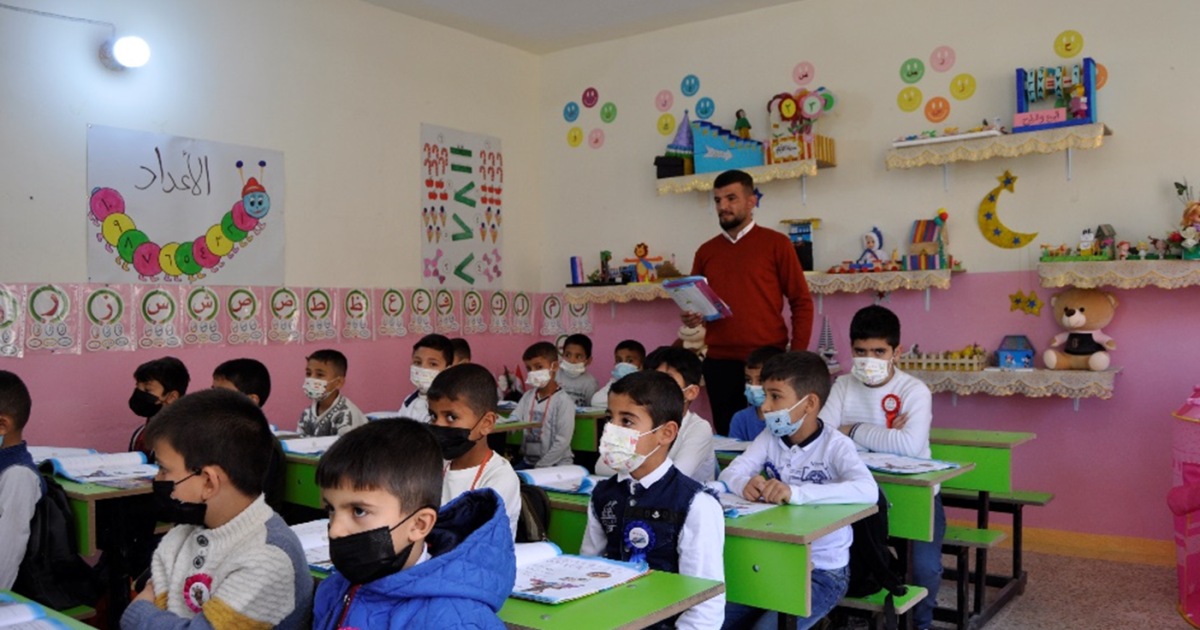
Teachers represent a critical line of defense for education in conflict-affected environments. In Iraq, Mazen Rafd, a teacher from Salah al-Din province, exemplifies this role. After participating in specialized training on psycho-social support, he transformed his classroom into a safer and more welcoming space, promoting engagement through activities and ensuring that students felt secure.
Mazen’s experience highlights the importance of empowering teachers to transform schools from mere teaching spaces into environments for healing and rebuilding trust, recognizing the fear and instability many children carry with them.
Technology as a Temporary Bridge
With access to schools often impeded in conflict zones, technology emerges as an alternative to sustain education through remote learning platforms, offline content, and alternative educational models. However, the Educate a Child initiative asserts that technology should serve as a temporary bridge for continuity in learning, rather than a permanent substitute for in-person education and teachers, alongside ensuring equitable access to prevent exacerbating the digital divide among children.
This year’s observance of the International Day is marked by events in Paris and Geneva, including a visual exhibit titled “Pedestrian Path,” transforming attack statistics on education into a visual timeline. At UNESCO headquarters in Paris, from September 9 to 13, digital displays will convey facts and messages regarding education protection, while an high-level event in Geneva will feature governmental representatives and international agencies discussing resilient educational practices amidst conflict.
Through the #TogetherForEducation campaign, the initiative aims to broaden international commitments to protect education before, during, and after crises. Attacks on schools do not only destroy buildings; they threaten childhood, stability, community fabric, and recovery opportunities, endangering the future of an entire generation as the aftermath of conflict lingers long after fighting ceases.