






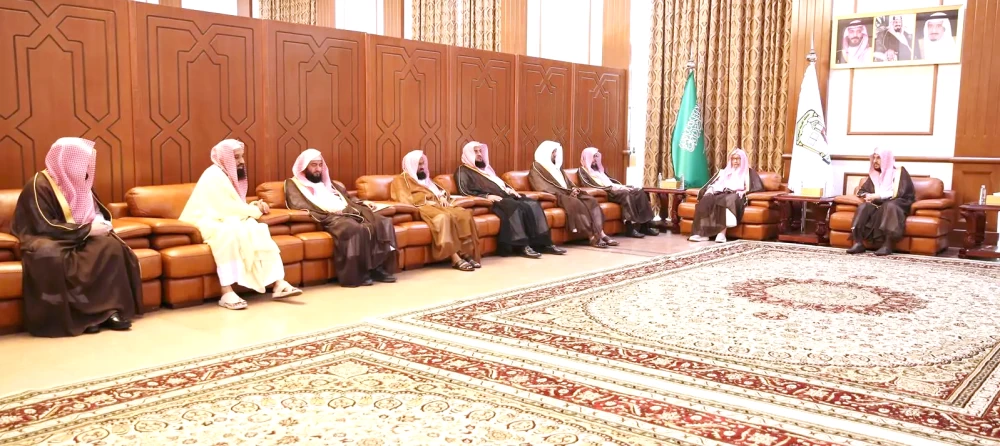

Grand Mufti meeting in Taif focuses on fatwa delivery and coordination
The Grand Mufti meeting convened yesterday in Taif, where the Grand Mufti of the Kingdom and Chairman of the Council of Senior Scholars, Sheikh Dr. Saleh Al-Fawzan, received regional fatwa commissioners to review procedures for issuing religious guidance. The meeting emphasized improving access to reliable fatwas and reinforcing adherence to the Quran and Sunnah in answering public queries.
Who attended and what was discussed
The reception brought together the Mufti and the country’s fatwa commissioners representing different regions, officials said. The Secretary-General of the Council of Senior Scholars and Secretary-General of the Permanent Committee for Scholarly Research and Ifta, Sheikh Dr. Fahd Al-Majid, also attended to oversee coordination between the central office and regional branches.
Officials described a focused agenda that examined the workload of fatwa commissioners, the flow of inquiries from the public, and mechanisms to ensure consistent rulings across regions. Furthermore, participants reviewed current practices for training and supporting commissioners, with attention to clarity, timeliness, and scholarly rigor.
Strengthening fatwa services and religious guidance
During the meeting, leaders emphasized the importance of delivering religious guidance that is both accessible and authoritative. The Grand Mufti meeting highlighted efforts to standardize responses so that citizens across the kingdom receive consistent advice in matters of worship, family law, business, and ethics.
According to officials, discussions included enhancing digital and local outreach, refining review processes for complex questions, and ensuring that fatwa commissioners have access to up-to-date scholarly resources. Therefore, improving the infrastructure supporting fatwa work was framed as essential to preserving public trust in religious guidance and Islamic jurisprudence.
Policies, training and quality control
Commissioners and central leadership considered measures to develop professional training programs and peer-review systems for fatwas. Meanwhile, they assessed how best to balance swift responses with careful jurisprudential analysis, particularly for novel or sensitive issues.
Officials indicated that strengthening coordination between the presidency and its regional branches would help integrate local context with nationally consistent legal and religious standards. Furthermore, a focus on continuing education, mentorship, and quality assurance was discussed to raise the overall level of service provided by fatwa commissioners.
Operational challenges and proposed solutions
Participants addressed operational challenges such as high volumes of inquiries, varying levels of local resources, and the need for centralized guidance on emerging topics. The Grand Mufti meeting considered scalable solutions including centralized databases of precedent, shared research tools, and standardized response templates for routine matters.
In addition, officials noted the potential for improved communication channels between regional offices and the central authority to expedite consultation on complex questions. Therefore, proposals centered on practical steps to improve turnaround times while maintaining adherence to scholarly standards.
Context: the role of fatwa commissioners in the kingdom
Fatwa commissioners serve as primary points of contact for individuals seeking religious rulings in cities and provinces. Their role involves interpreting Islamic sources, offering counsel on daily practice, and clarifying legal and ethical questions according to established jurisprudential methods.
Experts in Islamic jurisprudence often work through regional offices to handle local caseloads while consulting with central scholars as needed. The Grand Mufti meeting reinforced the necessity of this two-tiered approach to ensure that localized advice remains consistent with national scholarly positions.
Implications for public engagement and digital outreach
Enhancements discussed at the Grand Mufti meeting could affect how citizens interact with religious institutions, particularly through online platforms and call centers. Officials suggested that clearer procedures and improved resources would make it easier for the public to obtain reliable guidance without delay.
Furthermore, a coordinated approach to digital outreach could help counter misinformation and present unified responses to contemporary issues, officials said. Therefore, investments in both human expertise and technological tools were framed as complementary steps toward more effective public service.
What to watch next
Observers should expect follow-up measures outlining specific steps to implement the meeting’s recommendations, including timelines for training programs and technology upgrades. The presidency is likely to issue guidance on implementation and performance metrics to track improvements in response times and consistency.
Meanwhile, regional offices may begin pilot projects to test standardized procedures and share feedback with central leadership. Readers should watch for official statements detailing any new initiatives and for updates on how changes affect the availability and quality of fatwa services nationwide.
Conclusion and forward look
The Grand Mufti meeting in Taif underscored an institutional commitment to enhancing the delivery of religious rulings and ensuring consistent, reliable guidance across the kingdom. Moving forward, attention will focus on implementing training, quality control, and digital improvements to support fatwa commissioners and better serve the public.
Officials have indicated that concrete plans and timelines will be announced in coming months, and stakeholders will monitor progress to ensure the stated goals of clarity, accessibility, and scholarly integrity are achieved.