




Qatar-Turkey diplomatic talks in Doha
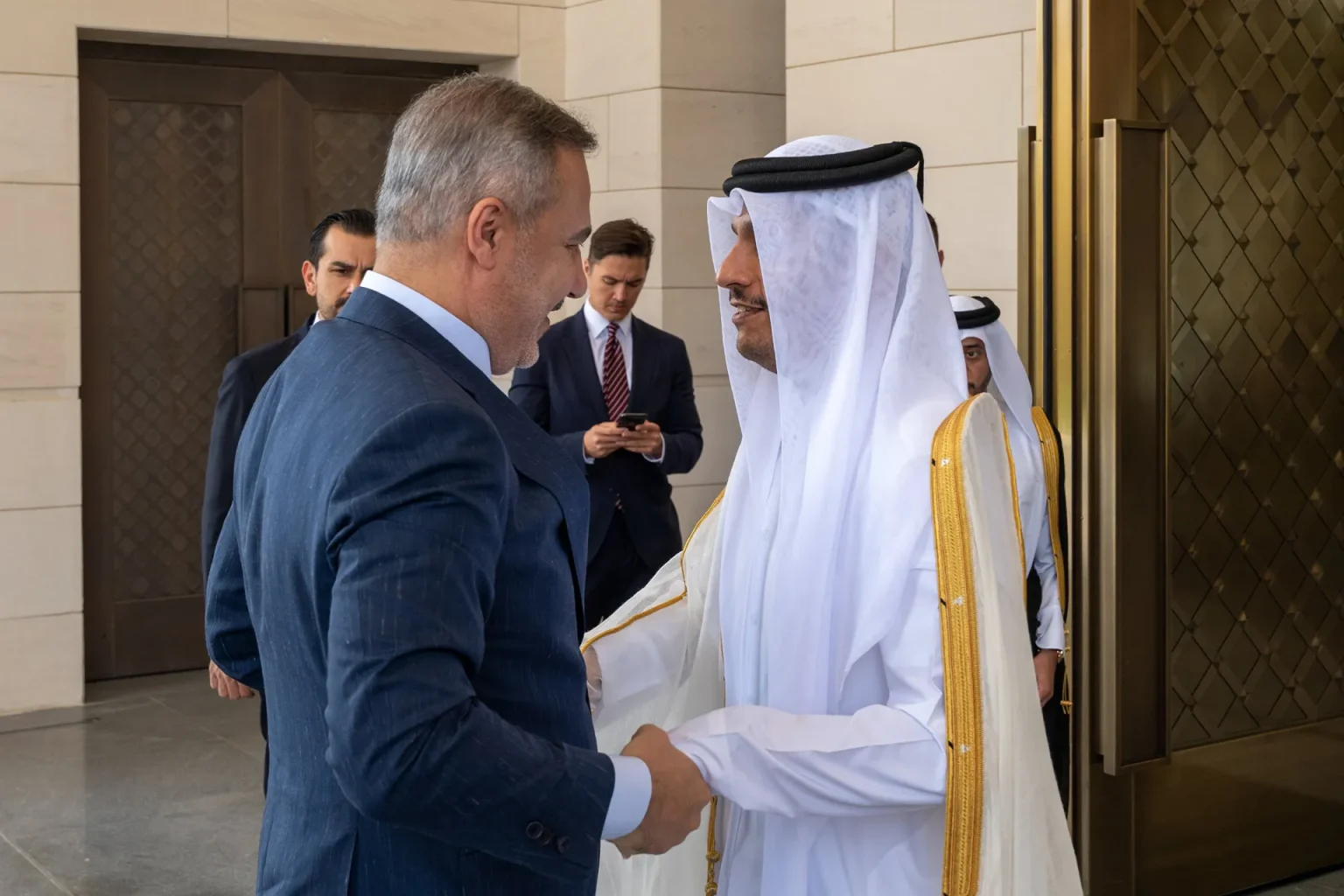
Qatar-Turkey diplomatic talks took place in Doha on July 19, 2026, as Qatari Prime Minister and Foreign Minister Sheikh Mohammed bin Abdulrahman Al Thani received Turkish Foreign Minister Hakan Fidan, officials said. The meeting focused on joint diplomatic efforts to reduce regional tensions and reinforce security, according to a government statement released after the visit.
What was discussed and immediate context
The discussions, held during Fidan’s visit to Doha, emphasized the need for sustained dialogue and diplomatic coordination, the statement said. Leaders reviewed steps to de-escalate recent hostilities in the Gulf and to preserve gains in regional stability achieved through prior mediation efforts.
Officials noted the meeting also addressed implementation of provisions in the memorandum of understanding between the United States and Iran, including measures to ensure freedom of navigation in the Strait of Hormuz. Furthermore, the talks examined ways to coordinate responses to cross-border incidents that threaten Gulf security.
Main issues: de-escalation and freedom of navigation
Qatar underscored that preventing escalation requires adherence to diplomacy and established agreements. The prime minister, according to the government release, urged all parties to commit to negotiated solutions and to respect mechanisms that guarantee freedom of navigation in strategic waterways.
Observers said maintaining secure shipping lanes in the Strait of Hormuz is central to Gulf security and to global energy markets. Therefore, Qatar and Turkey discussed practical steps to reduce naval incidents and improve information-sharing, with diplomatic coordination identified as a priority.
Qatar condemns attacks and assigns responsibility
The Qatari Foreign Ministry condemned, in strong terms, what it described as recent attacks launched by Iran on the territory of the state and on the territories of Jordan, Bahrain and Kuwait. The ministry stated these actions constitute a clear breach of the sovereignty and territorial integrity of the affected states and a violation of international law and the UN Charter.
The ministry added that continued attacks risk undermining regional stability and complicating diplomatic efforts to contain tensions. It also held Iran legally responsible for the consequences of those actions, an assertion that could shape future diplomatic and legal responses in regional forums and bilateral channels.
Implications for regional stability and Gulf security
Analysts said Qatar-Turkey diplomatic talks signal a coordinated Gulf response aimed at limiting escalation and protecting regional stability. Turkey’s involvement reflects Ankara’s broader diplomatic posture in the Middle East, while Qatar’s mediation role seeks to preserve diplomatic pathways.
Regional stability experts warned that repeated cross-border strikes could erode trust among Gulf states and hinder recovery of political channels. Therefore, stakeholders discussed crisis-management mechanisms and confidence-building measures that could be deployed to prevent miscalculation and to restore de-escalation momentum.
Diplomatic coordination and international agreements
During the meeting, officials reviewed how international agreements, including memoranda between major powers and regional actors, might be implemented to mitigate risks. The memorandum of understanding between the United States and Iran was cited as a framework whose provisions on maritime security could help reduce tensions if fully observed, according to the government statement.
Diplomatic coordination between Qatar and Turkey is expected to involve joint messaging at multilateral forums and enhanced liaison channels to expedite fact-finding and notification of incidents. In addition, both countries discussed aligning diplomatic engagement with other Gulf Cooperation Council members to present a unified front on freedom of navigation and respect for sovereignty.
Reactions and likely next steps
Regional capitals and international partners are likely to watch closely for follow-up actions from Doha and Ankara. Officials suggested that next steps may include further diplomatic consultations, technical exchanges on maritime safety, and coordinated statements at relevant international bodies, although precise timelines were not disclosed.
Meanwhile, Qatar’s public condemnation and attribution of responsibility to Iran could prompt increased diplomatic pressure and calls for accountability. Therefore, observers recommend monitoring official communiqués from the Qatari Foreign Ministry, Turkish diplomatic channels, and Gulf Cooperation Council statements for developments.
Conclusion and what to watch next
The Qatar-Turkey diplomatic talks in Doha underscored shared priorities of de-escalation, protection of maritime routes and reinforcement of regional stability. Going forward, readers should watch for joint communiqués, any expanded coordination among Gulf states, and whether the memorandum of understanding referenced by officials yields concrete measures to safeguard freedom of navigation in the Strait of Hormuz.
Expect further high-level consultations in the coming weeks and possible multilateral engagement to translate diplomatic coordination into operational steps that reduce the risk of further escalation.